crowns
Temporary Crown Care Tips: What to Avoid Before Your Crown
Temporary crown care tips: what to avoid eating, how to floss carefully, and what to do if it comes loose or falls off entirely.
Sep 13, 20269 min read


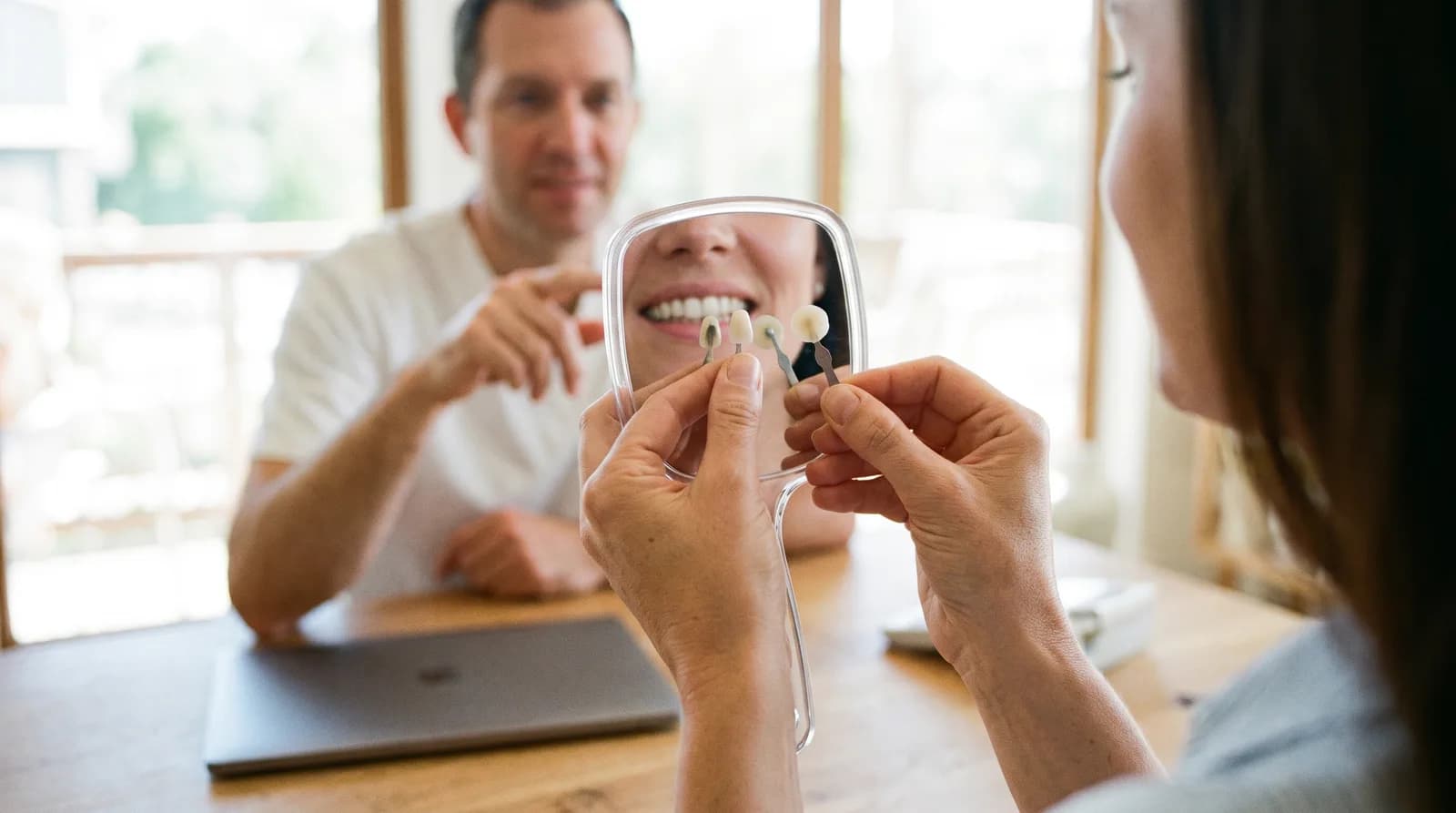
If you're weighing veneers vs bonding to fix a chipped, discolored, or slightly uneven tooth, the right choice comes down to how much correction you need, your budget, and how long you want the result to last. Both are effective cosmetic options, but they solve somewhat different problems. This guide breaks down the real differences to help you have a more informed conversation at your consultation. Both options are available as part of cosmetic dentistry care at Susan J. Curley DDS. Neither option is universally better; the right fit depends on your specific situation, goals, and what you're hoping to achieve.
Not Sure Which Fix Is Right for You?
A consultation can walk through your specific goals and which option actually fits.
Book Appointment →Veneers are thin, custom-made shells permanently bonded to the front of a tooth, while bonding uses a tooth-colored resin applied and shaped directly onto the tooth in a single visit. Veneers generally offer a longer-lasting, more durable result, while bonding is faster and less expensive.
Getting veneers typically requires two visits, one to prepare the tooth and take an impression, and a second to bond the finished veneer in place, though some practices offer same-visit options with certain materials. Bonding, by contrast, is usually completed in a single appointment, since the resin is applied, shaped, and hardened with a curing light right there in the chair. Both require some enamel preparation, but veneers involve more, which is part of why they're considered a more permanent commitment. That permanence is worth weighing carefully before moving forward with either treatment option.
An exam and consultation can confirm which option actually addresses your specific cosmetic concern most effectively. According to MouthHealthy, the ADA's patient education site, both veneers and bonding are considered safe, effective cosmetic options when performed by a qualified dentist.
Bonding is typically quick and comfortable, often completed in under an hour without requiring anesthesia for most straightforward cases involving a single tooth. Veneers involve more preparation, sometimes requiring a local anesthetic for enamel shaping, plus a temporary veneer while the permanent one is fabricated at a dental lab.
During bonding, Dr. Curley applies the resin directly to the tooth, shapes it to match the surrounding teeth, then hardens it with a curing light before a final polishing step, all typically completed in one sitting. Veneer preparation involves removing a thin layer of enamel to make room for the porcelain shell, followed by an impression sent to a dental lab where the final restoration is fabricated. A temporary veneer is placed in the meantime, with the permanent one bonded securely in place at a follow-up visit once it's fully ready.
Neither procedure is generally described as uncomfortable, though veneers involve more steps spread across a longer overall timeline from start to finish.
Veneers generally last considerably longer than bonding, often 10 to 15 years or more with proper care, while bonding typically lasts 3 to 7 years before needing touch-ups or replacement. This difference in longevity is one of the more significant factors in the decision for many patients.
For a fix you want to last as long as possible with minimal maintenance, veneers tend to have the edge, though the higher upfront cost is part of that tradeoff.
Bonding is generally more reversible than veneers, since it requires minimal enamel removal and can sometimes be adjusted or removed without permanently altering the tooth underneath. Veneers involve enamel removal that can't be undone, making them a more permanent decision.
Once enamel is removed to prepare a tooth for a veneer, that tooth will always need some form of covering, whether a veneer or eventually a crown, since the underlying enamel doesn't grow back. Bonding, requiring less alteration to the natural tooth, leaves more future options open if your preferences or needs change down the road. This distinction matters most for patients who are on the fence or want to preserve flexibility for future decisions.
Discussing this tradeoff directly with Dr. Curley helps clarify how much permanence you're comfortable committing to before moving forward with either option.
Bonding costs meaningfully less than veneers upfront, since it requires less material, a single visit, and no custom lab fabrication, making it the more budget-friendly option for smaller cosmetic fixes. Veneers represent a bigger upfront investment but often cost less over time given how much longer they last, spreading that cost across more years of use.
| Factor | Bonding | Veneers |
|---|---|---|
| Visits required | Typically one | Typically two |
| Typical lifespan | 3 to 7 years | 10 to 15+ years |
| Stain resistance | Lower than porcelain | High, especially porcelain |
Weighing upfront cost against long-term value is worth discussing directly during your consultation, since your specific situation affects which choice makes more financial sense.
Ready to Discuss Your Specific Goals?
A cosmetic consultation is the best way to find out which option fits your smile.
Book a Consultation →Bonding is generally easier and quicker to repair, since Dr. Curley can often simply add or reshape resin during a single follow-up visit. A damaged veneer, by contrast, typically requires a full replacement, since the porcelain shell can't be patched the way resin can.
If a bonded tooth chips or wears down, a straightforward touch-up visit can usually restore its appearance without needing to redo the entire procedure from scratch. A cracked or chipped veneer, however, usually needs to be entirely replaced with a new one, since porcelain doesn't repair in small sections the way resin does. This is one more consideration worth factoring into your decision, especially if you're prone to grinding your teeth or biting into hard foods regularly.
Whichever option you choose, contacting the office promptly after noticing any damage helps prevent a small issue from becoming a larger one.
Veneers generally handle more significant corrections better, since the porcelain shell can mask more noticeable discoloration, gaps, or shape irregularities than a thin layer of bonding resin can reliably achieve. Bonding works best for smaller, more targeted fixes on one or two teeth.
A small chip, a minor gap, or slight discoloration on one or two teeth is often well suited to bonding, since the fix is contained and doesn't require dramatically reshaping the tooth. More extensive concerns, like several stained or misshapen teeth intended to look uniform, tend to benefit from veneers, since porcelain can be color-matched and shaped more precisely across multiple teeth. Combining both approaches across different teeth is also possible, depending on what each specific tooth actually needs and how visible it is when you smile.
Bringing photos or a clear description of what you'd like to change helps Dr. Curley recommend which approach fits your specific situation, rather than guessing at your specific goals.
Yes, whitening your natural teeth before either veneers or bonding is generally worth doing, since both materials are color-matched to your teeth at the time of the procedure and won't whiten further afterward the way natural enamel can with future treatments.
Once porcelain veneers or bonding resin are placed, they maintain their original shade regardless of any whitening treatments applied later, which means your natural teeth could end up looking different from the veneer or bonded tooth over time if you whiten afterward. Discussing your long-term whitening goals with Dr. Curley before any cosmetic procedure helps ensure the color match stays consistent for years to come. This is particularly relevant if you're only treating one or two teeth rather than your entire smile.
Getting your natural shade where you want it beforehand avoids a mismatched appearance down the road that would otherwise require redoing the cosmetic work.
Veneers require care similar to natural teeth, regular brushing and flossing, along with avoiding using teeth as tools to prevent chipping the porcelain edge. Bonding requires slightly more caution, since the resin is softer and more prone to staining or chipping with heavy wear over time.
Both benefit from avoiding biting into very hard foods, like ice or hard candy, which can damage either material over time. Bonding in particular can pick up staining from coffee, tea, or red wine more readily than porcelain veneers, so patients who consume these regularly may notice bonding needs touch-ups sooner. Routine dental checkups allow Dr. Curley to catch any wear or damage early, before it becomes a bigger cosmetic or functional issue down the road.
Neither option is high-maintenance, but understanding these small differences helps set realistic expectations for how your specific choice will hold up over the years ahead. CDC oral health data notes that cosmetic dental concerns are increasingly common reasons patients seek dental care. Roughly 42% of adults aged 30 and older have some form of periodontal disease, according to CDC 2024 data, which is part of why addressing any underlying gum health first matters before cosmetic work begins.
Veneers vs bonding ultimately comes down to your specific goals, budget, and how long you want the result to last, with veneers offering more durability and bonding offering a faster, more affordable fix for smaller corrections. Susan J. Curley DDS can help determine which option actually fits your smile and your priorities best.
Results may vary. Please consult with your dentist at Susan J. Curley DDS for personalized treatment recommendations.
If you're considering a cosmetic fix, a consultation is the most direct way to get a recommendation tailored to your specific teeth. Regular dental visits catch roughly 80% of oral health issues before they become serious, according to the ADA, and a cosmetic consultation is also a good opportunity to address any underlying concerns before moving forward with either option.
Ready to Explore Your Options?
Book a cosmetic consultation with Susan J. Curley DDS and find the right fix for your smile.
Book an Appointment →Prefer to talk it through first?
Call 732-681-8604 →Written By
Dentist
Temporary crown care tips: what to avoid eating, how to floss carefully, and what to do if it comes loose or falls off entirely.
Cost of veneers NJ: what actually drives the price, from the number of veneers to material choice and treatment planning.
Crown after root canal: why almost every treated tooth needs one, what happens if you skip it, and the right treatment timeline.
Book your visit with Dr. Curley online or call us, and we'll take it from there.