veneers
What Affects the Cost of Veneers in NJ? A Full Guide
Cost of veneers NJ: what actually drives the price, from the number of veneers to material choice and treatment planning.
Sep 13, 20269 min read


Temporary crown care tips matter more than most patients expect. A temporary crown is more fragile than the permanent one coming later and needs a bit of extra attention in the meantime. A few simple precautions go a long way toward avoiding an unplanned visit to our emergency dentistry team before your next appointment.
Most patients only wear a temporary crown for a few weeks, but that short window is exactly when small mistakes tend to cause problems. Knowing what to avoid upfront makes that stretch far less stressful.
This guide is written from real patterns we see regularly, the specific habits and situations that most often lead to a temporary crown coming loose or falling off before its time. Avoiding these few pitfalls covers the vast majority of cases.
None of this is meant to make you anxious about a normal, routine part of getting a crown. It's simply practical information that helps the next few weeks go smoothly.
A temporary crown is designed to protect your prepared tooth for a few weeks, not to withstand the same daily use as a permanent restoration. Following the ADA's general patient guidance alongside these specific tips supports a smooth transition to your permanent crown. Nearly 1 in 4 adults in the US has untreated tooth decay, according to CDC data, which is part of why protecting a tooth that's already undergone treatment matters so much. This guide covers exactly what to avoid, and what to do if something does go wrong.
None of this requires treating your temporary crown as fragile beyond reason. A few specific precautions, covered in detail below, cover almost every situation that could otherwise lead to an unplanned call.
| Situation | What to Do |
|---|---|
| Temporary feels loose | Call promptly for a same-day recementing |
| Temporary falls off completely | Save it, call promptly, avoid chewing on that side |
| Mild sensitivity | Generally normal, mention at your next visit |
| Worsening discomfort | Call your dentist rather than waiting |
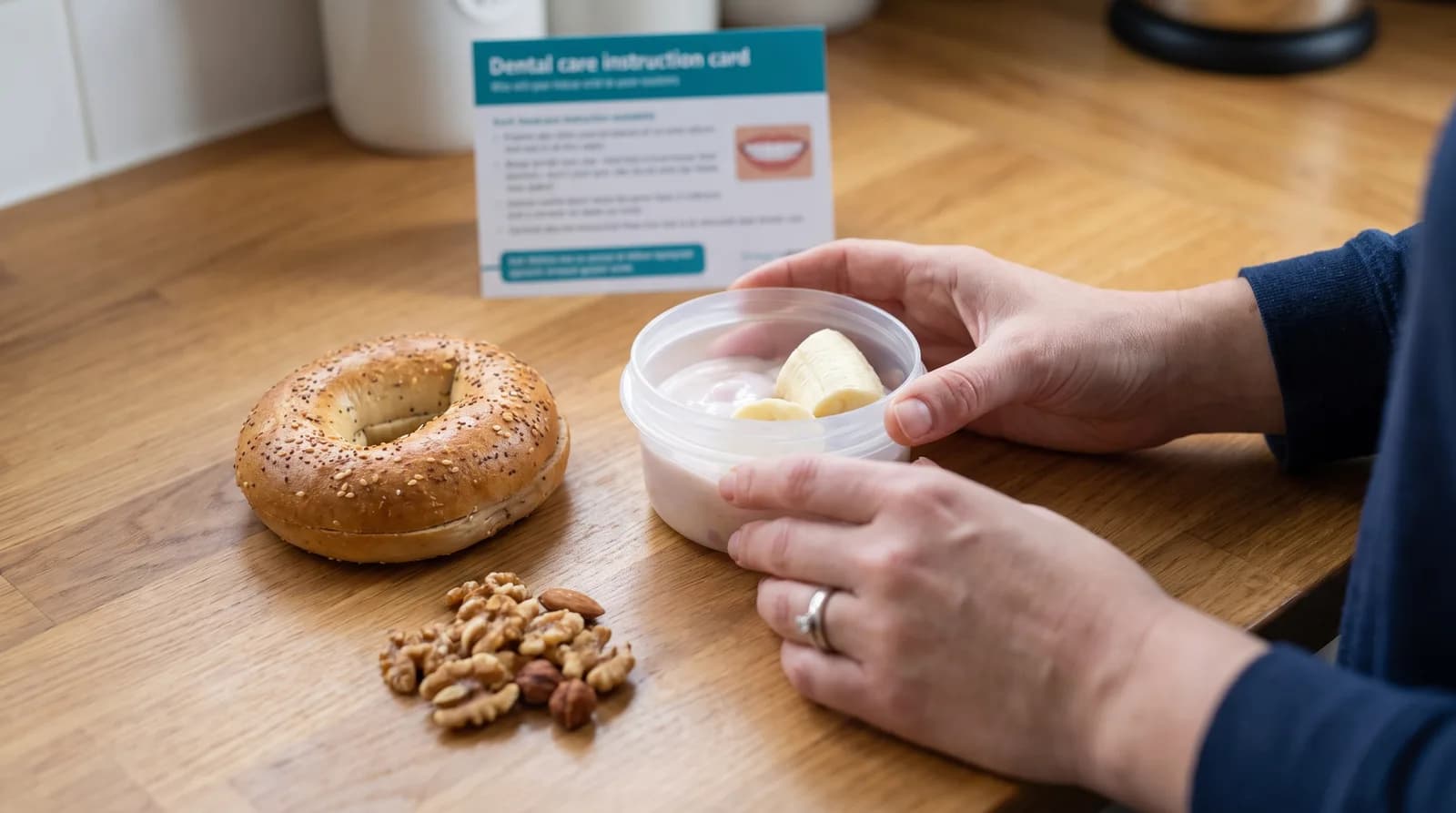
Avoid sticky foods like caramel or gum, hard foods like ice or nuts, and anything that requires significant biting force on the temporary crown's side of your mouth. Sticky foods in particular can dislodge a temporary crown entirely.
Chewing on the opposite side of your mouth whenever possible reduces the direct pressure on the temporary crown, giving it a much better chance of staying intact until your permanent crown appointment.
Cutting food into smaller pieces before eating also reduces the force needed to bite through it, which indirectly protects the temporary crown even on days when avoiding one side entirely isn't practical.
Being mindful for just a few weeks is a small trade-off compared to dealing with an unplanned visit or a delay in getting your permanent crown placed on schedule.
This adjustment feels awkward for the first day or two but quickly becomes second nature. Most patients report barely noticing the habit once they've settled into it for a few days.
Soft foods like pasta, eggs, and cooked vegetables are generally safe bets during this period, giving you plenty of options that don't put unnecessary stress on the temporary crown while you wait.
Smoothies and soups are another easy option worth keeping in rotation, since they require essentially no chewing at all on the affected side while still giving you satisfying, filling meals during the temporary period.
Brush normally around a temporary crown, but be gentle at the gumline where it meets your natural tooth. When flossing, slide the floss out sideways rather than pulling it straight up, which can dislodge the temporary crown entirely.
This sideways technique is worth practicing even before your temporary crown is placed, since the motion is different enough from typical flossing habits that it helps to think about it consciously for the first few days.
A water flosser set to a gentle setting is another option some patients prefer during this period, since it avoids the direct sideways motion of string floss near the temporary crown entirely.
Whichever method you use, the goal is simply removing plaque without applying force directly against the temporary crown's edge. A gentle, deliberate approach protects it far better than rushing through your normal routine.

Call your dentist promptly if a temporary crown feels loose, even if it hasn't fully come off, since a loose temporary can allow bacteria to reach the prepared tooth underneath. Most practices can see you quickly for a simple recementing.
Waiting to see if a loose temporary "settles back into place" on its own generally isn't worth the risk. A quick call and a short visit almost always resolves the issue before it becomes anything more involved.
Most practices, ours included, treat this kind of request as a priority since it's a quick fix that prevents a bigger problem. You're not being an inconvenience by calling about something that feels off.
Some patients hesitate to call over what feels like a minor issue, worried about seeming overly cautious. In reality, dental teams would much rather field a quick call about a loose temporary than see a patient later with a more involved problem that developed from waiting.
Temporary crown feeling loose or came off?
Same-day care is available to recement or replace it before your permanent crown appointment.
Schedule a Visit →If a temporary crown falls off completely, save it if possible and call your dentist promptly, since the exposed tooth is more sensitive and vulnerable without its protective covering. Avoid chewing on that side until you're seen.
Rinsing gently with warm water and keeping the area clean while you wait for your appointment helps protect the exposed tooth in the meantime. This is a temporary measure, not a substitute for being seen promptly.
Over-the-counter dental cement, sold at most pharmacies, can sometimes offer very short-term protection if you can't be seen the same day, though this should never replace an actual dental visit to properly recement or replace the temporary.
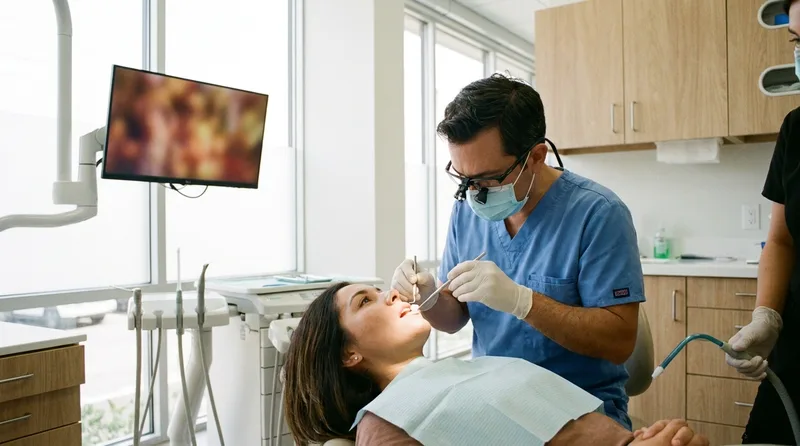
Our guide on same-day emergency dental care covers what to expect if you need to be seen quickly for this kind of issue. Most cases are resolved with a simple recementing rather than anything more involved.
Mild sensitivity to hot, cold, or pressure is common with a temporary crown, since the material doesn't insulate the tooth as effectively as a permanent restoration. This typically resolves once your permanent crown is placed.
Significant or worsening discomfort, rather than mild sensitivity, is worth mentioning to your dentist, since it can occasionally indicate the temporary isn't seated correctly or that something else needs attention before your next visit.
Keeping a simple mental note of whether sensitivity is staying steady or getting worse over the days helps you describe it accurately if you do need to call. That distinction matters more to your dentist than the sensitivity alone.
Sensitivity to sweet foods specifically is also worth mentioning if it develops, since it can sometimes point to a different issue than the general hot and cold sensitivity that's typically expected with a temporary crown.
A temporary crown typically needs to last a few weeks, the time between your preparation appointment and your permanent crown appointment, though this varies depending on whether you're waiting on a lab-made crown or have a same-day option available.
Understanding this timeline upfront helps set realistic expectations for how carefully you'll need to treat the temporary. A shorter wait naturally means less time for something to go wrong.
If your specific timeline runs longer than expected, due to a lab delay or a rescheduled appointment, it's worth checking in with your dentist about whether any additional precautions make sense for the extended wait.
Most temporary crown timelines proceed exactly as planned, and this kind of extended wait is the exception rather than the rule. Still, knowing it's an option to ask about gives you peace of mind either way.
Our guide on same-day crowns versus lab crowns covers how this timeline can vary based on the technology your dentist uses. A shorter temporary period generally means fewer opportunities for something to go wrong.
Call right away if the temporary crown falls off, feels loose, causes worsening discomfort, or if you notice a bad taste that doesn't resolve with normal brushing. Any of these can indicate the underlying tooth needs attention sooner than your scheduled visit.
A persistent bad taste specifically is worth taking seriously, since it can sometimes indicate bacteria have found a way past the temporary seal. This is exactly the kind of symptom that benefits from prompt attention rather than a wait-and-see approach.
Trusting your instincts here is reasonable. If something feels different or wrong with a temporary crown, a quick call to confirm is far simpler than waiting and hoping it resolves on its own.
Temporary crown care tips ultimately come down to a few consistent habits: avoid sticky and hard foods, floss carefully, and call promptly if anything feels off. Regular dental visits catch 80% of oral health issues before they become serious, according to the CDC's oral health data, and the same principle of prompt attention applies to any temporary crown concern. Results may vary. Please consult with your dentist at Susan J. Curley DDS for personalized treatment recommendations.
If your temporary crown has come loose, fallen off, or simply feels off, reaching out now is simpler than waiting for your scheduled appointment.
Having Trouble With Your Temporary Crown?
Same-day care is available with Dr. Curley in Wall Township if something feels wrong.
Book Appointment →Have questions before booking?
Contact Our Wall Township Office →Written By
Dentist
Cost of veneers NJ: what actually drives the price, from the number of veneers to material choice and treatment planning.
Crown after root canal: why almost every treated tooth needs one, what happens if you skip it, and the right treatment timeline.
How long do dental crowns last? Most last 10 to 15 years, depending on crown material, tooth location, and daily habits.
Book your visit with Dr. Curley online or call us, and we'll take it from there.