Laser Dentistry Benefits: Gentler Treatment for Gums
Dr. Susan J. Curley, DDSJuly 12, 20267 min read
Key Takeaways
Laser dentistry uses focused light energy to treat dental tissue with precision that reduces collateral damage to surrounding healthy tissue.
Laser dentistry benefits include reduced anesthesia need, less bleeding, faster healing, lower infection risk, and reduced noise for anxious patients.
Studies show patients report approximately 45% less post-operative pain with laser soft tissue treatment versus traditional instruments, according to published patient outcome data.
Laser-assisted periodontal therapy reduces average pocket depth by 0.5 to 1.0 mm more than scaling alone, according to systematic review data.
Lasers do not replace all traditional instruments; clinical judgment determines the right tool for each procedure.
If the idea of dental drills or scalpels is part of what makes you avoid the dentist, laser dentistry is worth understanding. It is not a gimmick or a marketing upgrade; it is a clinically validated approach to treating gum disease, cavities, and soft tissue conditions with a precision and gentleness that traditional instruments cannot always match. At Susan J. Curley DDS in Wall Township, NJ, laser dentistry is part of the everyday practice, not a specialty add-on. This article explains the core laser dentistry benefits and what the technology actually does.
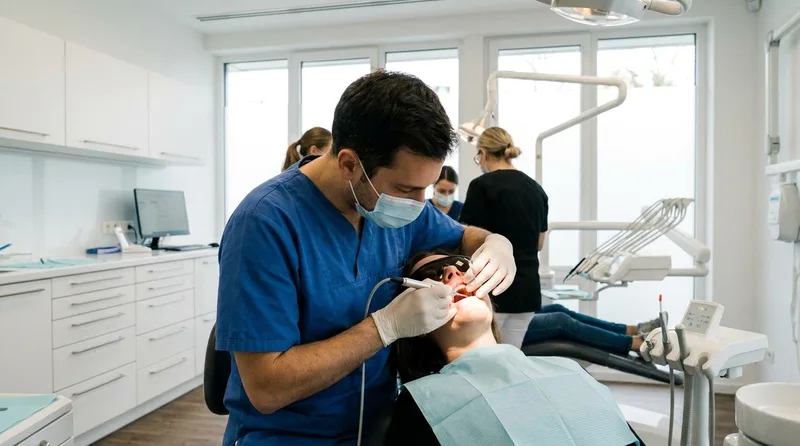
Soft tissue lasers treat gum tissue with precision, cauterizing blood vessels as they work for minimal bleeding and no sutures in most cases.
What Is Laser Dentistry?
Laser dentistry uses focused beams of light energy to cut, shape, and treat dental tissue with precision that traditional instruments cannot always match. Different lasers are calibrated for specific tissue types: soft tissue lasers for gums, hard tissue lasers for enamel and dentin, and diode lasers for broader applications.
Laser dentistry uses focused beams of light energy to cut, shape, or treat dental tissue with precision that a scalpel or drill cannot achieve in the same way. Different types of dental lasers are calibrated for specific tissue types: soft tissue lasers work on gum tissue, hard tissue lasers work on enamel and dentin, and diode lasers have broad applications across both. The laser energy interacts with water in the target tissue to remove or reshape it with minimal impact on the surrounding area.
The precision of laser energy means that the treatment boundary between affected and healthy tissue is sharper than with a drill or scalpel. This precision reduces collateral damage to surrounding tissue, which is one of the reasons laser-treated sites often heal faster and with less post-procedure discomfort than sites treated with traditional instruments.
According to Healthline, FDA-cleared dental laser devices have been used in clinical dentistry since the 1990s. Studies show that patients treated with lasers report approximately 45% less post-operative pain compared to those treated with traditional instruments in comparable soft tissue procedures, according to published patient outcome data.
What Conditions Are Treated With Dental Lasers?
Dental lasers have a broad range of clinical applications that span both preventive and restorative care. The most common uses at Susan J. Curley DDS include gum disease treatment, soft tissue procedures, cavity preparation, and hard tissue diagnostics.
The main clinical applications:
Gum disease treatment: Lasers can remove infected gum tissue from periodontal pockets with greater precision than traditional scaling alone. Laser-assisted periodontal therapy reduces bacterial load in the pocket, decontaminates the root surface, and stimulates tissue reattachment, all without the cutting and suturing required by traditional surgical approaches.
Gum recontouring and crown lengthening: Lasers can reshape the gum line to correct a gummy smile, expose more tooth structure before a crown, or create a more balanced and symmetrical appearance without a scalpel. The laser seals blood vessels as it works, so there is minimal bleeding and no sutures are needed in most cases.
Cavity detection: Laser fluorescence devices scan tooth surfaces and identify areas of early decay by detecting changes in the optical properties of demineralized enamel, often before the decay is visible on X-ray or to the naked eye.
Cavity preparation: Hard tissue lasers can prepare a cavity for a filling in many cases without the vibration and noise of a drill, which is one of the most significant comfort advantages for anxious patients. Not every cavity is a candidate, but straightforward small to medium cavities often are.
Frenectomy: A laser frenectomy releases a restrictive frenum attachment, the tissue connecting the tongue to the floor of the mouth or the lip to the gum, quickly and with minimal bleeding. Healing is typically faster than with a traditional scalpel incision.
Aphthous ulcer treatment: Low-level laser therapy can reduce the pain and healing time of canker sores significantly with a quick, non-invasive treatment that requires no anesthesia.
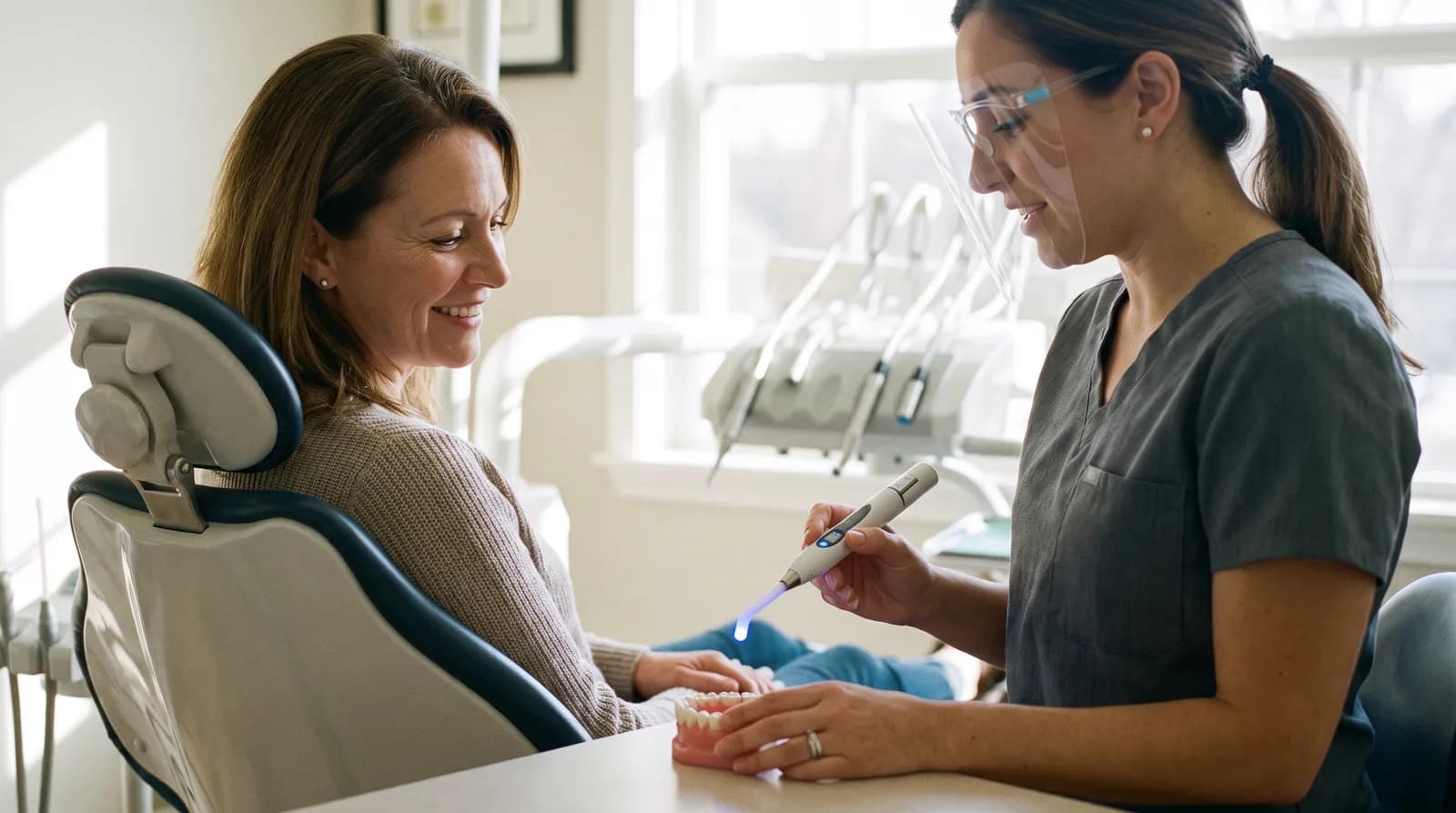
The absence of drill noise and vibration is one of the most significant laser dentistry benefits for patients with dental anxiety.
What Are the Main Laser Dentistry Benefits?
The benefits of laser dentistry cluster around four themes: reduced discomfort, faster healing, greater precision, and reduced anxiety. None of these are absolute, and not every procedure replaces its traditional equivalent entirely, but the advantages are real and clinically documented.
The core laser dentistry benefits in practice:
Less need for anesthesia in some procedures: Soft tissue laser work and some hard tissue cavity preparations can be performed with significantly reduced anesthesia or none at all, since the laser interacts with tissue differently than a blade or drill. This is particularly meaningful for patients with needle phobia.
Reduced bleeding and swelling: Lasers cauterize blood vessels as they work on soft tissue, resulting in less bleeding during the procedure and less swelling in the days that follow. Gum procedures that would require sutures with a scalpel often require none with a laser.
Faster healing: Because laser-treated tissue has less trauma and bleeding, the healing response is typically faster. Laser-treated gum sites often heal in days where scalpel incisions might take a week or more to become comfortable.
Reduced infection risk: Laser energy sterilizes as it works, reducing bacterial contamination at the treatment site. This is particularly relevant in periodontal therapy where bacterial load in the pocket is the driver of the disease.
Less noise and vibration: The absence of drilling vibration and the characteristic dental drill noise is meaningful for anxious patients. Many patients who report high dental anxiety cite the drill sound and sensation as a primary trigger.
According to the American Dental Association, patients treated with lasers may experience less post-operative pain and faster healing than with conventional dental instruments in appropriate applications, and laser therapy is a recognized and accepted modality in modern dental practice.
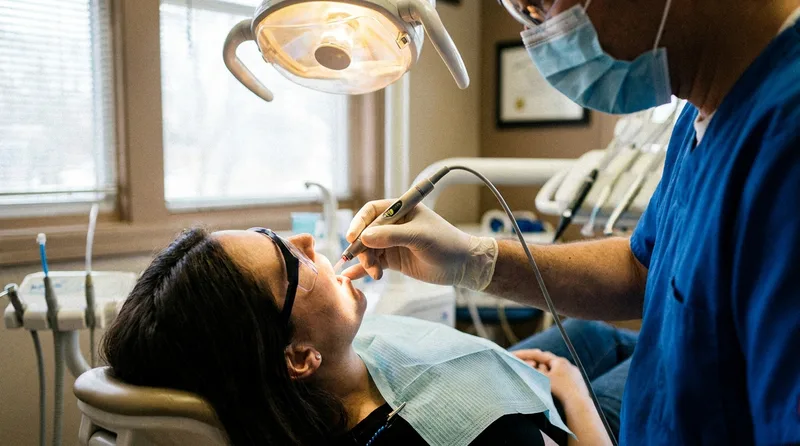
Laser fluorescence devices detect early decay before it is visible on X-ray, enabling earlier and more conservative intervention.
Does Laser Dentistry Replace Traditional Instruments Entirely?
No, and any practice claiming otherwise would be overstating what the technology does. Lasers are a precision tool for specific applications, not a universal replacement for all traditional dental instruments. Certain procedures still require drills, scalers, or sutures, and the clinical decision about which tool is appropriate depends on the specific situation.
At Susan J. Curley DDS, laser dentistry is used when it is the best tool for the job, not as a marketing point. A straightforward small cavity on an accessible surface may be suitable for laser preparation; a large cavity involving significant tooth structure may still be best addressed with traditional instruments. A gum recontouring procedure is an excellent candidate for laser treatment; a deep surgical periodontal case with bone involvement may require additional procedures. The clinical decision is always patient-specific.
Is Laser Dentistry Safe?
Dental laser devices cleared by the FDA for clinical use have a well-established safety record when used by trained practitioners on appropriate indications. The energy delivered is calibrated for dental tissue, and protective eyewear is worn by both the patient and the dental team during laser procedures as a standard precaution.
Published research on laser-assisted periodontal therapy has found that laser treatment combined with scaling and root planing reduces average pocket depth by approximately 0.5 to 1.0 mm more than scaling alone, according to published systematic review data. Bacterial counts in treated pockets are significantly lower in laser-treated sites, with no significant adverse effects reported in appropriately selected cases.
Laser dentistry at Susan J. Curley DDS follows established protocols for patient protection including protective eyewear for both patient and staff and careful documentation of any relevant medical history before each procedure. Because laser energy is precise and calibrated to specific tissue types, the risk of damage to adjacent healthy tissue is lower than with traditional cutting instruments when the procedure is performed correctly by a trained practitioner.
Patients with pacemakers or certain implanted electronic devices should inform Dr. Curley before any laser procedure, as some laser types can interact with electronics. This is a standard precaution and does not typically preclude laser treatment, but the specific device and laser type should be reviewed before proceeding. To schedule a consultation or ask questions about laser dentistry options, visit susanjcurleydds.com/book-appointment.
Interested in gentler dental treatment?
Ask about laser dentistry at your next visit to Susan J. Curley DDS in Wall Township, NJ. Dr. Curley uses laser technology for gum treatment, soft tissue procedures, and cavity preparation where it provides a meaningful comfort advantage.