Restorative Dentistry
Chipped Tooth Repair Options Same Day: What to Know
Chipped tooth repair options same day: dental bonding vs a same-day crown, what to do right now, and what your emergency visit will look like.
Aug 23, 202610 min read


Choosing a family dentist in Monmouth County is a decision most people make quickly and then live with for years. The search often comes down to convenience, insurance, and whoever shows up first in a search result. That process works fine for finding a dental office. It does not always work well for finding a dental practice where patients actually feel known, where continuity of care means something, and where the relationship with the dentist matters as much as the technology. This guide covers the questions worth asking before how to choose a family dentist becomes a matter of whoever has the next available slot.
Dr. Susan J. Curley DDS has served patients in Wall Township and throughout Monmouth County for years, providing the kind of personalized, relationship-centered dental care that is increasingly difficult to find as dental practice consolidates into larger corporate group practices.
Continuity of care means seeing the same dentist at every visit, not a rotating roster of associates. A dentist who has followed your oral health for years notices subtle changes that a provider seeing you for the first time cannot detect from a chart alone.
Continuity of care means seeing the same dentist at every visit, not a rotating roster of associates. It matters because dentistry is a relationship built on pattern recognition over time. A dentist who has seen your teeth for five or ten years notices subtle changes that a provider seeing you for the first time cannot catch. A new provider every visit reads the chart; a long-term provider reads the patient.
In corporate dental group settings, patient volume and associate turnover mean that continuity is often incidental rather than guaranteed. At a boutique private practice, the dentist who performed your first exam is the same one who will notice, years later, that a particular tooth is wearing differently than it was, that gum tissue around a crown has changed, or that a spot on an X-ray warrants a second look.
Ask directly: will I see the same dentist at every appointment, or will I be assigned to whoever is available? The answer tells you a great deal about how the practice is structured and what the patient experience prioritizes.
Different dental practices operate with meaningfully different philosophies about treatment. Some practices are production-oriented, with pressure to complete certain volumes of procedures and to present comprehensive treatment plans at every visit. Others are conservative, recommending treatment only when it is clinically indicated and being honest when watchful monitoring is the right approach.
A good question to ask before committing to a practice is: what is your approach when something is borderline: do you lean toward treating it or monitoring it? There is no universally correct answer, but the answer tells you whether the practice values productivity or patient-centered clinical judgment. A dentist who says "I prefer to watch borderline situations carefully and intervene only when necessary" is describing a philosophy that prioritizes your long-term oral health over procedural volume.
According to the American Dental Association, the relationship between a dentist and patient should be built on trust, informed consent, and shared decision-making, with the patient having access to a clear explanation of all treatment options including the option to monitor rather than treat in appropriate cases.
Modern dental technology improves diagnosis accuracy and patient comfort. Intraoral scanners, digital X-rays, same-day crown milling, and cone beam CT all exist to benefit the patient. The question is whether the technology at a given practice was acquired to improve outcomes or to increase procedural volume.
Modern dental technology exists for two reasons: it makes diagnoses more accurate and it makes procedures more comfortable. Intraoral scanners eliminate the need for traditional impression trays. Digital X-rays reduce radiation exposure significantly compared to older film-based systems. Cone beam CT imaging provides three-dimensional views of bone and root anatomy that two-dimensional X-rays cannot show. Same-day crown milling technology eliminates the two-to-three-week wait and temporary crown associated with traditional crown fabrication.
The right question is not whether a practice has every available technology but whether the technology it has improves patient outcomes and experience. Research shows that practices using digital radiography expose patients to approximately 70% less radiation than conventional film X-rays, according to published dental technology data, demonstrating that technology investment can have direct patient health benefits. A practice that invested in digital scanning, intraoral cameras, and same-day crown fabrication is demonstrating a commitment to patient experience. A practice that invested primarily in patient scheduling software and faster checkout systems is demonstrating a different set of priorities.
At Susan J. Curley DDS, the investment in iTero digital scanning, same-day ceramic crown milling, and digital smile design reflects a commitment to accuracy, comfort, and transparency in treatment. Our article on iTero 3D scanning explains how digital impressions improve fit accuracy and eliminate the discomfort of traditional impression trays.
Dental anxiety affects a significant portion of the adult population, and how a practice responds to it reveals its patient orientation. A practice that dismisses anxiety and offers no accommodations is prioritizing throughput; one that adjusts its approach is prioritizing the individual patient.
Dental anxiety affects a significant portion of the adult population, and the way a practice responds to it reveals a great deal about its patient orientation. A practice that dismisses anxiety, schedules anxious patients into the same time slots as everyone else, and does not offer sedation or comfort accommodations is telling you that efficiency matters more than individual patient experience.
According to research published in dental public health literature, dental anxiety is one of the leading causes of dental care avoidance in adults, with studies showing that approximately 36% of adults experience some degree of dental anxiety, according to that published data. A family dentist who takes anxiety seriously offers options, communicates before and during procedures, and structures appointments to be as comfortable as possible retains patients who might otherwise avoid care entirely, which has real implications for their long-term oral health.
Good questions to ask: Do you offer sedation options? How do you handle patients who need more time to get comfortable? Can I signal that I need a break during a procedure without feeling like I am inconveniencing the schedule?
Transparency in treatment means the dentist explains what is being recommended, why, what the alternatives are including doing nothing, and what the expected consequences of each option look like. Transparency about costs means itemized estimates before treatment begins, not surprises at checkout.
Transparency in treatment means that the dentist explains what is being recommended, why it is being recommended, what the alternatives are including doing nothing, and what the expected timeline and consequences of each option look like. It means informed consent that is genuine rather than procedural. It means that a patient who asks "do I really need this?" gets a direct answer rather than a deflection.
Transparency about costs means that financial estimates are provided before treatment begins, that the patient understands what insurance will and will not cover, and that the practice is clear about financing options without pressure. At Susan J. Curley DDS, every treatment plan includes an itemized cost estimate before any work is scheduled, and the financial conversation happens before the clinical one whenever possible.
Our article on smile makeover cost factors covers how treatment costs are explained at this practice for patients considering cosmetic work.
A true family dental practice sees patients at every stage of life, from children through adults and into older age, building a clinical record that spans decades rather than a series of first visits. The relationship with a dentist who has followed a patient across life stages has genuine clinical value.
A true family dental practice is equipped to see patients at every stage of life, from children through adults and into older age, and to provide the continuity of care that follows a patient across those stages. This is different from a practice that accepts all age groups on paper but primarily orients its services and environment around a specific demographic.
A family dentist in Monmouth County who sees your children through their adolescence, provides their adult preventive care, and eventually transitions their care as they age has built something genuinely valuable: a relationship and a clinical record that spans decades. The questions worth asking are whether the practice sees children, whether the office environment is welcoming for different ages, and whether the dentist has experience with the full range of conditions that appear across different life stages.
According to the National Institute of Dental and Craniofacial Research, regular dental visits across all life stages are essential for detecting oral disease early, maintaining systemic health, and preserving natural teeth. A consistent relationship with a dentist who knows your history makes those visits more clinically valuable than a series of appointments with unfamiliar providers.
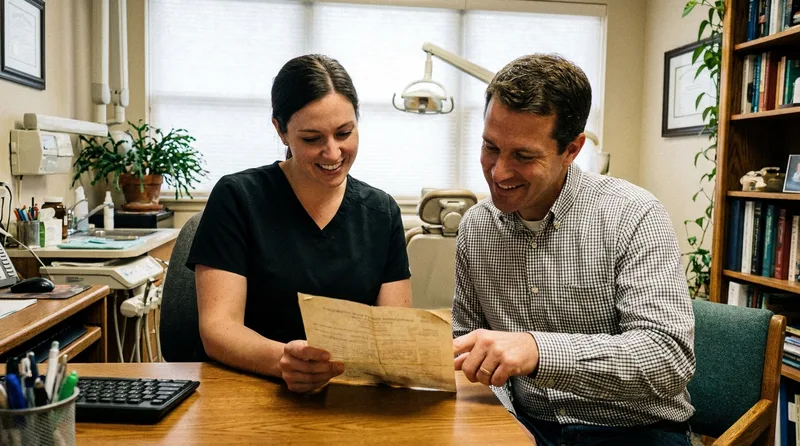
Patient reviews tell you things a practice's website cannot. Reading reviews with an eye for patterns rather than individual data points reveals what the actual patient experience is like: whether patients feel rushed, whether the staff is warm and communicative, whether the dentist takes time to explain things, and whether the practice handles problems well when they arise.
The most meaningful reviews are specific ones that describe a particular experience rather than generic "great dentist" praise. A review that says "Dr. Curley took twenty minutes to explain why she was recommending a crown rather than a filling, showed me the X-ray, and answered every question I had before we proceeded" tells you something real about what a visit to that practice is like.
New patient appointments at Susan J. Curley DDS include a comprehensive examination, full-mouth X-rays, a professional cleaning, and a direct conversation with Dr. Curley about your oral health status and any concerns you have before leaving the chair.
If you are looking for a family dentist in Monmouth County who combines clinical expertise with the kind of personal attention that is the hallmark of an independent private practice, Susan J. Curley DDS in Wall Township, NJ welcomes new patients. New patient appointments include a comprehensive examination, full-mouth X-rays, a professional cleaning, and a direct conversation with Dr. Curley about your oral health status and any concerns you have.
To schedule a new patient appointment or ask questions about the practice before committing, visit susanjcurleydds.com/book-appointment or call the office directly. The about page at susanjcurleydds.com/about provides background on Dr. Curley's training, philosophy, and approach to patient care.
Looking for a family dentist in Monmouth County?
Susan J. Curley DDS in Wall Township, NJ offers personalized, relationship-centered dental care for patients of all ages. New patients are always welcome.
View Dental ServicesGetting to know Susan J. Curley DDS before your first visit is easy with these resources.
Results may vary. Please consult with your dentist at Susan J. Curley DDS for personalized treatment recommendations.
Written By
Dentist
Chipped tooth repair options same day: dental bonding vs a same-day crown, what to do right now, and what your emergency visit will look like.
TMJ symptoms you shouldnt ignore: jaw clicking, locking, headaches, and ear discomfort, what causes them, and when to see a dentist.
Root canal treatment what to expect: the step-by-step process, sedation options, appointment length, and recovery from a patient-comfort perspective.
Book your visit with Dr. Curley online or call us, and we'll take it from there.