Preventive Dentistry
Oral Cancer Screening Dentist Visits: What Actually Happens
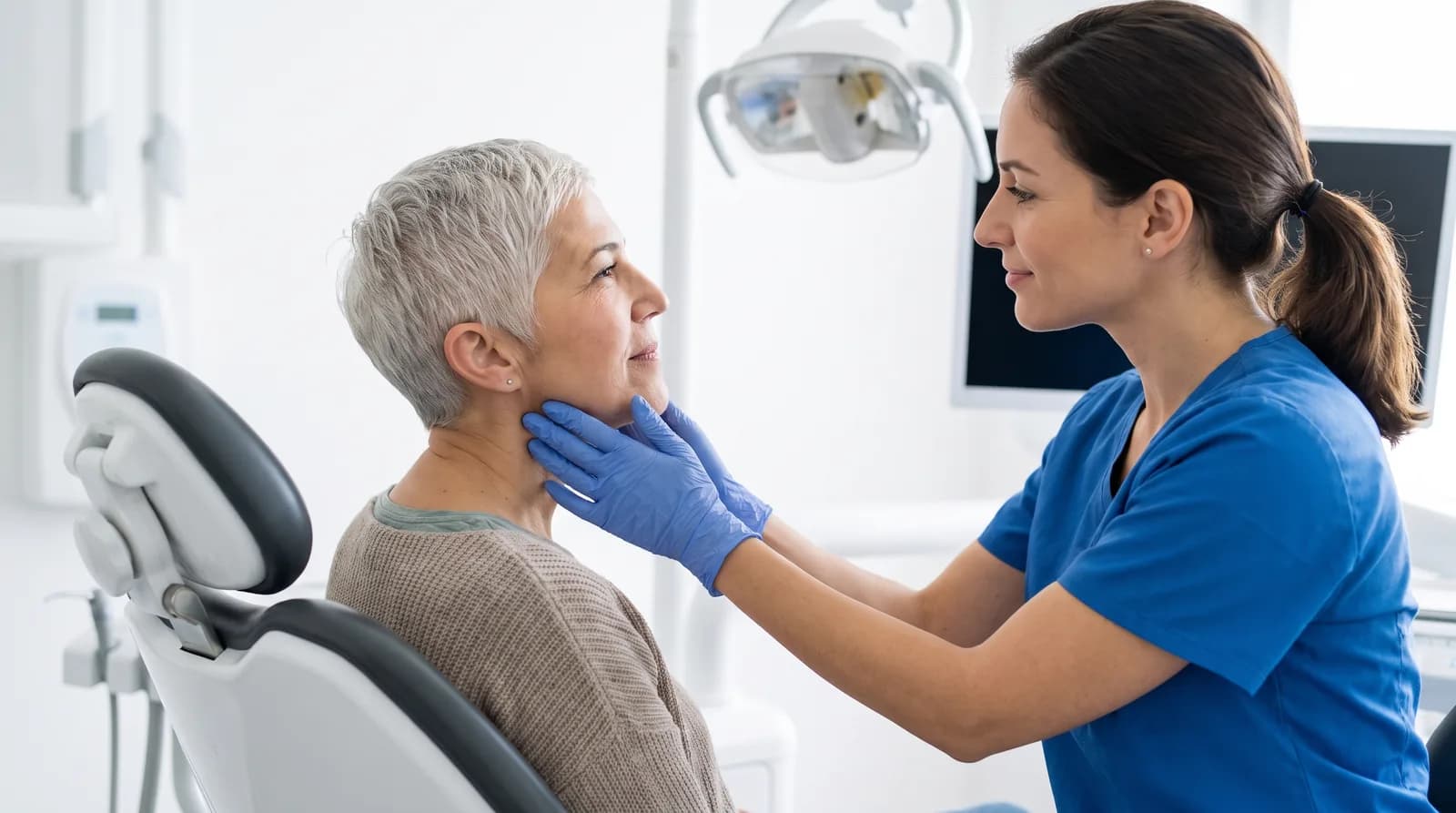
An oral cancer screening dentist visit is quick, painless, and already part of every checkup. Here's exactly what Dr. Curley checks and why.
Jul 15, 20268 min read


Most people picture gum disease as something dramatic, painful, obvious. In reality, the early signs of gum disease are quiet. They show up as small things you brush off (literally), not warning signs that grab your attention. That's exactly why 42% of adults aged 30 and older have some form of periodontal disease, according to the CDC, and most don't find out until a dentist points it out.
The good news is that catching these signs early, while it's still gingivitis, means the damage is usually reversible. This isn't meant to alarm you. It's meant to help you recognize five specific signs your gums may already be trying to tell you, so you can act while treatment is still simple.
If you're due for a checkup or want a professional look at your gum health, Susan J. Curley DDS's periodontal treatment team can help you figure out exactly where you stand.
Sign #1: Bleeding Gums. Bleeding gums during normal brushing or flossing is one of the earliest and most commonly dismissed signs of gum disease. Healthy gums are firm and don't bleed under normal pressure. If you're seeing pink in the sink regularly, that's inflammation, not just "brushing too hard."
Many people assume bleeding means they need to brush more gently, and while technique matters, recurring bleeding after weeks of gentle brushing usually points to gum inflammation rather than a technique problem. This is the earliest stage, called gingivitis, and it's also the most reversible. A professional cleaning combined with better daily flossing often resolves it within a few weeks.
Flossing tends to reveal gum bleeding before brushing does, simply because it reaches between teeth where a toothbrush can't. If you notice bleeding specifically when you floss but not when you brush, that's not a reason to floss less; it usually means plaque has built up in exactly the spots that need the most attention. Skipping the floss because it bleeds tends to make the underlying inflammation worse, not better.
Sign #2: Persistent Bad Breath. Bad breath that doesn't improve with brushing, mints, or mouthwash can signal bacteria building up below the gumline, not just something you ate. This kind of bad breath tends to return within an hour or two of masking it, which is a useful clue it's coming from inside your mouth rather than your last meal.
The bacteria responsible for gum disease produce compounds that create a distinct, sometimes sulfur-like odor. This is different from the temporary bad breath everyone gets from coffee or garlic. If you've noticed people commenting on your breath more than usual, or you're reaching for gum far more often than you used to, it's worth mentioning at your next dental visit.
It's worth noting that bad breath has plenty of other causes too, including dry mouth, certain medications, and diet, so this sign alone isn't a diagnosis. What makes it worth paying attention to is persistence combined with any of the other signs on this list. Bad breath that shows up alongside bleeding gums or visible swelling is a stronger signal than bad breath on its own.
| Sign | Often Mistaken For | Usually Means |
|---|---|---|
| Bleeding gums | Brushing too hard | Early gum inflammation |
| Persistent bad breath | Diet or dry mouth | Bacteria below the gumline |
| Gum recession | Getting older | Gum tissue loss from inflammation |
| Slightly loose teeth | Normal wear | Bone support weakening |
| Red, swollen gums | Irritation from food | Active gum inflammation |
Sign #3: Gum Recession. Gum recession, where teeth start to look slightly longer because the gum tissue has pulled back, is a sign of gum disease that's easy to miss because it happens so gradually. Most people don't notice until they compare a current photo to one from a few years ago.
Unlike a lot of the other early signs, gum recession doesn't fully reverse on its own, even after treatment stops the inflammation causing it. That's part of why catching it early matters: stopping the progression is realistic, but regrowing lost gum tissue generally requires more involved treatment. According to the National Institute of Dental and Craniofacial Research, gum recession is one of the clearer visible markers that periodontal disease has progressed beyond the earliest gingivitis stage.
If you notice more of your tooth showing near the gumline than you remember, or increased sensitivity near the gumline when eating something cold, that's worth a closer look. Sensitivity often shows up alongside recession because the newly exposed root surface isn't protected by enamel the way the rest of your tooth is. Nearly 1 in 4 adults in the US has untreated tooth decay, according to CDC data, and exposed root surfaces from recession are more vulnerable to that kind of decay than enamel-covered tooth surfaces.
Sign #4: Loose or Shifting Teeth. Teeth that feel slightly loose or seem to have shifted position are a later but still early-catchable sign of gum disease, usually indicating the bone supporting your teeth has started to weaken. Many people write this off as "just getting older."
Some patients notice this first as a slight change in how their bite feels, like teeth meeting slightly differently than they used to, or small gaps opening between teeth that weren't there before. These changes tend to happen slowly enough that they're easy to adapt to without realizing something has shifted.
Of the five signs covered here, changes in tooth stability are the ones worth acting on fastest. Bleeding gums and mild swelling usually mean gingivitis, which is reversible. Looseness or shifting suggests the bone that anchors your teeth is already involved, which puts it closer to periodontitis territory. That doesn't mean the situation is unmanageable, but it does mean the window for the simplest treatment is narrower. If your bite feels different or you've noticed new spacing between teeth, mention it at your next visit even if nothing hurts.
Consistent cleanings catch these signs early
Staying on the cleaning interval that's right for you is one of the simplest ways to catch gum disease while it's still reversible.
Find Your Ideal Cleaning Interval →Sign #5: Red or Swollen Gums. Gums that look redder than usual, appear puffy, or feel tender when you touch them are a direct sign of active inflammation, the hallmark of gingivitis. Healthy gums are typically a consistent pale pink and feel firm, not tender.
This sign is sometimes easier to catch than the others because it's visible in the mirror, but it's also easy to attribute to something temporary, like eating something too hot or brushing a little too aggressively that morning. The distinction is persistence: temporary irritation settles down within a day, while gum disease-related swelling and tenderness tends to stick around or gradually worsen.
A simple way to check is to gently press a clean finger against your gumline near the middle of a tooth. Healthy gum tissue springs back and doesn't feel notably tender. If it feels soft, puffy, or the pressure causes discomfort that seems disproportionate to how gently you pressed, that's consistent with active inflammation worth mentioning to your dentist.
If you notice one or more of these signs of gum disease, the most useful next step is scheduling a dental visit rather than waiting to see if things improve on their own. Your dentist can check gum pocket depth and tell you definitively whether you're dealing with early gingivitis or something further along.
A few practical steps in the meantime:
This isn't a reason to panic. Gingivitis, the earliest and most common stage, responds well to a professional cleaning and improved home care in most cases. Regular dental visits can catch 80% of oral health issues before they become serious, according to the ADA, and gum disease is exactly the kind of issue that benefits from being caught in that early, easily-treated window rather than after it has progressed.
What you shouldn't do is wait for pain as your signal to act. Gum disease is notoriously painless in its early stages, which is precisely why so many people don't address it until it has already progressed. If any of the five signs above sound familiar, that's your cue, not the absence of discomfort.
Some people are more likely to notice these signs sooner than others, simply because certain factors accelerate gum disease:
It also helps to know that noticing one of these signs doesn't automatically mean advanced disease. Bleeding gums alone, without recession or looseness, is often just gingivitis, the most common and most treatable stage. The five signs in this guide aren't a diagnosis; they're a prompt to get an actual answer from someone who can look at your gums directly, rather than guessing based on symptoms alone.
Results may vary. Please consult with your dentist at Susan J. Curley DDS for personalized treatment recommendations.
Notice any of these signs?
Dr. Curley and her team can check your gum health and catch problems early, while they're still simple to treat.
Book an Appointment →Written By
Dentist
An oral cancer screening dentist visit is quick, painless, and already part of every checkup. Here's exactly what Dr. Curley checks and why.
How often do you need dental x rays? Dr. Curley explains actual radiation exposure, real intervals, and when yearly x-rays make sense.
How often should you get teeth cleaned? Dr. Curley explains why the 6-month rule isn't one-size-fits-all and what really sets your interval.
Book your visit with Dr. Curley online or call us, and we'll take it from there.