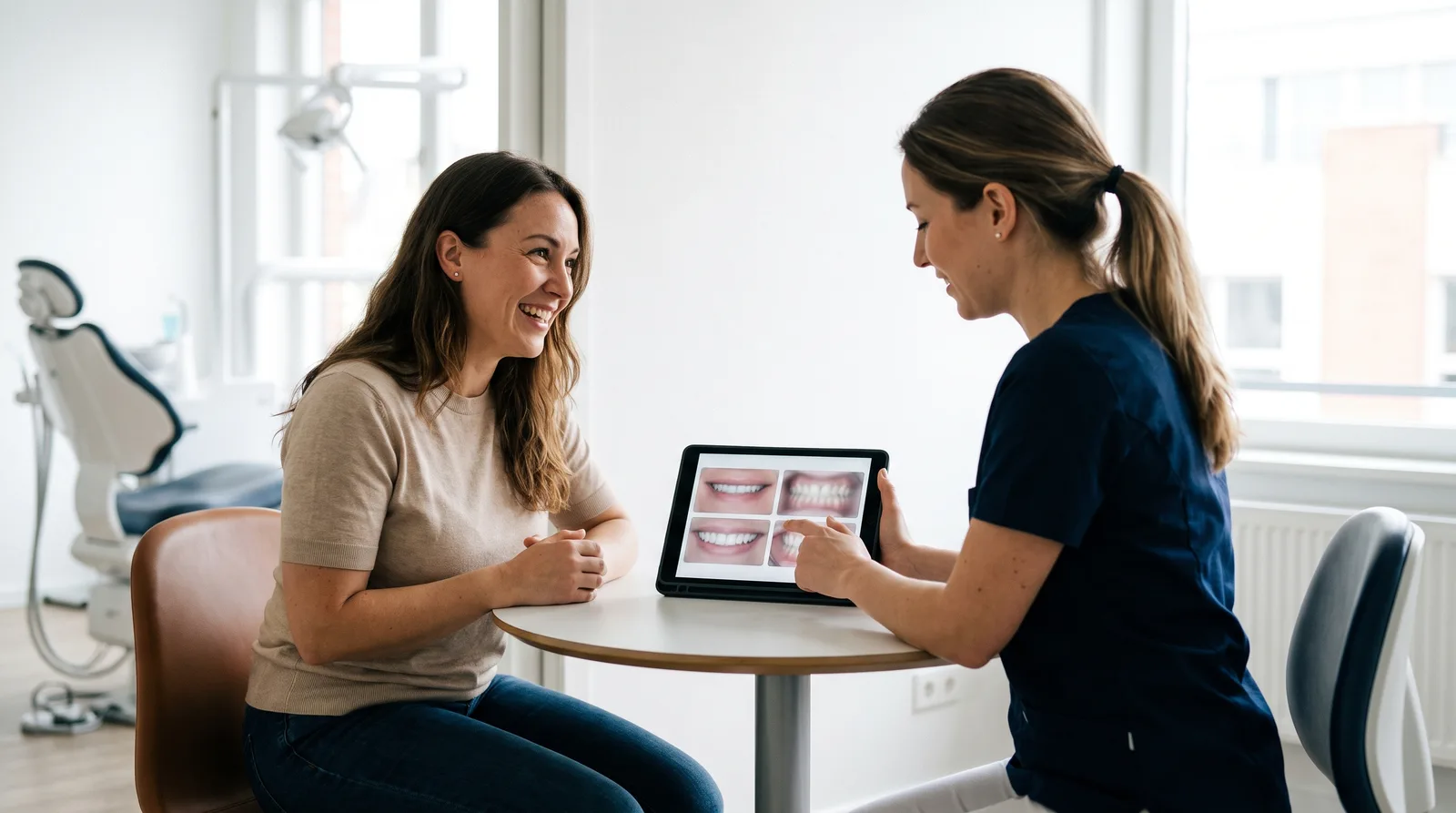
smile-design
Your First Smile Makeover Consultation: What to Expect
Your first smile makeover consultation: what to expect, from the goals discussion to your digital smile design preview and plan.
Sep 20, 20268 min read


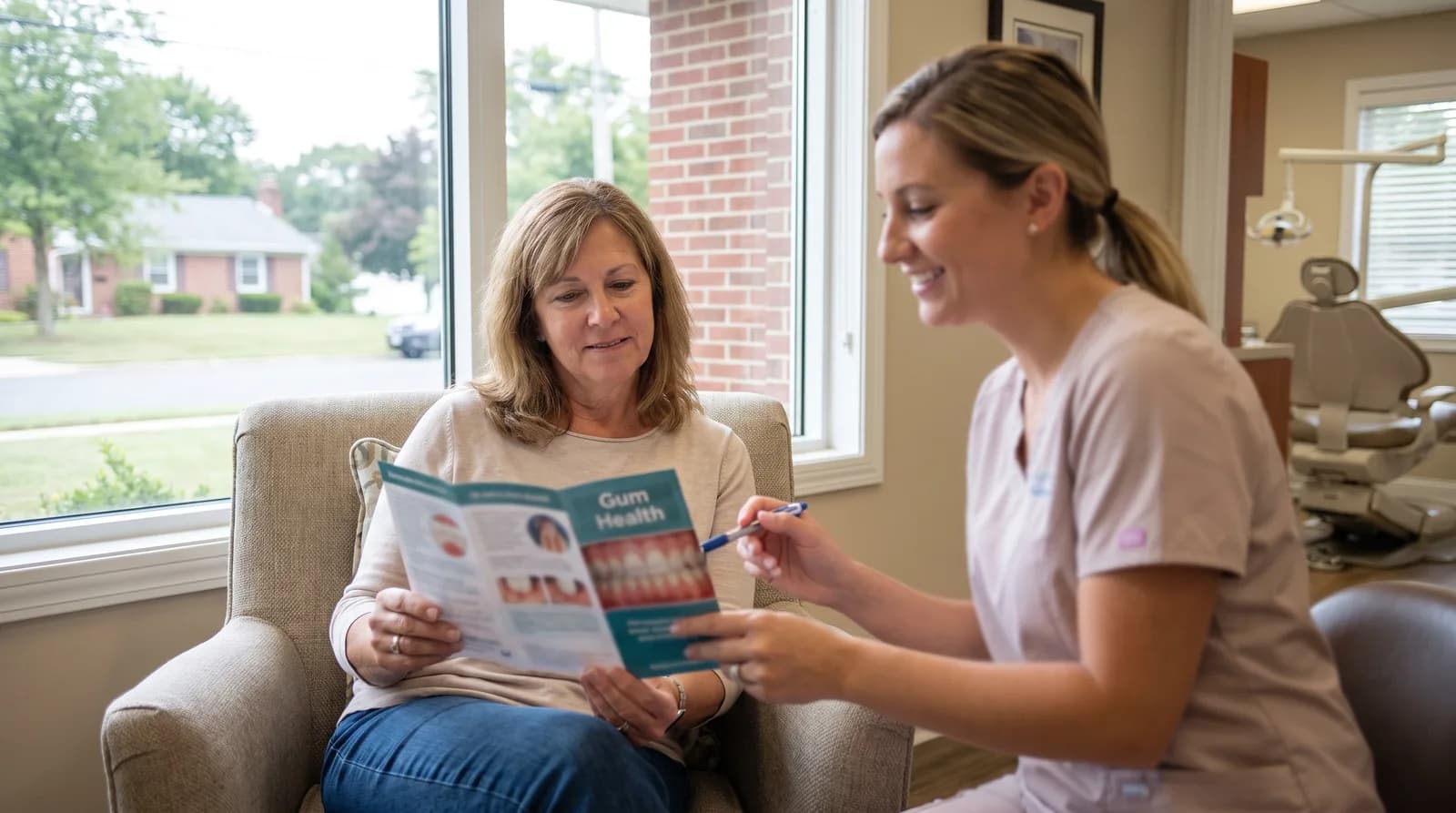
If Dr. Curley has recommended scaling and root planing wall township nj patients sometimes hear called a "deep cleaning," it's natural to wonder how it's different from the cleaning you've had every six months for years. The short version: it treats a problem your regular cleaning isn't designed to reach. Our periodontal treatment team at Susan J. Curley DDS performs this procedure regularly, and patients almost always have the same handful of questions before their appointment.
Hearing that you need a "deep cleaning" can feel like a bigger deal than it actually is. It's one of the most common, well-established treatments in dentistry, not a sign that something has gone seriously wrong. Understanding what it actually involves usually settles most of the worry before the appointment even starts, and most patients are pleasantly surprised by how manageable the whole process turns out to be.
We covered the early warning signs of gum disease in a separate guide. This one picks up from there, walking through exactly what scaling and root planing involves, why it's recommended, and what to expect during and after.
Been told you need a deep cleaning?
We'll walk you through exactly what to expect before your visit.
Book an Appointment →Scaling and root planing is a two-part deep cleaning procedure: scaling removes plaque and tartar from the tooth surface and below the gumline, while root planing smooths the exposed tooth root so gum tissue can reattach more easily. Together, they treat the early stages of gum disease.
The name sounds clinical, but the concept is straightforward. Tartar that builds up below the gumline creates a rough surface where bacteria continue to collect, which keeps inflammation going even with good brushing habits at home. Scaling clears that buildup away, and root planing smooths the root surface underneath so bacteria have a harder time reattaching.
This procedure sits between a routine cleaning and full periodontal surgery. It's the standard first-line treatment once gum disease has progressed beyond what brushing, flossing, and a regular cleaning can manage on their own.
Dentists sometimes refer to it by other names too, including "periodontal scaling" or simply "SRP" on treatment plans and insurance paperwork. All of these describe the same two-part procedure, just with different shorthand depending on the office or the insurance form in front of you. If you see any of these terms on your paperwork, they all point to the same treatment described here.
A regular cleaning maintains healthy gums by removing plaque above and just below the gumline. Scaling and root planing goes further, reaching into deeper gum pockets to treat gum disease that's already developing, and typically takes longer with local anesthetic involved.
Cost and insurance coverage also tend to differ between the two. A regular cleaning is usually covered at or near 100% under most dental plans as a preventive service, while scaling and root planing is often classified as a basic or major procedure with different coverage, so it's worth checking your specific plan before your visit.
| Feature | Regular Cleaning | Scaling and Root Planing |
|---|---|---|
| Purpose | Maintain healthy gums | Treat existing gum disease |
| Depth reached | Above and slightly below gumline | Deep into gum pockets, along the root |
| Anesthetic | Rarely needed | Typically used, area by area |
| Number of visits | One | Usually one to two |
| Follow-up schedule | Every 6 months | Often every 3 to 4 months initially |
Scaling and root planing becomes necessary when tartar builds up below the gumline and gum disease begins to develop, something a toothbrush and regular cleaning can no longer fully address. Left untreated, that inflammation can progress toward more serious bone and tissue loss.
Plaque that isn't removed regularly hardens into tartar within days, and once tartar forms below the gumline, brushing and flossing physically can't remove it anymore. Only professional instruments can. As tartar accumulates in that space, the surrounding gum tissue becomes inflamed, pulls slightly away from the tooth, and forms a deeper pocket, which then traps even more bacteria. It's a cycle that tends to get worse, not better, without professional intervention. Gum disease is also more common than most patients assume: about 42% of adults aged 30 and older have some form of it, according to the CDC.
Dr. Curley typically recommends it after measuring gum pocket depths during an exam. Pockets deeper than 4 millimeters, along with bleeding on gentle probing, are the clearest signals that plaque and tartar have moved below the gumline where a regular cleaning can't reach. Genetics, smoking, certain medications, and inconsistent home care all raise the likelihood of needing this treatment at some point.
A few signs commonly prompt this recommendation during a routine exam:
Gum disease in its earliest stage, known as gingivitis, is generally reversible with proper treatment and consistent home care, according to CDC oral health resources, which is exactly why catching it at this stage matters.
Not sure if you need a deep cleaning?
A gum pocket measurement at your next exam gives a clear answer.
Contact Us →During scaling and root planing, Dr. Curley numbs the treatment area, then uses ultrasonic and hand instruments to remove tartar from below the gumline before smoothing the root surface. Most patients complete this over one or two visits, treated by quadrant or by side.
Splitting the mouth into sections across two visits, rather than treating everything at once, keeps each appointment shorter and more comfortable, and gives the numbed side time to recover before the next visit. Some cases with milder involvement can be completed in a single, longer visit instead.
No, scaling and root planing shouldn't hurt during the procedure itself, since local anesthetic numbs the treatment area beforehand. Most patients describe feeling pressure and vibration from the instruments rather than sharp discomfort.
Some mild soreness and tooth sensitivity in the day or two afterward is common, similar to how gums might feel after a particularly thorough flossing session, just more pronounced. Over-the-counter pain relief and a soft-food day or two typically manage this without issue.
Patients with significant dental anxiety sometimes worry more about this procedure than it warrants. If anxiety is a real concern, mention it beforehand. Additional numbing time, a slower pace, or simple communication about what's happening at each step usually resolves most of the apprehension well before the appointment ends.
Recovery from scaling and root planing is generally mild: some gum tenderness, tooth sensitivity to hot or cold, and slight swelling for a few days. Most patients feel back to normal within a week, with gums gradually tightening as inflammation resolves.
Sensitivity to temperature is one of the more common lingering effects, since the newly exposed root surface can react to hot or cold for a week or two. A sensitivity toothpaste often helps during this window, and it typically resolves on its own as the gums settle.
Avoid very hot, cold, spicy, or crunchy foods for the first day or two, and rinse gently with warm salt water starting the day after treatment. Brushing and flossing should continue as normal everywhere except directly on the treated area for the first 24 hours, after which you can resume your full routine.
A follow-up visit, usually 4 to 6 weeks later, re-measures gum pocket depths to confirm the treatment worked. Shallower pockets and less bleeding on probing are the clearest signs of success, along with a move to a more frequent maintenance cleaning schedule going forward.
This follow-up isn't optional paperwork. It's the actual measurement that tells Dr. Curley whether the tissue is responding as expected or whether a specific area needs additional attention, sometimes a repeat treatment in a stubborn spot, or occasionally a referral to a periodontal specialist for more advanced cases. Most patients see meaningful improvement in pocket depth and bleeding by this follow-up, which is a strong sign the underlying gum disease is responding well to treatment.
Scaling and root planing treats the existing problem, but keeping gum disease from returning depends heavily on what happens after: consistent brushing and flossing at home, and sticking to the 3 to 4 month maintenance schedule Dr. Curley recommends rather than drifting back to a standard six-month gap. National data from the ADA Health Policy Institute consistently shows that consistent preventive care reduces costly emergency dental visits down the line.
Results may vary. Please consult with your dentist at Susan J. Curley DDS for personalized treatment recommendations.
Before your scaling and root planing appointment, it's worth asking how many visits your specific case will need, what your insurance covers, and what recovery will realistically feel like for you. A quick conversation upfront tends to remove most of the uncertainty patients carry into the appointment.
It's also reasonable to ask what happens if the treatment doesn't fully resolve a stubborn area. In most cases, that simply means a second, more targeted pass at the follow-up visit rather than an entirely new treatment plan. Understanding that upfront helps set realistic expectations rather than assuming one visit has to solve everything permanently.
Scaling and root planing sounds more intimidating than it actually is. It's a well-established, first-line treatment for gum disease, done comfortably under local anesthetic, with a short recovery and a clear way to measure whether it worked. Wall Township patients considering scaling and root planing for the first time are usually relieved by how routine the whole process feels once it's explained step by step. Explore more of our Periodontal Care articles for other gum health topics worth knowing about.
Ready to talk about your gum health?
Susan J. Curley DDS will walk you through your options, from a routine cleaning to a full periodontal plan.
Book Appointment →Prefer to talk it through first?
Call 732-681-8604 →Written By
Dentist
Your first smile makeover consultation: what to expect, from the goals discussion to your digital smile design preview and plan.
What is digital smile design? A preview technology that lets you see your proposed new smile before treatment even begins.
Am I a candidate for veneers? Six clear signs that suggest veneers could be a good fit for your smile and long-term goals.
Book your visit with Dr. Curley online or call us, and we'll take it from there.