
veneers
Composite vs Porcelain Veneers: Which Fits Your Budget?
Composite vs porcelain veneers: cost, durability, and finish compared to help you choose the right material for your smile goals.
Sep 16, 20268 min read



Am I a candidate for veneers is one of the most common questions patients ask before their first cosmetic dentistry consultation. The good news is that many patients qualify. A consultation confirms your specific case.
Rather than guessing based on general assumptions, this guide walks through six specific signs. Each one suggests veneers could genuinely be a good fit for your smile.
Think of these signs as a starting point for self-reflection, not a rigid checklist. Recognizing even one or two of them is reason enough to bring the question to a consultation.
Nearly all Americans, 99.7% according to the American Academy of Cosmetic Dentistry, consider their smile an important social asset. This is consistent with the ADA's patient resources on veneers. This guide covers six signs that suggest veneers could be a good fit for you.
None of these signs require a dental background to recognize. Most patients can honestly assess several of them just by thinking about their own smile and daily habits.
By the end of this guide, you should have a much clearer sense of your own situation. You'll know whether it lines up with what makes someone a strong candidate.
Keep in mind that even patients who don't recognize any of these signs might still have questions worth discussing. A consultation covers far more than a checklist alone.
These six signs are simply a starting point for a broader, more personal conversation. It's about what you want your smile to look and feel like going forward.
Veneers are a cosmetic solution, not a treatment for active decay or gum disease. Good candidates generally have healthy teeth and gums as a stable foundation for the veneer itself.
If you have an active cavity or gum issue, your dentist typically addresses that first. Once your mouth is healthy, veneers become a genuine option again.
This sequencing protects your investment. Placing a veneer over an untreated issue underneath doesn't solve the underlying problem, and it can complicate treatment later.
This is one reason a thorough exam always comes before any veneer discussion. Confirming a healthy foundation first protects the long-term success of the cosmetic work that follows.
Most oral health issues, when caught early, are straightforward to resolve. This means the step rarely delays your veneer timeline by much once it's addressed.
None of this should feel discouraging if it applies to you. It simply means there's a clear, well-understood first step before moving forward with the cosmetic part of treatment.
Veneers cover minor chips, cracks, and general wear on the front surface of a tooth. This makes them a strong option for patients with cosmetic damage that doesn't affect the tooth's core structure.
More significant structural damage, where a large portion of the tooth is compromised, generally calls for a crown instead. A crown surrounds and protects the entire tooth rather than just the front surface.
The distinction between cosmetic damage and structural damage is exactly what your dentist evaluates during an exam. It determines which restoration actually fits your specific tooth.
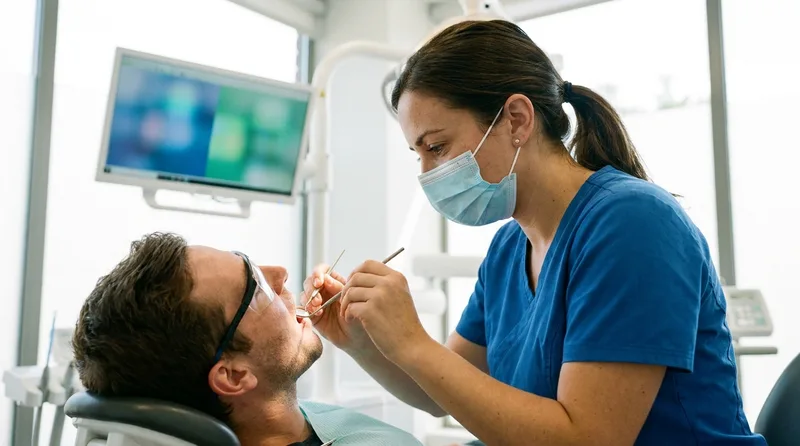
This evaluation typically includes an X-ray, which reveals the internal condition of the tooth beyond what's visible on the surface alone.
Imaging like this is standard practice before any cosmetic treatment. It ensures the plan accounts for everything happening beneath the surface, not just what's visible to the eye.
Recognizing more than one of these signs in your own smile makes you an even stronger potential candidate. A single concern is often enough to justify a consultation.
There's no minimum number of signs required before it's worth asking the question. Even one persistent concern is a reasonable enough reason to schedule an exam.
Waiting until you check every box on a list, rather than acting on genuine curiosity, only delays a decision. You could make that decision with confidence much sooner.
Some discoloration, especially stains from certain medications or deep internal staining, genuinely doesn't respond to whitening treatments at all. Veneers can address this kind of stubborn discoloration directly and reliably.
Our guide on how long veneers last covers what to expect once discoloration is addressed this way. This is often the deciding factor for patients who've already tried whitening without success.
This particular sign tends to be one of the clearest for patients to recognize in themselves, since it usually follows genuine frustration with a whitening routine that simply hasn't worked.
Tetracycline staining and fluorosis are two specific examples of discoloration that typically don't respond to whitening at all. This makes veneers one of the few reliable options for these cases.
If you've tried multiple whitening approaches without meaningful improvement, that pattern itself is a useful piece of information to bring to your consultation.
Mentioning specifically which whitening methods you've tried, and for how long, helps your dentist quickly assess your case. This helps determine whether veneers are the more appropriate next step.
Bringing any previous whitening trays, gels, or professional treatment records to your consultation gives your dentist even more useful context, if you still have them.
None of this is required, but every detail you can share helps your dentist reach an accurate recommendation more quickly. This can save you a follow-up visit in some cases.
The goal of a consultation is always the same: giving you a clear, specific answer about your own teeth rather than a generic response that could apply to anyone.
Walking away from that visit with a defined next step, whether that's moving forward with veneers or addressing something else first, is what a good consultation should give you.
Wondering if veneers are right for you?
A consultation gives you a clear, personalized answer based on your specific teeth.
Schedule a Consultation →Veneers can close small gaps and visually correct minor misalignment without full orthodontic treatment. This works well when the misalignment is cosmetic rather than a bite or jaw issue needing correction.

More significant misalignment usually calls for orthodontic treatment first. Our guide on clear aligners covers one option for correcting alignment before veneers.
Combining orthodontics with veneers, in the right sequence, often produces a more predictable result. This tends to last longer than veneers alone on significantly misaligned teeth.
Your dentist can advise on this sequencing during your initial consultation. This way you know upfront whether alignment work should come first or whether veneers alone will address your specific concern.
This kind of upfront honesty leads to a result you'll be satisfied with for years. That holds true even when it means a longer timeline than you hoped for.
Patients often appreciate this directness more in hindsight than they expected to at the time. It prevented a result that wouldn't have held up long-term.
Good candidates understand veneers enhance an already healthy smile rather than fixing every dental issue at once. A digital smile design preview helps set accurate expectations for the final result before treatment begins.
Our guide on digital smile design covers how this preview works. Patients who understand the process tend to be happiest with the final result.
Veneers change the appearance of the teeth they cover, not the entire structure of your bite or jaw. Understanding this distinction upfront prevents disappointment later in the process.
A dentist who takes the time to explain exactly what will and won't change is setting you up well. This helps you get a result you'll actually be happy with once treatment is complete.
This same transparency extends to timeline and process, so you know exactly what each appointment involves before you're sitting in the chair.
Feeling fully informed at every step of the process is one of the clearest signs of a good fit. It shows you've found a dental team genuinely invested in your outcome, not just the procedure itself.
Veneers require the same daily brushing and flossing as natural teeth, plus regular checkups every six months. Good candidates are willing to commit to this ongoing care to protect their long-term investment.
Patients who grind their teeth heavily may still be candidates. This applies as long as they're willing to wear a night guard to protect the veneers from excess wear.
| Good Candidate Signs | Needs Attention First |
|---|---|
| Minor chips, cracks, or wear | Active decay or gum disease |
| Discoloration resistant to whitening | Significant misalignment or bite issues |
| Small cosmetic gaps | Uncontrolled grinding without a night guard plan |
| Willingness to maintain long term | Insufficient remaining enamel |
Am I a candidate for veneers ultimately comes down to your specific teeth, health, and goals. There's no simple yes or no from a checklist alone. Regular dental visits catch 80% of oral health issues before they become serious, according to CDC oral health data. The same principle applies to confirming veneer candidacy early. Results may vary. Please consult with your dentist at Susan J. Curley DDS for personalized treatment recommendations.
If several of these signs sound familiar, a consultation is the most direct way to find out. It confirms whether veneers are the right fit for you.
Bringing a written list of your specific concerns, even a short one, helps make sure nothing gets overlooked once you're actually sitting down for the exam.
Find Out If Veneers Are Right for You
Schedule a consultation with Dr. Curley in Wall Township to get a direct answer.
Book Appointment →Have questions before booking?
Contact Our Wall Township Office →Written By
Dentist
Composite vs porcelain veneers: cost, durability, and finish compared to help you choose the right material for your smile goals.
How long do veneers last? Most last 10 to 15 years, depending on material, staining resistance, habits, and daily maintenance.
Temporary crown care tips: what to avoid eating, how to floss carefully, and what to do if it comes loose or falls off entirely.
Book your visit with Dr. Curley online or call us, and we'll take it from there.