Dental Implants
Same-Day Dental Implants: Who Is a Good Candidate?
Same day dental implants: who qualifies, how eligibility is determined, and what to realistically expect from treatment.
Sep 7, 20269 min read



Mini dental implants for dentures at our full mouth reconstruction practice give many patients frustrated with a slipping plate a more affordable, less invasive path to a stable, secure fit. They work differently than standard implants, and understanding those differences helps you know whether they're the right fit for your specific situation.
If you've grown used to adjusting how you eat or speak around a shifting denture, it's worth knowing that isn't the only option available. Mini implants specifically target that instability, often with less involved treatment than standard implant-supported solutions require.
Many patients considering mini implants have already tried adhesives, refitting, or a new denture altogether without lasting improvement. Mechanical stabilization through implants addresses the underlying issue rather than temporarily masking it the way adhesive does.
Traditional dentures rely on suction and adhesive alone, which is why they can shift while eating or talking. Nearly all Americans, 99.7% according to the American Academy of Cosmetic Dentistry, consider their smile an important social asset, and a stable, confident bite plays a real part in that. Mini implants anchor a denture mechanically instead, similar in concept to standard implants but with a smaller diameter and often a simpler placement process, consistent with the ADA's patient resources on dental implants. This guide covers how mini implants work, who they suit, and how they compare to standard implant options.
Mini dental implants are narrower titanium posts, generally less than half the diameter of standard implants, placed in the jawbone to anchor a denture using small ball or socket attachments. They work on the same basic principle as standard implants, just at a smaller scale.
Because of their smaller size, mini implants can sometimes be placed in bone that wouldn't support a standard implant without additional grafting. This makes them a practical option for denture wearers who've experienced bone loss over years of wearing a traditional plate.
The attachment mechanism is what actually stops the slipping most patients complain about. Once a denture clicks onto the mini implant attachments, it stays anchored during eating and speaking rather than shifting the way a traditional plate does.
This mechanical anchor also means less reliance on daily adhesive, which many long-time denture wearers find to be one of the more welcome changes. Mornings become simpler once you're no longer applying and reapplying adhesive throughout the day.
Mini implants are narrower, often require less bone volume, and typically involve a simpler placement procedure than standard implants. Standard implants generally offer more surface area for bite force and are the standard choice for a single missing tooth or larger restorations.
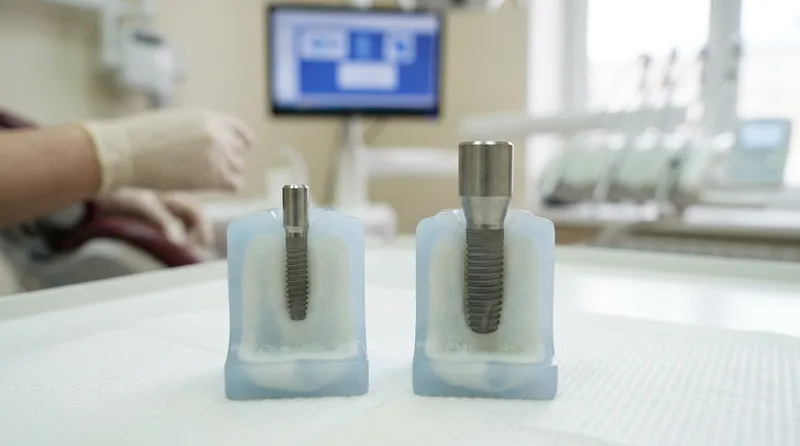
Neither option is universally better, they simply suit different situations. A patient with plenty of remaining bone and a goal of replacing a single tooth is generally better served by a standard implant, while a denture wearer focused specifically on stability often finds mini implants a more direct solution.
Good candidates typically include denture wearers frustrated with slipping or discomfort, patients with some bone loss who aren't ideal candidates for standard implants, and those looking for a more accessible path to a stable denture. A consultation and imaging confirm whether mini implants fit your case.
Age alone isn't a limiting factor for most candidates, since mini implants are frequently used successfully for patients across a wide range of ages who share the same underlying goal: a denture that stays put.
Overall health, medication use, and healing capacity matter more than age itself when it comes to candidacy. Your medical history, discussed during the consultation, factors into this evaluation alongside the imaging that confirms your available bone.
Mini implants aren't automatically the right choice just because they're less invasive. Patients with adequate bone and a preference for a fixed, non-removable restoration may still be better served by standard implants or an All-on-X approach, depending on their specific goals.
This is exactly why a consultation matters more than researching options in isolation. What works well for one denture wearer's specific bone structure and goals may not be the ideal fit for another, even with similar complaints about slipping.
| Factor | Mini Implants | Standard Implants |
|---|---|---|
| Bone needed | Generally less | More, may require grafting |
| Procedure complexity | Generally simpler | More involved surgical process |
| Best for | Denture stabilization specifically | Wide range of restorations |
| Relative cost | Generally lower | Generally higher |
Tired of a denture that won't stay put?
A consultation can confirm whether mini implants are a good fit for stabilizing your denture.
Schedule a Consultation →Mini implants anchor your denture using small ball attachments that snap into matching sockets built into the denture base, locking it in place mechanically rather than relying on suction alone. This is the same basic mechanism used by implant-supported overdentures with standard-size implants.
Our guide on implant-supported overdentures covers this attachment system in more detail. An existing denture can sometimes be retrofitted with these attachments, or a new denture can be designed specifically to work with mini implants from the start.
Most patients notice the difference immediately once the attachments engage. Foods that were previously difficult, like firmer fruits or chewier meats, become manageable again once the denture stops shifting mid-bite.
The mini implant process typically involves a consultation and imaging, placement of the implants, and fitting the denture with matching attachments, often completed in fewer visits than standard implant treatment. Some cases allow the denture to be stabilized the same day as placement.
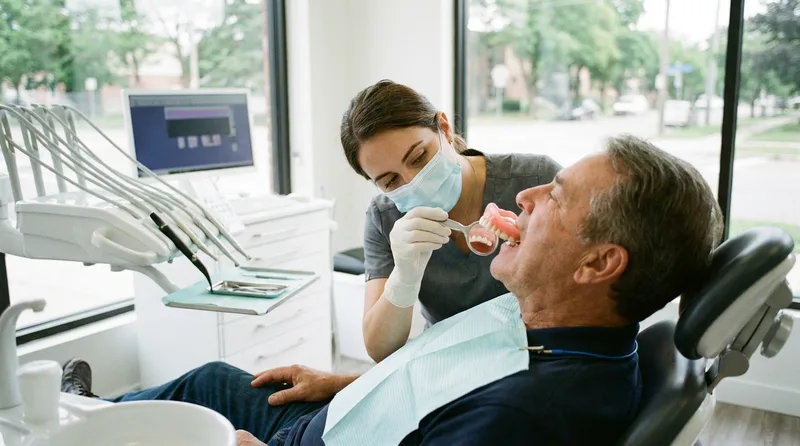
Placement itself is coordinated with a specialist, while Dr. Curley designs and fits the denture attachments that connect to the implants. This coordinated approach means one dental team tracking your case from consultation through the final, stabilized fit.
Because the placement procedure is generally simpler than standard implant surgery, healing time before the denture is fitted with attachments also tends to be shorter. Your specific timeline still depends on your individual case and bone healing.
Most patients describe the entire experience as more straightforward than they expected, especially compared to the multi-step process sometimes associated with full standard implant treatment. Fewer steps generally mean fewer total appointments to coordinate around your schedule.
Yes, mini implants are often a good alternative for patients who don't have enough bone volume for standard implants without grafting, since their narrower diameter requires less width to place successfully. This can mean skipping a separate grafting procedure entirely.
This matters most for long-time denture wearers, since the bone that once supported natural teeth continues to shrink the longer it goes without stimulation. Mini implants can sometimes work with exactly the kind of narrowed ridge that develops after years of wearing a traditional plate.
This doesn't mean bone grafting is never worth considering for denture stabilization. For some patients, grafting followed by standard implants remains the better long-term choice, particularly if a fixed, non-removable restoration is the ultimate goal rather than a removable denture.
Standard implants sometimes require a separate bone grafting procedure when bone volume is insufficient, adding months to that treatment timeline. Mini implants offer a path around that requirement for many, though not all, denture-stabilization cases.
If you've been told in the past that you don't have enough bone for implants, it's worth revisiting that conversation specifically around mini implants, since the calculation can be genuinely different than it was for a standard implant recommendation.
With proper care, mini implants can provide many years of reliable denture stability, though their smaller size means they may not carry quite the same long-term track record as standard implants for heavier bite forces. Regular checkups help confirm continued stability over time.
Dental implants have a success rate of 95 to 98% over 10 years, according to the Journal of Oral and Maxillofacial Surgery, and while this figure reflects standard implants specifically, mini implants benefit from the same fundamentals: good oral hygiene, regular checkups, and addressing any grinding habits that could affect long-term stability.
Attachment components inside the denture base can wear down gradually with normal use, similar to any mechanical connector, and are typically replaceable during a routine visit without needing to touch the implants themselves. This kind of minor maintenance keeps the overall system working well for years.
Mini implants are worth considering if a slipping denture has been affecting your daily life and you want a more accessible path to stability, especially if bone loss has made standard implants more complicated. A consultation gives you a direct answer for your specific case.
Cost is generally lower than standard implant-supported options, since fewer implants and a simpler procedure are typically involved, though your specific case determines the actual comparison. CareCredit and Sunbit financing are available regardless of which option ends up being the right fit.
Bringing your specific frustrations and goals to that consultation, rather than a general sense that "something needs to change," helps Dr. Curley recommend the option that actually addresses what's bothering you most about your current denture.
There's no obligation attached to simply asking the question. Many patients find that a single consultation, even if they're not certain they'll move forward, gives them enough clarity to make a confident decision either way.
Mini dental implants for dentures offer a genuine, well-established path to stability for many patients frustrated with a slipping plate. Following general oral health guidance from the CDC alongside your denture care supports a comfortable, healthy fit long-term. Results may vary. Please consult with your dentist at Susan J. Curley DDS for personalized treatment recommendations.
If a loose denture has been affecting how you eat, speak, or simply feel day to day, it's worth finding out whether mini implants could be the fix.
Ready for a Denture That Stays Put?
Schedule a consultation with Dr. Curley in Wall Township and find out if mini implants fit your case.
Book Appointment →Have questions before booking?
Contact Our Wall Township Office →Written By
Dentist
Same day dental implants: who qualifies, how eligibility is determined, and what to realistically expect from treatment.
The dental implant timeline: consultation, bone grafting if needed, placement, healing, and your final crown fitting, explained.
Bone grafting before dental implants: who actually needs it, what the process involves, and alternatives worth considering.
Book your visit with Dr. Curley online or call us, and we'll take it from there.