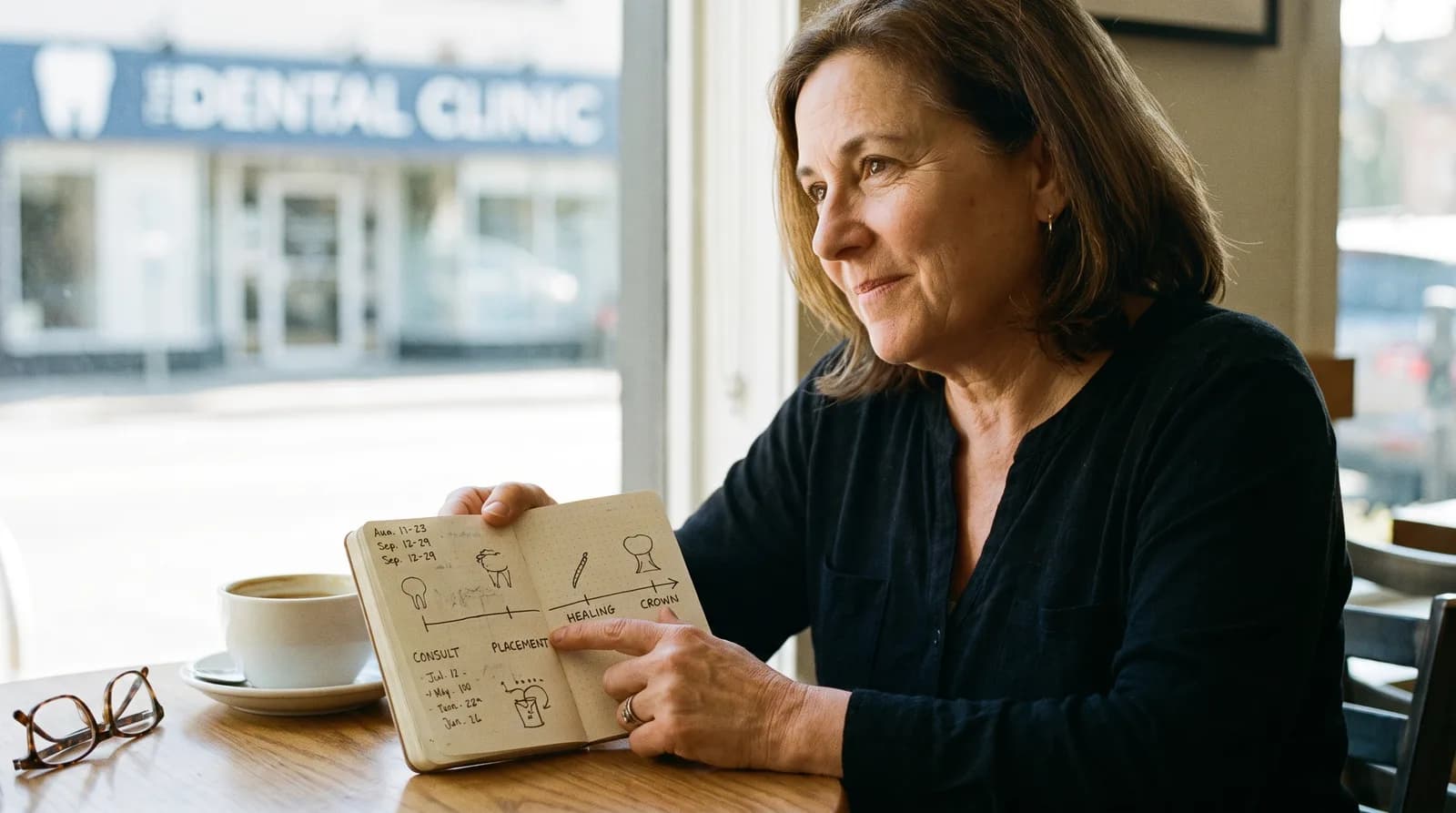
Dental Implants
Same-Day Dental Implants: Who Is a Good Candidate?
Same day dental implants: who qualifies, how eligibility is determined, and what to realistically expect from treatment.
Sep 7, 20269 min read


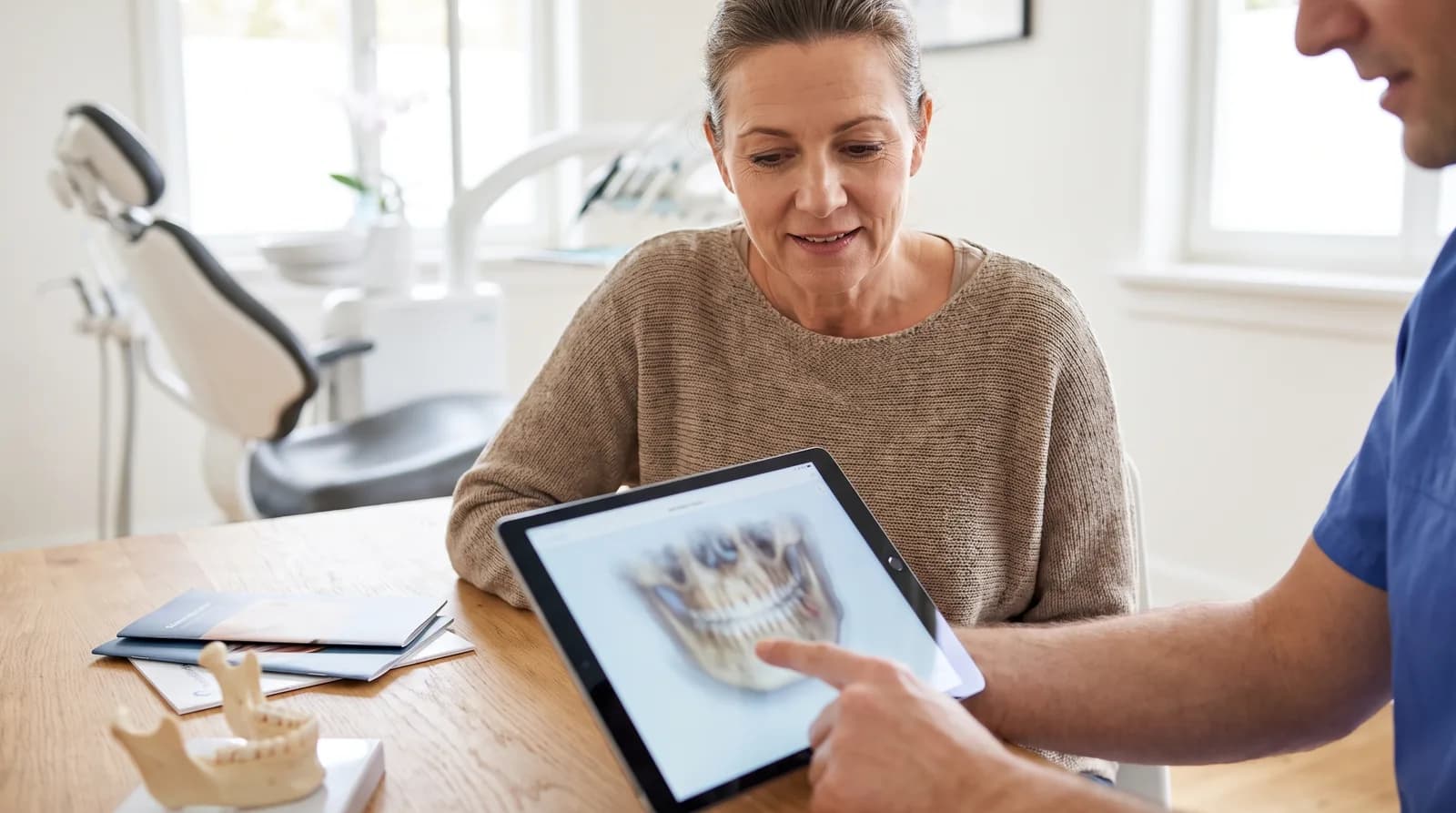
Bone grafting before dental implants sounds like a bigger step than it actually is for most patients considering restorative dentistry, and the truth is simpler than the worst-case assumption people often bring to a first consultation: many implant patients never need a graft at all. Whether you do depends on specific, measurable factors in your jawbone.
It's easy to find worst-case stories online about lengthy grafting timelines and multiple procedures, and understandably, those stories stick with people considering implants for the first time. What's less visible are the many straightforward cases that proceed directly to implant placement without any of that.
This guide is written for exactly that gap between perception and typical reality, so you can walk into a consultation with a clearer sense of what's likely rather than what's possible in the worst case. Most patients find the actual conversation with their dentist far less alarming than what they'd imagined beforehand.
Dental implants have a success rate of 95 to 98% over 10 years, according to the Journal of Oral and Maxillofacial Surgery, and having adequate bone is one of the main factors behind that consistency. This guide covers who actually needs grafting, who doesn't, and what the process looks like if you do, consistent with the ADA's patient resources on dental implants, so you can approach your consultation with realistic expectations rather than an assumption.
Not necessarily. Whether you need bone grafting depends on how much bone width and height remain at the implant site. This is measured through imaging rather than assumed based on how long a tooth has been missing. Many patients have enough bone and skip this step entirely.
The assumption that grafting is a standard, expected part of getting implants often comes from worst-case stories rather than typical outcomes. In practice, plenty of patients move from consultation to implant placement without any grafting involved, particularly when the tooth was lost relatively recently or the jawbone in that area was never significantly affected.
This is worth saying plainly, since the fear of needing a graft keeps some patients from even scheduling a consultation. An accurate answer takes a scan, not a guess, and that scan often brings better news than expected.
The main factor is how much bone width and height remain at the implant site. A dentist measures this using a CBCT scan rather than guessing from an X-ray alone. Enough bone in the right dimensions means an implant can typically be placed without any grafting.
Bone quality matters alongside quantity. Even adequate width and height can be softer or more porous than ideal in some patients, which a CBCT scan can also help assess. This is why the scan, not a visual exam alone, gives the most reliable answer.
This is also why relying on how a tooth looks or feels isn't a reliable way to predict whether grafting will be needed. Bone changes happen beneath the gum line, invisible to both patient and dentist without imaging, which is exactly the gap a CBCT scan closes.
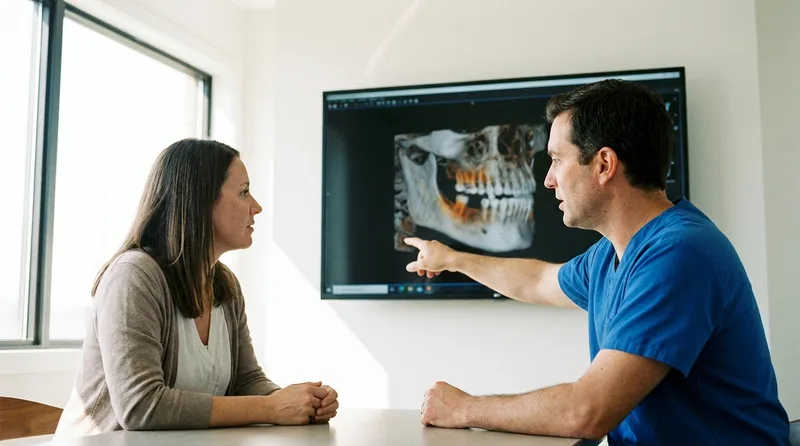
A CBCT scan captures a detailed 3D image of your jawbone, showing exact width, height, and density at the proposed implant site in a way a standard 2D X-ray can't. This is the step that actually answers whether grafting is needed, rather than guessing beforehand.
The scan takes less than a minute, and the resulting 3D model gives your dentist a complete picture before any treatment decision is made. Nothing about the scan itself is invasive or uncomfortable, which makes it a low-effort way to get a real answer early.
Our guide on CBCT imaging for implant planning covers this scan in more detail, including what the visit itself involves. The scan itself is quick and low-radiation, and results are usually reviewed with you the same visit.
Wondering if you'll need a bone graft?
A CBCT scan gives you a real answer, rather than an assumption, before any treatment plan is finalized.
Schedule a Consultation →Bone grafting involves adding graft material to the area needing more bone volume, then allowing several months of healing before the area is dense enough to support an implant. The specific technique and timeline depend on how much bone is needed.
Graft material can come from your own bone, a donor source, or a synthetic substitute, depending on the size and location of the area needing correction. Your dentist selects the option best suited to your specific situation, weighing healing time against the amount of bone needed.
Local anesthetic is used for the grafting procedure itself, similar to any other minor dental surgery, and most patients describe manageable discomfort afterward that resolves within a few days. This is generally a well-tolerated procedure, not the ordeal some patients expect going in.
Minor grafting can sometimes happen at the same time as implant placement, while more significant bone loss requires a separate procedure and healing period before the implant itself is placed. Your dentist will explain which category your specific case falls into based on your CBCT results.
This distinction matters for planning purposes. A same-day graft keeps your overall timeline shorter, while a staged approach adds a separate healing period but is sometimes the more predictable path for larger bone deficits. Neither approach is inherently better, they simply fit different situations.
Healing after a bone graft typically takes 3 to 6 months before the site is ready for implant placement, though this varies based on the amount of grafting needed and individual healing factors. Minor grafts sometimes require less time.

This healing period is often the part patients find most frustrating, since it adds time before the implant itself can move forward. Framing it as a necessary investment in a stable, long-lasting result, rather than an unwelcome delay, tends to make the wait easier to accept.
Regular checkups during this healing window let your dentist confirm the graft is integrating as expected, well before your next scan officially clears you for implant placement. Most patients find this period passes faster than the original estimate felt at the start.
Some patients use this waiting period productively, addressing any other dental needs, like a cleaning or an unrelated filling, so the eventual implant visit is the last remaining step rather than one item on a longer list.
In some cases, alternatives like shorter implants, angled placement, or an implant-supported overdenture using fewer implants can work around limited bone without a full graft. Whether these apply depends on your specific anatomy and goals.
| Option | Best For |
|---|---|
| Bone graft | Significant bone loss, standard implant desired |
| Shorter or angled implants | Mild to moderate bone limitations |
| Implant-supported overdenture | Full arch cases with limited bone, fewer implants needed |
| Dental bridge | Patients preferring to avoid implants and grafting entirely |
Our guide on implant-supported overdentures covers one such alternative in more detail. A dental bridge is another option worth discussing if grafting isn't appealing, though it comes with its own trade-offs around neighboring teeth and longevity.
None of these alternatives are automatically better than grafting, they simply shift the trade-offs. A shorter implant may have a slightly different long-term outcome than a standard-length one, and an overdenture involves different daily care than a fixed restoration. Your dentist can walk through what each option actually means for your specific goals.
Cost and timeline also factor into this decision alongside the clinical considerations. An alternative that avoids grafting might mean a shorter overall timeline, which matters for patients eager to complete treatment, while grafting followed by a standard implant might better suit someone prioritizing a specific long-term outcome over speed.
There's no universally correct choice among these options, only the one that fits your specific bone structure, timeline, and priorities best. That's exactly the kind of decision worth making alongside your dentist rather than researching in isolation beforehand.
Discussing your priorities directly with your dentist, whether that's speed, long-term outcome, or avoiding a second procedure entirely, helps narrow these options faster than trying to weigh every factor on your own beforehand.
Most implant cases benefit from a CBCT scan to confirm bone volume before finalizing a treatment plan, though very straightforward single-tooth cases with obviously adequate bone sometimes proceed with more limited imaging. Your dentist will recommend what's appropriate for your specific case.
Full-arch cases, cases near the sinus or major nerves, and any situation where bone volume looks uncertain almost always call for a CBCT scan given how much planning detail it provides. Regular dental visits catch 80% of oral health issues before they become serious, according to the ADA, and the same principle of catching issues early applies to implant planning. This step exists to give you an accurate answer, not to create extra steps for their own sake.
Following general oral health guidance from the CDC alongside thorough imaging-based planning supports the strong long-term outcomes implants are known for. If your dentist recommends a CBCT scan, it's worth understanding that recommendation as thoroughness, not an assumption that something is wrong.
Bone grafting before dental implants is a real consideration for some patients, but it's far from universal, and an accurate answer requires imaging rather than assumption. Results may vary. Please consult with your dentist at Susan J. Curley DDS for personalized treatment recommendations.
If you've been putting off an implant consultation out of worry about needing a bone graft, a CBCT scan is the clearest way to find out whether that concern actually applies to you. Many patients leave that scan relieved to learn grafting isn't part of their plan at all.
Find Out What Your Case Actually Needs
Schedule a consultation with Dr. Curley in Wall Township and get a clear answer about bone grafting for your case.
Book Appointment →Have questions before booking?
Contact Our Wall Township Office →Written By
Dentist
Same day dental implants: who qualifies, how eligibility is determined, and what to realistically expect from treatment.
Mini dental implants for dentures: how they stabilize a slipping plate, who qualifies, and how they compare to standard implants.
The dental implant timeline: consultation, bone grafting if needed, placement, healing, and your final crown fitting, explained.
Book your visit with Dr. Curley online or call us, and we'll take it from there.