Restorative Dentistry
Chipped Tooth Repair Options Same Day: What to Know
Chipped tooth repair options same day: dental bonding vs a same-day crown, what to do right now, and what your emergency visit will look like.
Aug 23, 202610 min read


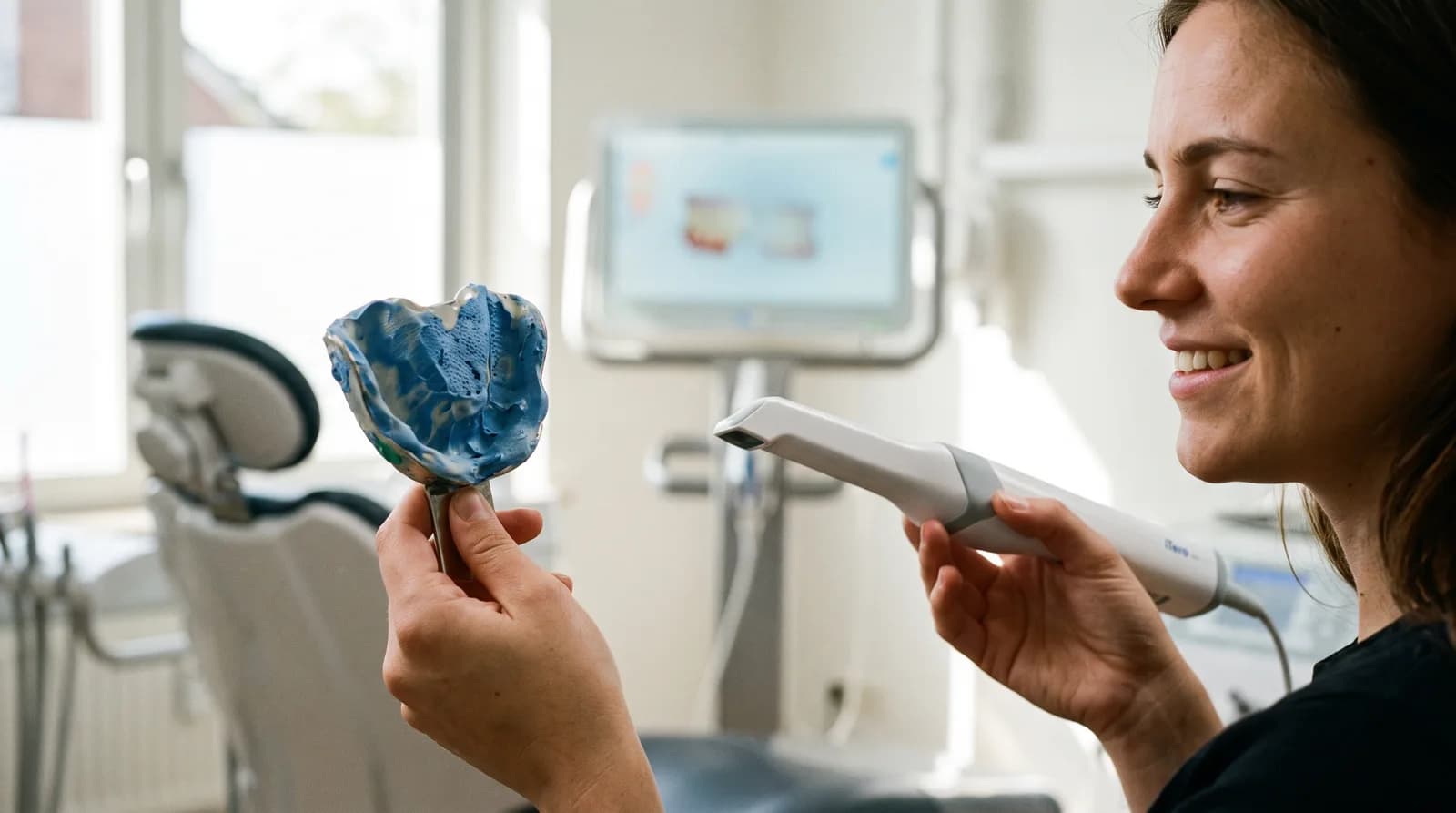
If you have had a crown, a retainer, or Invisalign made in the last decade, you probably remember the impression. A tray loaded with rubbery material was pressed into your mouth and held there for several minutes while you were told not to swallow. It worked, but it was uncomfortable, and the results were imprecise enough that bite adjustments afterward were routine. At Susan J. Curley DDS, that experience no longer exists. The practice uses iTero 3D scanning, an intraoral iTero 3D scanning dentist technology that replaced traditional impressions at this practice years ago, and the difference for patients is immediate and obvious from the first moment the scanner is in the room.
This article explains what iTero scanning is, how it compares to traditional impressions, and why the shift matters for the accuracy of your dental treatment, not just your comfort in the chair.
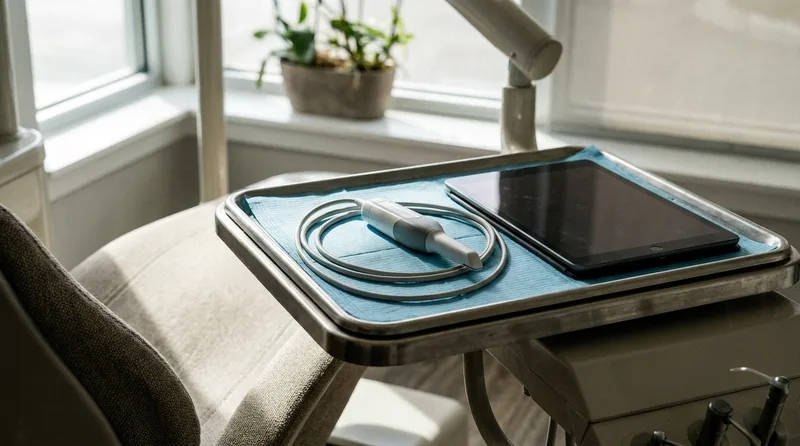
iTero is a digital intraoral scanner that captures a precise 3D model of the teeth using a small handheld wand, building the model in real time on a screen as it moves through the mouth. The scan takes two to five minutes and requires no impression material of any kind.
iTero is a digital intraoral scanner that captures a precise three-dimensional model of your teeth, gums, and bite using a small handheld wand. The wand is moved slowly through the mouth while a continuous stream of optical images builds a full digital model in real time on the screen. The entire scan typically takes two to five minutes, requires no materials to be placed in the mouth, and produces a data file that can be sent digitally to a dental laboratory or to Invisalign's treatment planning system within seconds.
The resulting 3D model is more geometrically accurate than a physical impression and can be rotated, zoomed, and analyzed from any angle. It eliminates the physical handling, shipping, and replication errors that occur when a traditional mold is poured and cast into a model at the lab. Because the file is digital, it can also be stored permanently, retrieved at any time, and used for comparison at future appointments to track changes in tooth position or wear over time.
At Susan J. Curley DDS, the iTero scanner is used for Invisalign treatment planning, crown and restoration fabrication, nightguard and retainer fitting, and the digital smile design process that allows patients to preview cosmetic outcomes before any treatment begins.
Traditional dental impressions involved pressing trays of setting material against the teeth, waiting for it to harden, and removing it carefully. The process was uncomfortable, had a meaningful failure rate requiring retakes, and introduced dimensional errors at multiple points in the laboratory process.
Traditional dental impressions involved pressing a horseshoe-shaped tray filled with alginate or polyvinyl siloxane material against the teeth and holding it in place for several minutes while the material set. The process had a high rate of patient discomfort, a meaningful rate of incomplete or failed impressions requiring retakes, and built-in inaccuracies from the physical handling and laboratory steps that followed.
The specific problems with traditional impressions included material shrinkage as it set, distortion during removal, dimensional changes during shipping to the lab, pouring errors when the impression was converted into a plaster model, and the simple reality that even a slight movement during the impression could introduce error. Each of these steps added variability to the final result, which is why fitting adjustments on crowns and other restorations were so routinely expected.
For patients with a strong gag reflex, upper arch impressions could be genuinely distressing, and some patients avoided necessary treatment specifically because they dreaded the impression process. Pediatric patients, anxious patients, and patients with limited mouth opening all experienced disproportionate difficulty with traditional molds. These were not minor inconveniences but real barriers to care that digital scanning eliminates entirely.
Research on iTero 3D scanning dentist applications shows digital scans produce mean deviations under 50 microns from actual tooth dimensions, comparable or superior to traditional impressions. Studies also find significantly fewer remakes and chairside adjustments when digital scanning is used.
Research published in peer-reviewed dental literature has found that digital intraoral scanning produces comparable or superior accuracy to traditional impression methods, with studies finding that digital scans have a mean deviation from actual tooth dimensions of less than 50 microns, according to that research. For crown and restoration fabrication, this level of precision translates directly to better-fitting restorations that require fewer chairside adjustments.
For Invisalign treatment specifically, iTero is the system designed and validated by Align Technology, the company that makes Invisalign aligners. Scans taken with iTero integrate directly with Invisalign's ClinCheck treatment planning software, which generates the digital simulation of tooth movement that patients review before treatment begins. The precision of the scan is the foundation of the entire treatment plan, which is why the quality of the starting data directly affects the accuracy of the aligner series.
One study found that digital impressions resulted in approximately 30% fewer crown remakes compared to conventional impressions, according to published clinical data on intraoral scanning outcomes.
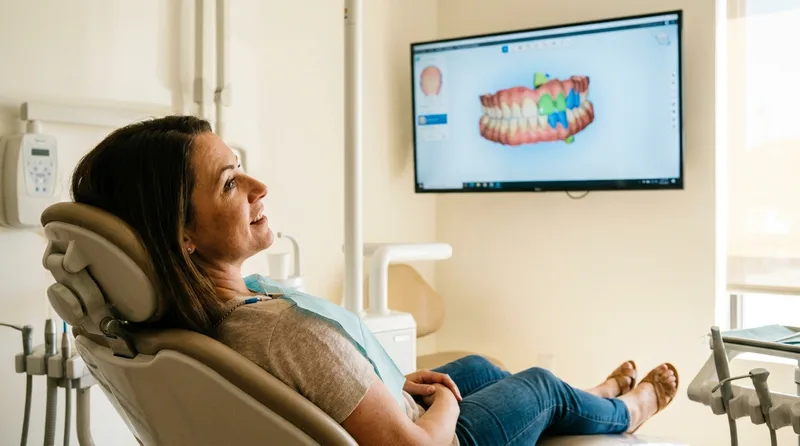
The iTero scan uses a slim wand moved gently through the mouth with no materials, no pressure, and no gagging. Most patients describe it as simply having a wand moved around their mouth for a few minutes, and many find watching their teeth appear in 3D on the screen genuinely interesting.
The iTero scan is performed with a slim handheld wand that is moved slowly through the mouth. Nothing is pressed against the teeth with pressure, nothing sets or hardens, and nothing has to be held in place. The scanner emits harmless light to capture optical images; the process is entirely non-invasive and requires no contact beyond the gentle positioning of the wand near the tooth surfaces.
Most patients describe the experience as simply having a wand moved around their mouth for a few minutes, which is accurate. There is no gagging, no taste, no waiting for material to set, and no moment of removal that can distort a fragile impression. The live 3D model builds on the screen in real time, which patients often find interesting to watch, particularly when their tooth shapes become recognizable as the scan progresses.
For patients who have historically avoided dental treatment due to gag reflex issues or anxiety around impressions, the shift to digital scanning is often the change that makes certain procedures accessible for the first time. The scanner can be paused, repositioned, and resumed at any point, giving both the patient and the clinician full control over the pace of the process.
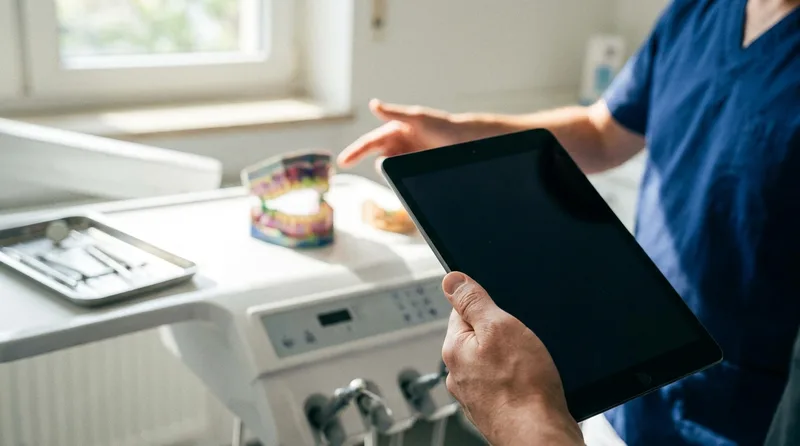
The iTero Outcome Simulator uses the scan data to generate a real-time visual prediction of Invisalign results, showing patients a personalized before-and-after of their own teeth before they commit to treatment. It is built into the scanner and requires no additional appointment or preparation.
One of the most compelling features of the iTero scanner that goes beyond impression replacement is the Outcome Simulator, a built-in tool that uses the digital scan data to generate a real-time visual prediction of what the teeth would look like after Invisalign treatment. Patients can see a before-and-after comparison of their own teeth on the screen before committing to treatment.
This predictive capability changes the consultation conversation entirely. Rather than describing what Invisalign might achieve in general terms, Dr. Curley can show each patient a personalized projection based on the actual geometry of their teeth. The simulation is not a guarantee of a specific outcome, but it provides a realistic visual reference that helps patients make more informed decisions about whether to proceed and what to expect.
The same scan data used for the Outcome Simulator feeds directly into the ClinCheck treatment plan when a patient decides to move forward with Invisalign, which means no additional scanning is needed to start treatment. The consultation and the start of planning happen from a single scan session.
The iTero 3D scanning dentist workflow at Susan J. Curley DDS covers Invisalign, crowns and restorations, nightguards and retainers, digital smile design, and long-term monitoring. Each application benefits from the precision and speed of digital scanning over traditional molds.
The iTero scanner is used across multiple treatment types at the practice, replacing traditional impressions wherever precision, efficiency, and patient comfort can be improved.
Better starting data means better treatment outcomes. A more accurate digital scan produces better-fitting crowns, a more precisely planned aligner series, and fewer adjustments after delivery, saving time for both the patient and the practice.
The shift from traditional impressions to digital scanning is not primarily about comfort, though comfort matters. It is about the quality of the data that drives every downstream treatment step. A more accurate starting model means a better-fitting crown, a more precisely planned aligner series, and fewer adjustment appointments after delivery.
According to the American Dental Association, digital impression technology represents a meaningful advancement in restorative and orthodontic dentistry, offering improved accuracy and patient experience compared to conventional methods.
At Susan J. Curley DDS in Wall Township, NJ, the commitment to current technology is part of a broader approach to providing care that is more comfortable, more accurate, and more efficient than the standard. If you have questions about how iTero scanning fits into your specific treatment plan, or if you would like to schedule a consultation that includes a scan, visit susanjcurleydds.com/about to learn more about the technology in use at the practice, or call the office to book directly.
Experience the difference digital scanning makes.
Book a consultation at Susan J. Curley DDS in Wall Township, NJ and see your teeth in 3D for the first time.
Request an AppointmentiTero scanning is used across several treatments at Susan J. Curley DDS. The links below go deeper on two of the procedures where it plays the most central role.
Results may vary. Please consult with your dentist at Susan J. Curley DDS for personalized treatment recommendations.
Written By
Dentist
Chipped tooth repair options same day: dental bonding vs a same-day crown, what to do right now, and what your emergency visit will look like.
TMJ symptoms you shouldnt ignore: jaw clicking, locking, headaches, and ear discomfort, what causes them, and when to see a dentist.
Root canal treatment what to expect: the step-by-step process, sedation options, appointment length, and recovery from a patient-comfort perspective.
Book your visit with Dr. Curley online or call us, and we'll take it from there.