Restorative Dentistry
Chipped Tooth Repair Options Same Day: What to Know
Chipped tooth repair options same day: dental bonding vs a same-day crown, what to do right now, and what your emergency visit will look like.
Aug 23, 202610 min read



TMJ symptoms you shouldnt ignore usually show up gradually: a jaw that clicks when you chew, morning stiffness, or headaches that seem to come from nowhere. TMJ refers to the temporomandibular joint, the hinge connecting your jawbone to your skull, and problems there are more common than most people realize.
Many patients live with mild jaw discomfort for months before mentioning it at a dental visit, often assuming it's just stress or a habit they'll grow out of. This guide walks through the symptoms worth paying attention to, what typically causes them, and when it's time for a restorative dentistry evaluation rather than waiting it out.
TMJ symptoms include jaw discomfort or tenderness, clicking or popping when you open your mouth, difficulty chewing, and a jaw that occasionally locks in place. Any of these on their own is worth noting, and a combination is worth an evaluation, as outlined in the ADA's patient education library.
The temporomandibular joint works every time you talk, chew, or yawn, which means small problems there tend to show up constantly rather than occasionally. Unlike a sore muscle that rests when you're not using it, this joint gets almost no downtime, so symptoms often build gradually rather than appearing all at once.
These symptoms don't need to appear all at once to be worth noting. Many patients start with just one, like occasional clicking, and only later notice discomfort or fatigue joining in. Tracking when symptoms show up and what seems to trigger them, whether that's stress, certain foods, or waking up after a night of grinding, gives your dentist useful information at the evaluation. If more than one of these signs applies to you, consider it worth mentioning at your next visit:
Jaw discomfort when chewing is one of the most common TMJ symptoms, but it doesn't automatically confirm a TMJ disorder on its own. Other causes, like a cracked tooth or sinus pressure, can produce similar sensations.
What sets TMJ-related chewing discomfort apart is usually its pattern: it tends to worsen with harder or chewier foods, ease up with rest, and often comes paired with clicking or a feeling of muscle fatigue in the jaw rather than a single sharp sensation tied to one tooth. A dental exam can distinguish between a joint issue, a tooth issue, and referred discomfort from elsewhere.
One helpful way to narrow things down at home, before your appointment, is paying attention to timing. Discomfort that shows up specifically during or right after meals, especially with tougher foods like steak or raw vegetables, points more toward the joint. Discomfort that's constant regardless of eating, or that's isolated to one specific tooth, is more likely dental in origin. Either way, the exam is quick and the distinction matters for how treatment moves forward.
Jaw clicking or locking typically happens when the small disc that cushions the temporomandibular joint shifts out of its normal position. The sound or catching sensation occurs as the jaw moves the disc back into place or around it.
This disc displacement can develop from jaw injury, chronic teeth grinding, joint inflammation, or simply from the joint's own wear over time. Clicking without any discomfort is common and doesn't always need treatment, but clicking paired with locking, discomfort, or a limited range of motion is a stronger signal that the joint needs attention.
Locking is generally the symptom that pushes people to finally schedule an appointment, since a jaw that gets stuck, even briefly, is hard to ignore and can be alarming the first time it happens.
Not all clicking needs treatment right away. A joint that clicks consistently but painlessly, moves through its full range, and doesn't lock, is sometimes simply monitored over time rather than treated immediately. What changes that calculus is any new discomfort, a shrinking range of motion, or locking that starts happening more frequently, since those signal the joint's condition may be progressing rather than staying stable.
Yes, TMJ symptoms commonly radiate to nearby areas, causing headaches, ear discomfort, or a feeling of fullness in the ear, since the joint sits directly in front of the ear canal. These referred symptoms are often mistaken for unrelated issues.
Many patients see a doctor for recurring headaches or ear-related concerns for months before a dentist identifies the temporomandibular joint as the actual source. Tension-type headaches that concentrate around the temples, along with a dull ache near the ear that isn't explained by an ear infection, are common patterns worth mentioning during a dental visit if you also notice jaw clicking or chewing discomfort.
This overlap is part of why TMJ symptoms get missed for so long. A headache specialist may not think to ask about jaw clicking, and an ear, nose, and throat doctor may rule out an ear infection and stop there, without connecting the dots to the joint sitting just in front of the ear canal. Mentioning jaw symptoms specifically, even if they seem unrelated to the headache or ear concern you're actually there for, often speeds up getting the right diagnosis.
Dealing with unexplained headaches or ear discomfort?
A jaw evaluation at our Wall Township office can help identify whether TMJ is the underlying cause.
Schedule an Evaluation →Common causes of TMJ symptoms include teeth grinding or clenching, jaw injury, arthritis in the joint, chronic stress, and a bite that doesn't align evenly. Often, more than one factor contributes at once.
Teeth grinding, frequently tied to stress or sleep patterns, places repetitive strain on the joint and surrounding muscles, particularly overnight when most people aren't aware they're doing it. An uneven bite forces the jaw to compensate constantly, which fatigues the joint over time even without any single injury. Arthritis, though less commonly discussed, affects the temporomandibular joint the same way it affects other joints in the body.
It's common for more than one of these factors to overlap. Someone under significant stress may start clenching at night, which then reveals a bite misalignment that had been mild and unnoticed for years. Nearly 1 in 4 adults in the US has untreated tooth decay, according to CDC data, and an uneven bite from decay-related tooth loss or shifting can be one of those overlapping contributors. Identifying every contributing factor matters because treating just one, like fitting a night guard while ignoring an uneven bite, sometimes only partially resolves the symptoms.
See a dentist about TMJ symptoms if jaw discomfort lasts more than a week or two, if your jaw locks even briefly, or if clicking is joined by discomfort, swelling, or a noticeable change in your bite. Earlier evaluation generally means simpler treatment.
Regular dental visits catch 80% of oral health issues before they become serious, according to the CDC's overview of oral health, and TMJ symptoms are no exception. A dentist familiar with your bite and jaw movement over time is often better positioned to catch subtle changes than a first-time evaluation elsewhere. Waiting rarely makes joint-related symptoms resolve on their own, and untreated cases sometimes progress to the point where the joint itself sustains lasting changes.
There's no need to wait for symptoms to become severe before scheduling. A quick evaluation when symptoms first appear is usually far simpler, and less costly, than treatment after months of unaddressed strain on the joint. If you're already coming in for a routine cleaning and have noticed any jaw clicking or discomfort, mentioning it during that visit is an easy way to get ahead of it.
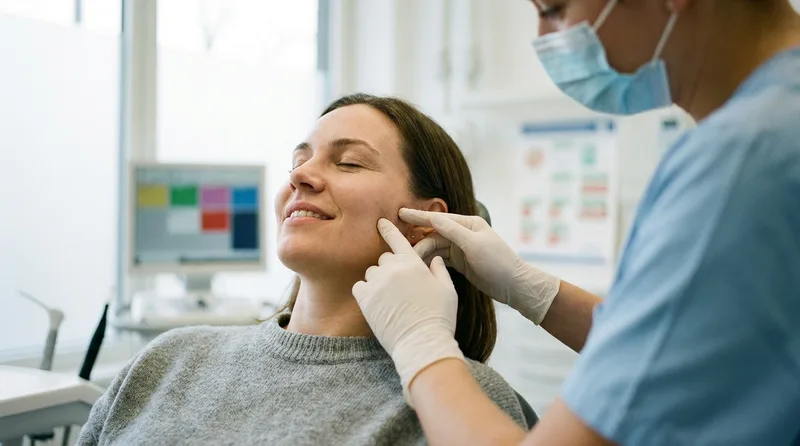
A TMJ evaluation typically includes a physical exam of the jaw's range of motion, listening for clicking or grinding sounds, checking your bite alignment, and reviewing your symptom history. Imaging is sometimes added for a more detailed look at the joint.
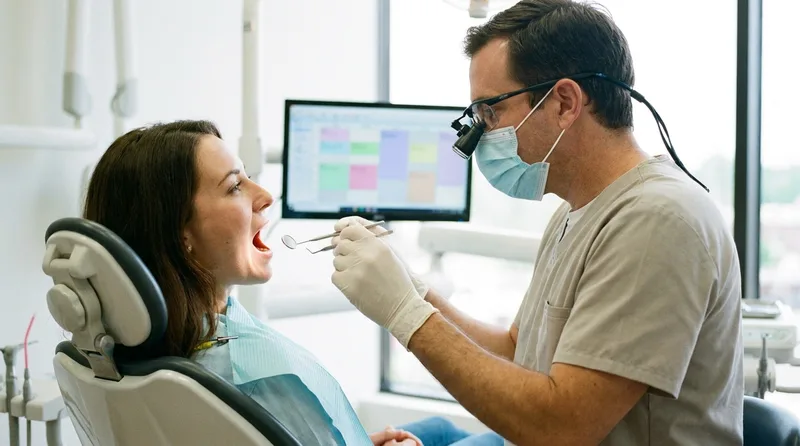
Dr. Curley will ask about when symptoms started, what makes them better or worse, and whether you notice grinding or clenching, particularly overnight. Gently feeling the joint while you open and close your mouth reveals a lot about where the discomfort originates and how the joint is tracking. Depending on findings, a night guard, bite adjustment, or referral for further evaluation may follow.
The whole evaluation typically fits within a standard appointment and doesn't require anything uncomfortable or invasive. Most of what's needed comes from watching how your jaw moves, listening closely during that movement, and asking the right questions about your daily habits, especially ones you might not think to mention, like chewing gum frequently or resting your chin on your hand.
Treatment options for TMJ symptoms range from a custom night guard and bite adjustments to physical therapy exercises and, in persistent cases, referral to a specialist. Most cases respond well to conservative treatment first.
A night guard is often the first line of treatment when grinding is a factor, since it reduces the pressure placed on the joint overnight without requiring any permanent change to your teeth. Bite adjustments address cases where uneven contact between teeth is straining the joint. Simple jaw stretches and posture adjustments can also relieve mild symptoms, and Dr. Curley can walk through which combination fits your specific pattern of symptoms.
| Treatment | Best For |
|---|---|
| Custom night guard | Grinding or clenching, especially overnight |
| Bite adjustment | Uneven contact between teeth straining the joint |
| Jaw stretches and posture care | Mild, early-stage symptoms |
| Specialist referral | Persistent cases not responding to conservative care |
Most patients see meaningful improvement from conservative treatment alone, and more involved options are generally reserved for cases that don't respond after a fair trial of the simpler approaches first.
TMJ symptoms you shouldnt ignore tend to share a common thread: they're persistent, they cluster together, and they don't fully resolve with rest. Catching them early usually means simpler, less invasive treatment. Results may vary. Please consult with your dentist at Susan J. Curley DDS for personalized treatment recommendations.
If jaw clicking, discomfort, or unexplained headaches have been part of your routine for weeks, it's worth having them looked at rather than assuming they'll pass.
Noticing TMJ Symptoms?
Schedule a jaw evaluation with Dr. Curley in Wall Township and get a clear picture of what's causing your symptoms.
Book Appointment →Have questions before booking?
Contact Our Wall Township Office →Written By
Dentist
Chipped tooth repair options same day: dental bonding vs a same-day crown, what to do right now, and what your emergency visit will look like.
Root canal treatment what to expect: the step-by-step process, sedation options, appointment length, and recovery from a patient-comfort perspective.
Implant supported overdentures explained: how they differ from traditional dentures and All-on-X, who qualifies, and what the process involves.
Book your visit with Dr. Curley online or call us, and we'll take it from there.