smile-design
Your First Smile Makeover Consultation: What to Expect
Your first smile makeover consultation: what to expect, from the goals discussion to your digital smile design preview and plan.
Sep 20, 20268 min read


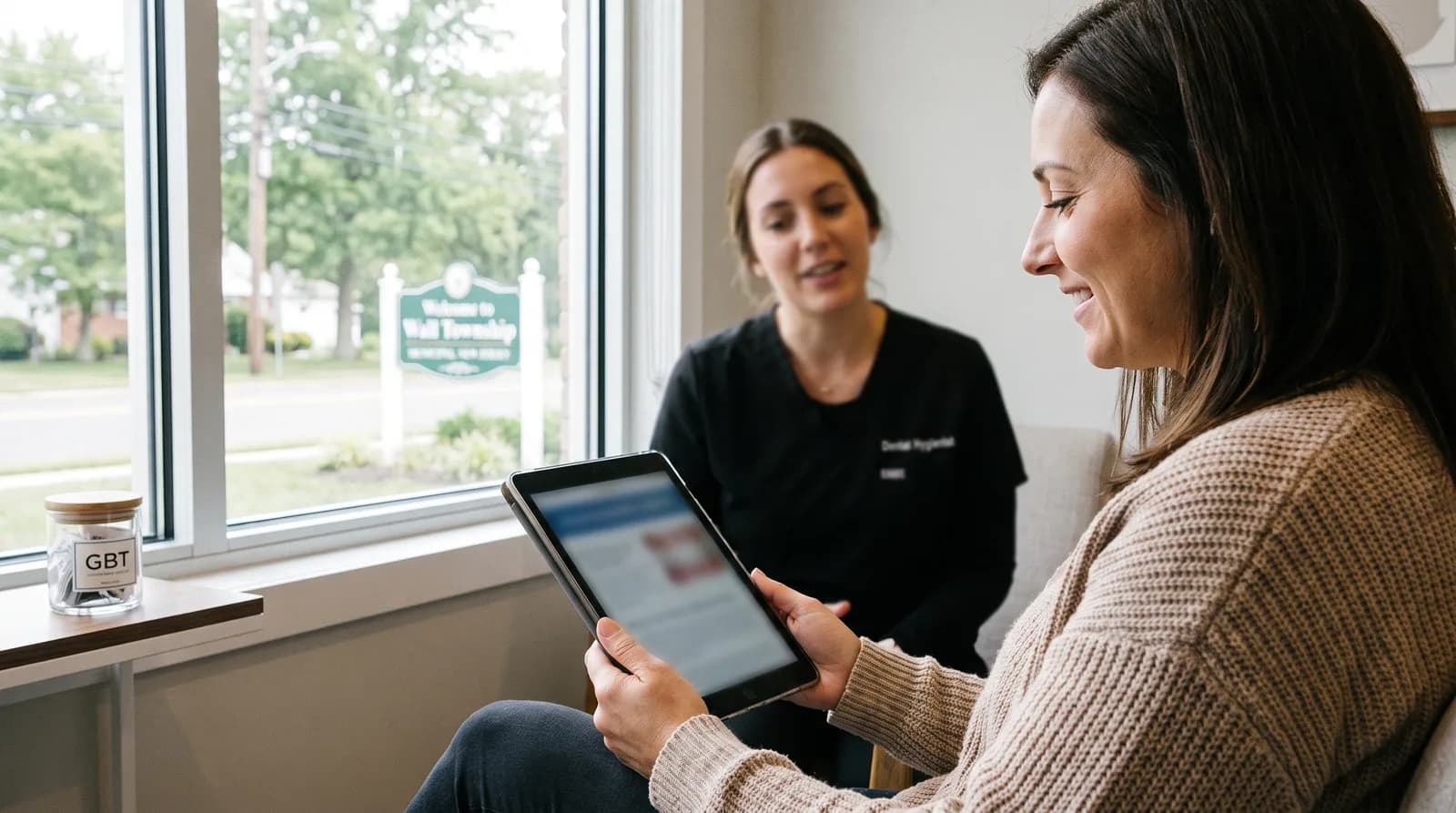
Guided biofilm therapy vs traditional cleaning comes down to how plaque gets removed: GBT swaps most scraping for a warm air, water, and fine powder spray guided by a disclosing dye, while a traditional cleaning relies on metal hand and ultrasonic scalers from the start. Both approaches remove plaque and stain, they just get there differently, and patients notice the difference almost immediately. If you've been putting off a cleaning because the last one left your gums sore, this guided biofilm therapy vs traditional cleaning comparison walks through exactly how each one works and which fits your mouth.
Susan J. Curley DDS offers guided biofilm therapy as part of its periodontal treatment services, alongside traditional deep cleanings for patients further along in gum disease. Here's what sets the two apart, and how to know which one your mouth actually needs.
Guided biofilm therapy, often called GBT or Airflow cleaning, is a technology-guided cleaning method that uses a disclosing solution to stain plaque, then removes it with a warm air and water spray carrying fine powder. It's a full protocol, not just a gadget swapped in for the old one.
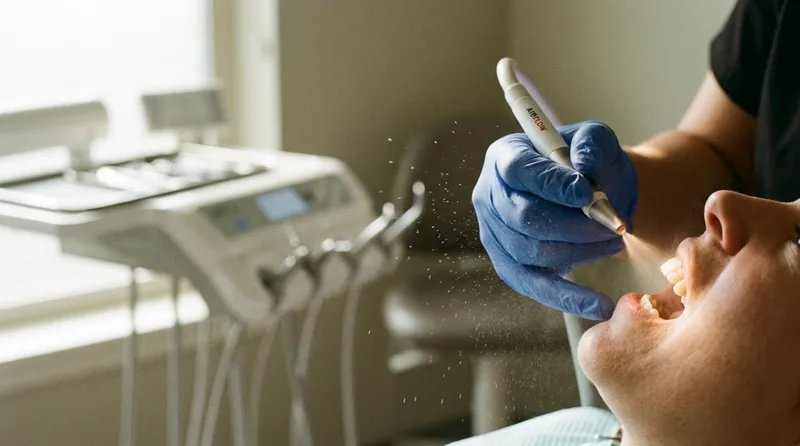
The process starts with a disclosing dye that turns biofilm (the sticky layer of bacteria that forms on teeth between visits) a visible color, so the hygienist can see exactly where it's hiding. Airflow technology then sprays the surfaces clean using erythritol powder, which is gentle enough for daily biofilm removal but effective enough to lift years of surface stain in one visit. According to the CDC, 42% of adults aged 30 and older have some form of periodontal disease, and biofilm buildup is the starting point for nearly all of it. Removing it thoroughly, before it hardens into tartar, is the whole point of GBT.
Traditional metal scalers still have a role. GBT handles biofilm and surface stain, but hardened tartar below the gumline still needs manual or ultrasonic scaling to remove. Most guided biofilm therapy appointments combine both.
For the full walkthrough of the eight-step GBT protocol and who benefits most, see our complete guide to guided biofilm therapy in Wall Township.
Guided biofilm therapy replaces most manual scraping with an air-powder spray guided by a biofilm-staining dye, while a traditional cleaning relies primarily on hand and ultrasonic scalers from the start. Both remove plaque and stain. They just get there differently, and patients feel that difference almost immediately.
A traditional cleaning is a proven, effective method that's been the standard for decades. It works by mechanically scraping deposits off the tooth surface, above and below the gumline, using metal instruments and often an ultrasonic scaler for tougher buildup. It's thorough, but it can feel more intense on sensitive teeth or inflamed gums. Guided biofilm therapy front-loads a gentler, powder-based pass that clears the bulk of the plaque and stain first, so any remaining scaling is faster and more targeted.
| Factor | Guided Biofilm Therapy | Traditional Cleaning |
|---|---|---|
| Primary tool | Air, water, and erythritol powder spray | Hand scalers and ultrasonic instruments |
| Sensation | Warm, gentle spray with minimal vibration | Scraping pressure, more noticeable on sensitive teeth |
| Stain removal | Very effective, including coffee and wine stain | Moderate, may need separate polishing step |
| Below the gumline | Reaches shallow pockets; deep tartar still needs scaling | Handles hardened tartar directly |
| Best for | Healthy to mildly inflamed gums, stain-prone patients | Moderate to advanced tartar buildup or gum disease |
Curious which cleaning fits your mouth?
Dr. Curley can tell you within one exam whether guided biofilm therapy alone will do the job or whether you need a combination approach.
Request an Appointment →Yes, most patients describe guided biofilm therapy as noticeably gentler than a traditional scaling, mainly because it skips much of the direct metal-on-tooth contact. The warm air-powder spray simply doesn't generate the same vibration or pressure a hand scaler does.
That doesn't mean scaling disappears from the appointment. If you have tartar that's already hardened, particularly below the gumline, GBT will not remove it on its own. Your hygienist still uses scaling and root planing for those areas, but because GBT has already cleared the surface plaque and stain, the scaling portion tends to be shorter and more focused. Patients with sensitive teeth or a strong gag reflex, in particular, often say the whole visit feels shorter and calmer.
One caveat worth knowing upfront: the powder spray can feel unusual before it feels good. Some patients need a visit or two to adjust to the sensation of air and water moving across the gumline. It's different, not worse, and most people prefer it once they know what to expect.
Guided biofilm therapy supports better gum health mainly by removing plaque more thoroughly along the gumline, where traditional instruments can sometimes miss thin biofilm layers. Less biofilm left behind means less irritation and a lower chance of inflammation progressing.
Gum disease develops in stages, and catching it early changes the entire treatment picture. Our guide to gum disease treatment stages breaks down what gingivitis versus early periodontitis actually looks like, and GBT plays a real role in that first stage. Because the disclosing dye shows the hygienist exactly where biofilm sits, thin plaque along the gumline gets targeted instead of guessed at. MouthHealthy, the ADA's patient education site, notes that consistent plaque removal at home and in the chair is the single biggest factor in preventing gum disease from advancing.
None of this replaces regular checkups. Even the most thorough cleaning can't catch everything a hygienist and dentist look for during an exam. Regular dental visits can catch 80% of oral health issues before they become serious, per the ADA, and Americans who visit a dentist regularly are 60% less likely to lose teeth, according to the Journal of Dental Research. GBT is one part of a bigger prevention strategy, not a standalone fix.
Gum health starts with the right cleaning protocol
Dr. Curley builds a cleaning plan around where your gums actually stand today, not a one-size-fits-all schedule.
Book Appointment →Most patients searching for guided biofilm therapy Wall Township NJ practices offer are good candidates, especially those with healthy to mildly inflamed gums, heavy surface stain, or sensitivity to traditional scaling. It's not a fit for every situation, though, and a quick exam usually settles the question.
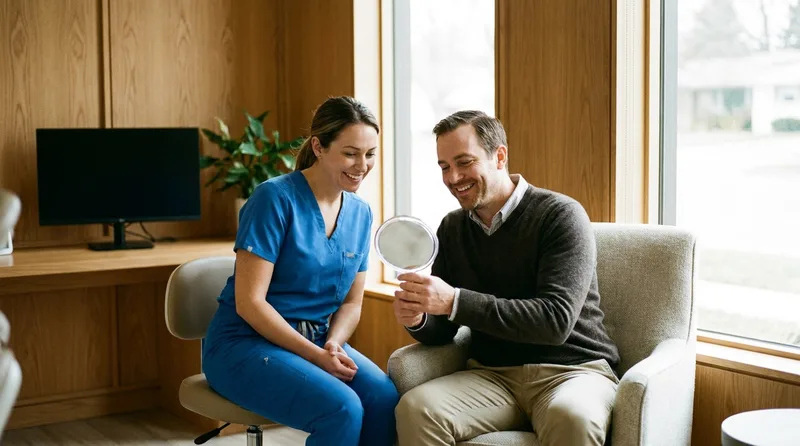
GBT tends to work best for people who fall into a few common categories. Consider whether any of these describe you:
If you have moderate to advanced periodontal disease with heavy calculus deposits, you'll likely still need scaling and root planing as the primary treatment, with GBT used as a finishing step rather than the main event. Dr. Curley will tell you which category you fall into during your exam. Not always an easy call from the outside, but a straightforward one in the chair.
A guided biofilm therapy appointment follows a set sequence: disclosing dye first, then an exam of stained areas, then the air-powder cleaning, and finally any spot scaling that's still needed. Most visits run about the same length as a standard cleaning, sometimes shorter.
Here's the typical order of events:
The National Institute of Dental and Craniofacial Research points out that visualizing biofilm directly, rather than relying on touch alone, helps hygienists catch buildup that's easy to miss with a mirror and instrument. That's the core advantage GBT brings to the appointment: you can see, on the spot, exactly which areas of your home routine need more attention.
Insurance coverage for guided biofilm therapy varies by plan, and it's usually billed similarly to a standard preventive cleaning when no additional periodontal treatment is involved. Some plans cover it fully as a preventive service; others may apply a small difference in cost.
Because GBT is relatively new compared to traditional scaling, not every insurance plan has a specific billing code for it yet. In practice, most plans process it under the same preventive cleaning benefit that covers a standard cleaning, since the clinical outcome (removing plaque and stain) is the same. If your gums need scaling and root planing alongside GBT because of existing tartar or early gum disease, that portion is billed as periodontal treatment, which typically falls under a different coverage category with its own annual maximum.
The team at Susan J. Curley DDS verifies your specific benefits before your appointment so you know what to expect. It's a five-minute phone call that saves a surprise later. Worth doing every time your plan renews, since benefits reset annually and sometimes change.
Most patients schedule guided biofilm therapy every six months, matching the standard preventive cleaning interval, though some with higher stain buildup or early gum inflammation benefit from a three or four month schedule instead. Your specific interval depends on how quickly plaque and stain reaccumulate.

A twice-yearly cadence works for most healthy adults with good home care habits. If you're a heavy coffee or red wine drinker, a smoker, or someone whose gums show early inflammation at every visit, a shorter interval catches buildup before it hardens into tartar. Colgate's oral health resources note that consistent professional cleanings, paired with daily brushing and interdental cleaning, are what actually keep gum disease from progressing between visits, regardless of which cleaning method you use.
Related: Not sure the standard six-month rule fits your mouth at all. How often should you get teeth cleaned? →
Dr. Curley reviews your biofilm and stain pattern at each visit and adjusts your recall interval from there. It's not a fixed rule. It's a decision made from what your mouth is actually doing.
Guided biofilm therapy isn't a replacement for scaling when tartar has already hardened, but for most patients it's a noticeably gentler, more thorough way to keep plaque and stain from building up in the first place. The real value shows up over time, in fewer sensitive visits and cleaner results at every recall. If your last cleaning left you dreading the next one, that's worth a conversation, not just a rebooking. Results may vary. Please consult with your dentist at Susan J. Curley DDS for personalized treatment recommendations.
Ready for a gentler, more thorough cleaning?
Schedule a guided biofilm therapy cleaning at Susan J. Curley DDS and see what a modern approach to gum health feels like.
Book Appointment →Have questions about which cleaning is right for you?
Contact Us →Written By
Dentist
Your first smile makeover consultation: what to expect, from the goals discussion to your digital smile design preview and plan.
What is digital smile design? A preview technology that lets you see your proposed new smile before treatment even begins.
Am I a candidate for veneers? Six clear signs that suggest veneers could be a good fit for your smile and long-term goals.
Book your visit with Dr. Curley online or call us, and we'll take it from there.