Cosmetic Dentistry
Porcelain Veneers Process Step by Step: A Full Guide
Porcelain veneers process step by step: consultation, tooth preparation, temporaries, fabrication, and placement, visit by visit.
Aug 24, 202610 min read


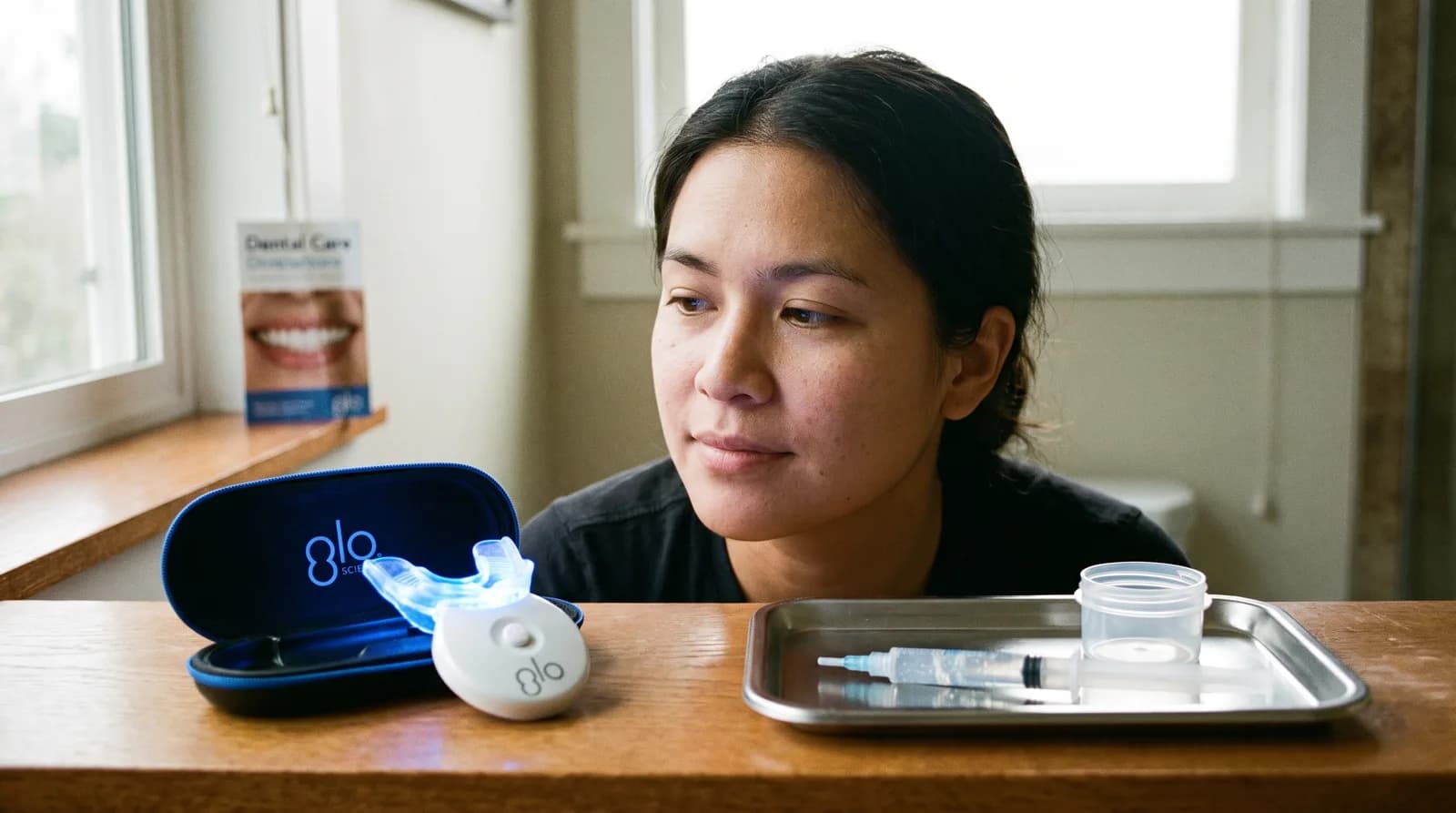
GLO teeth whitening vs traditional whitening comes down to one core difference: GLO combines gentle heat with LED light to activate the whitening gel, while most traditional methods rely on light alone, or no light at all. That difference affects speed, comfort, and how the whitening process actually feels in the chair or at home.
Nearly all Americans, 99.7% according to the American Academy of Cosmetic Dentistry, consider their smile an important social asset, which is part of why whitening remains one of the most requested treatments at our GLO teeth whitening practice. Regular dental visits also catch 80% of oral health issues before they become serious, according to the ADA, which is worth keeping in mind alongside any cosmetic whitening plan. This guide compares GLO directly against traditional whitening options so you can see which fits your priorities.
GLO teeth whitening uses a mouthpiece that combines gentle warmth with LED light to accelerate a lower-concentration whitening gel, rather than relying on a stronger gel or light alone. The heat-and-light combination is the technology's defining feature.
Traditional whitening methods typically use either a higher-concentration gel activated by a bright light in-office, or a lower-concentration gel worn in a tray at home over several weeks without any light or heat involved. GLO's approach pairs a milder gel with dual heat and light activation, aiming to reach similar results with less reliance on high peroxide concentrations alone.
The system is available both as an in-office treatment and as a take-home device, so you can start in the chair and continue at home with the same core technology, unlike most traditional options that pick one format or the other.
This flexibility is part of what sets GLO apart in day-to-day use. Rather than choosing between an in-office appointment and a separate take-home kit with different instructions and materials, GLO patients use one consistent system throughout, which simplifies both the initial treatment and any future touch-ups down the road.
The mouthpiece itself is designed to fit comfortably over the front teeth while the heat and light work, and most patients find the initial session straightforward to sit through, whether at the office or at home. Because the technology does the work of accelerating the gel, patients don't need to layer on extra product or extend wear time to compensate for a milder formula.
Traditional teeth whitening includes in-office treatments using a stronger peroxide gel activated by a bright light, custom take-home trays with a milder gel worn over one to two weeks, and over-the-counter strips or toothpaste for milder results.
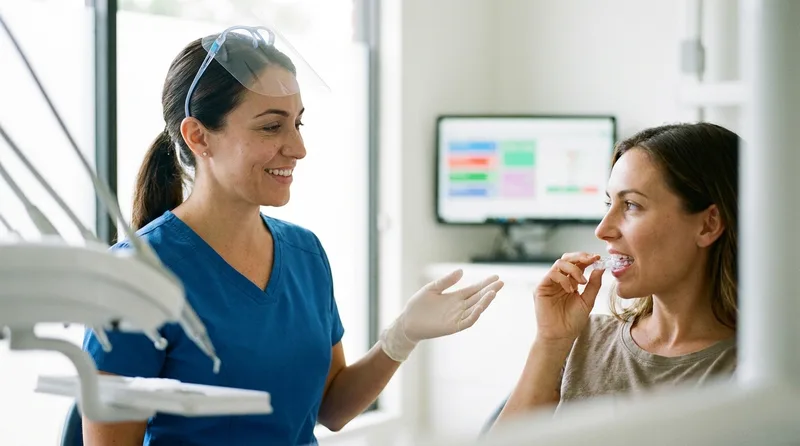
In-office traditional whitening delivers faster results in a single visit, generally using a higher peroxide concentration than take-home versions. Custom trays offer a gentler, gradual approach that some patients prefer, spreading the process over daily wear rather than one longer session. Over-the-counter products sit at the mildest end, often taking the longest to show a noticeable change since they use the lowest available concentrations.
Custom trays are molded specifically to your teeth by your dentist, which helps the gel stay in even contact with the tooth surface rather than shifting around the way a one-size-fits-all strip can. That fit difference is part of why custom trays generally outperform over-the-counter options even at similar gel concentrations.
Traditional in-office treatments have been the standard professional option for years, refined through repeated use in dental offices, and remain a reliable choice for patients who simply want the fastest possible route to a brighter smile in a single sitting without any at-home component to manage afterward.
Professional teeth whitening, whether GLO or a traditional in-office treatment, can improve shade by 4 to 8 levels in about two weeks, according to the ADA's cosmetic dentistry patient resources. GLO's in-office session and take-home continuation both fall within that professional-strength timeline.
Take-home trays without any light or heat activation, whether custom-fitted or over-the-counter, generally take longer to reach a comparable shade change simply because the gel works without any accelerant. GLO's dual activation is designed to speed up that same gel-based whitening process compared to a tray used passively on its own.
In practical terms, that often means GLO patients see a visible difference by the end of their first session, while a passive tray might take several nights of wear before a similar change becomes noticeable. Neither pace is wrong, it simply depends on whether you're working toward a specific date or are comfortable with a more gradual timeline.
| Method | Typical Timeline | Activation |
|---|---|---|
| GLO | Visible change same session, full result in about 2 weeks | Heat and LED light |
| In-office traditional | Single visit, immediate result | Light only |
| Custom trays | 1 to 2 weeks of nightly wear | None |
| Over-the-counter | Several weeks or longer | None |
GLO uses a lower peroxide concentration than most in-office traditional treatments, which is generally associated with less sensitivity, though individual results vary by patient. Sensitivity with any whitening method typically fades within a day or two.
Higher-concentration in-office gels can cause more noticeable, though usually temporary, sensitivity for patients with thinner enamel or existing gum recession. Take-home trays with milder gel tend to cause less sensitivity than strong in-office treatments but more than most over-the-counter products, simply due to concentration and daily wear time. Dr. Curley can recommend the option best suited to your enamel and sensitivity history during a consultation.
If you've had noticeable sensitivity with whitening in the past, mentioning that upfront changes the recommendation. Some patients do well starting with a milder concentration and building up gradually rather than jumping straight to the strongest available option, regardless of which whitening system is used.
Desensitizing products, whether a specific toothpaste before treatment or a fluoride application afterward, can also reduce sensitivity regardless of which whitening method is chosen. Dr. Curley may recommend one of these as a precaution if your history suggests you're more prone to sensitivity than average.
Curious if GLO fits your smile goals?
A quick consultation can help determine which whitening option matches your enamel, timeline, and budget.
Schedule a Consultation →Results from GLO and traditional professional whitening last similarly, generally six months to two years, depending on diet, oral hygiene, and habits like smoking or drinking coffee, tea, or red wine. Neither option is permanent, since natural teeth continue to be exposed to staining factors daily.
What tends to matter more than the whitening method itself is what happens afterward. Patients who maintain good oral hygiene, limit heavily staining foods and drinks, and touch up periodically with a take-home kit see results last noticeably longer than those who don't adjust any habits post-whitening. GLO's take-home device makes those periodic touch-ups simple, since patients already own the same system used for the initial treatment.
Coffee, tea, red wine, and tobacco use are the most common culprits behind faster relapse after any whitening treatment, a pattern also noted in the CDC's general oral health guidance. Rinsing with water after these, rather than letting stain-causing liquids sit on the teeth, is a simple habit that extends results regardless of which whitening method you chose. A touch-up every few months, rather than waiting until the shade has fully faded, also tends to maintain a brighter result more consistently than infrequent, larger corrections.
GLO offers more built-in flexibility since the same device works both in-office and at home, letting you start treatment at your appointment and continue the exact same process afterward. Traditional methods generally require choosing one format from the start.
With traditional options, an in-office treatment is a single, complete appointment, while custom trays require nightly discipline over one to two weeks to see full results. GLO's combined format suits patients who want a strong initial result immediately but also like having the option to maintain or boost that result later without switching products or systems entirely.
For patients with busy schedules, the ability to finish the bulk of the whitening in a single appointment, then simply use the same take-home device occasionally afterward, tends to fit more naturally into daily life than committing to nightly tray wear for two full weeks. That said, some patients genuinely prefer the gradual pace of trays, since it doesn't require setting aside time for an in-office visit at all.
GLO whitening is generally priced similarly to other professional in-office treatments, while custom trays and over-the-counter options cost less upfront but may require more product over time to maintain results. The right comparison depends on how you value convenience and speed.
Over-the-counter strips and toothpaste are the most affordable individual purchase, but their milder formulas often mean buying multiple rounds to see meaningful change, which adds up over time. Professional options, including GLO, involve a higher upfront cost but typically deliver a stronger, faster result in far fewer applications. CareCredit and Sunbit financing are available if you'd like to spread the cost of a professional treatment over time.
It's worth factoring in the take-home component when comparing cost, since GLO's device is reusable for future touch-ups without needing an entirely new in-office visit each time. Traditional custom trays are also reusable in this way, so the ongoing cost difference between the two mainly comes down to the concentration and quantity of gel refills used over time rather than the initial device itself.
GLO is worth considering if you want a strong result quickly along with the flexibility to touch up at home using the same system. Traditional custom trays suit patients who prefer a gradual approach, and over-the-counter products fit those testing the waters with minimal commitment.

Whichever option appeals most, a consultation is the clearest way to match your enamel condition, sensitivity history, and timeline to the right choice rather than guessing based on marketing alone.
GLO teeth whitening vs traditional whitening ultimately comes down to how much you value the combined in-office-and-home flexibility versus a more conventional single-format approach. Both can deliver a noticeably brighter smile when used correctly. Results may vary. Please consult with your dentist at Susan J. Curley DDS for personalized treatment recommendations.
If you've been comparing whitening options and want a professional opinion on which fits your smile, a consultation is a straightforward way to get a clear answer.
Ready to Brighten Your Smile?
Ask Dr. Curley about GLO teeth whitening at your Wall Township consultation and see which option fits your smile goals.
Book Appointment →Have questions before booking?
Contact Our Wall Township Office →Written By
Dentist
Porcelain veneers process step by step: consultation, tooth preparation, temporaries, fabrication, and placement, visit by visit.
Chipped tooth repair options same day: dental bonding vs a same-day crown, what to do right now, and what your emergency visit will look like.
TMJ symptoms you shouldnt ignore: jaw clicking, locking, headaches, and ear discomfort, what causes them, and when to see a dentist.
Book your visit with Dr. Curley online or call us, and we'll take it from there.