Dental Technology
Same Day Crowns vs Lab Crowns: The Real Differences
Same day crowns vs lab crowns: how they compare on process, durability, appearance, timeline, and overall cost for your restored tooth.
Aug 25, 20269 min read


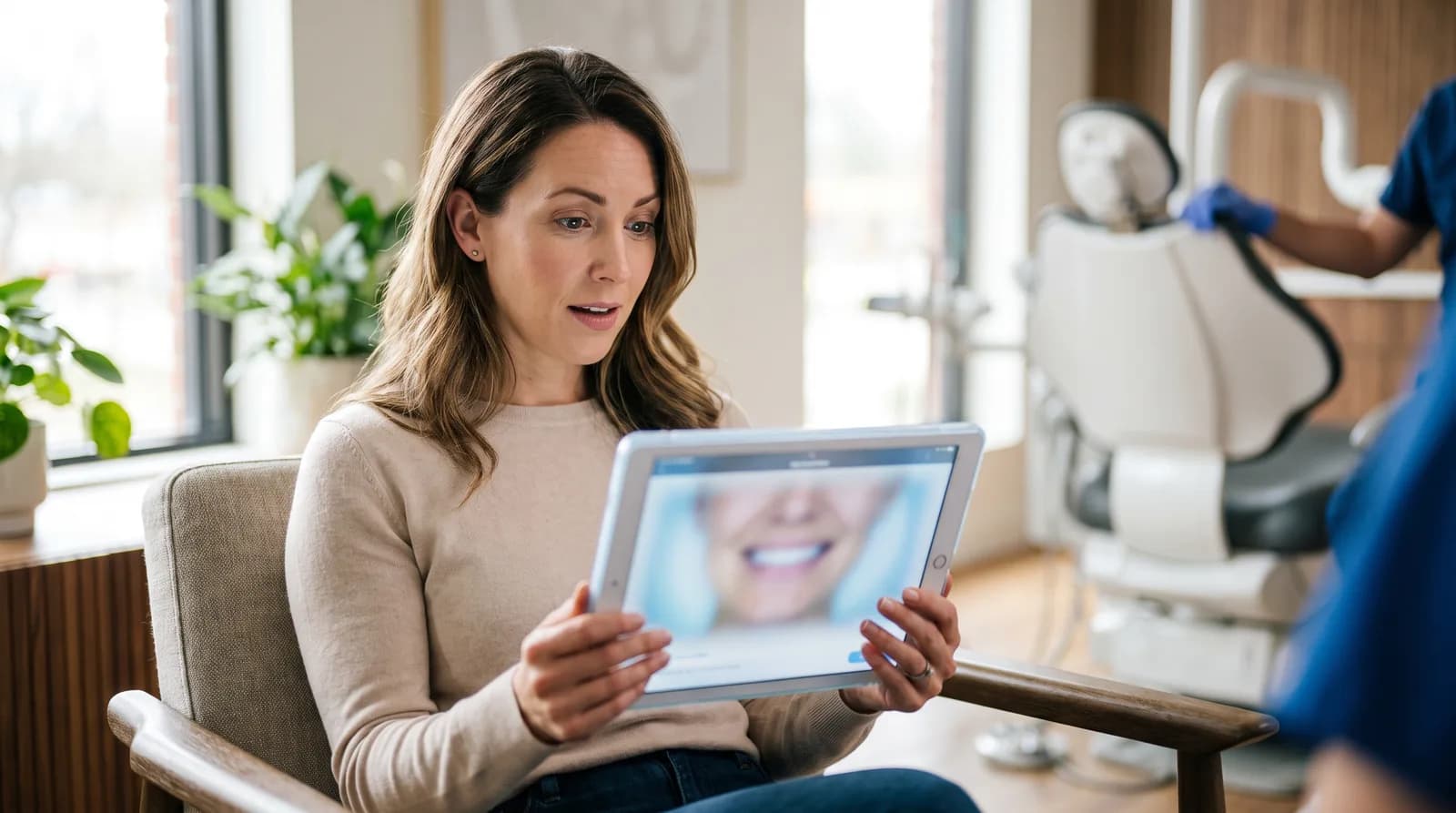
Digital smile design what patients should know starts with this: it's a preview, not a promise carved in stone. Before any tooth is touched, digital smile design software lets you see a simulated version of your future smile, built from photos and scans of your actual face and teeth.
Nearly all Americans, 99.7% according to the American Academy of Cosmetic Dentistry, consider their smile an important social asset, which is exactly why previewing a result before committing to treatment has become such a valued part of digital smile design, a planning approach detailed further in the ADA's patient resources on cosmetic dentistry. This guide covers what the process actually involves, what it can and can't tell you, and what to expect at your first appointment.
Patients considering cosmetic treatment for the first time often describe the decision as intimidating precisely because it's hard to picture the outcome ahead of time. A verbal description of "slightly longer" or "a bit whiter" leaves a lot of room for misalignment between what a patient imagines and what a dentist actually plans to create. Digital smile design closes that gap by putting a specific, personalized visual in front of both parties before any decision is finalized.
Digital smile design is a planning process that uses photos, video, and digital scans of your face and teeth to create a simulated preview of your smile after treatment. It's used to plan cosmetic work like veneers, whitening, or a full smile makeover before anything begins.
The process pulls in facial proportions, lip line, and how your teeth show when you smile and speak, not just the teeth themselves in isolation. That distinction matters because a smile that looks great on a model of teeth alone can look off once it's mapped onto your actual face, lips, and expression. Digital smile design accounts for that bigger picture from the start.
This is a planning tool, not the treatment itself. Once a design direction is approved, the actual work, whether that's porcelain veneers, whitening, or bonding, follows as its own separate process.
The value of separating planning from treatment is that decisions get made before any tooth is touched. Rather than discovering partway through a veneer case that the proposed length looks off once it's actually in your mouth, adjustments happen on the screen first, where changes cost nothing but a few extra minutes of conversation. Porcelain veneers can last 10 to 15 years with proper care, according to the Journal of Prosthetic Dentistry, which is part of why getting the design right before committing matters so much.
The process starts with photos and video of your face and smile, followed by a digital scan of your teeth, then software maps a proposed new smile onto those images for you to review together with Dr. Curley. Adjustments happen before any treatment begins.

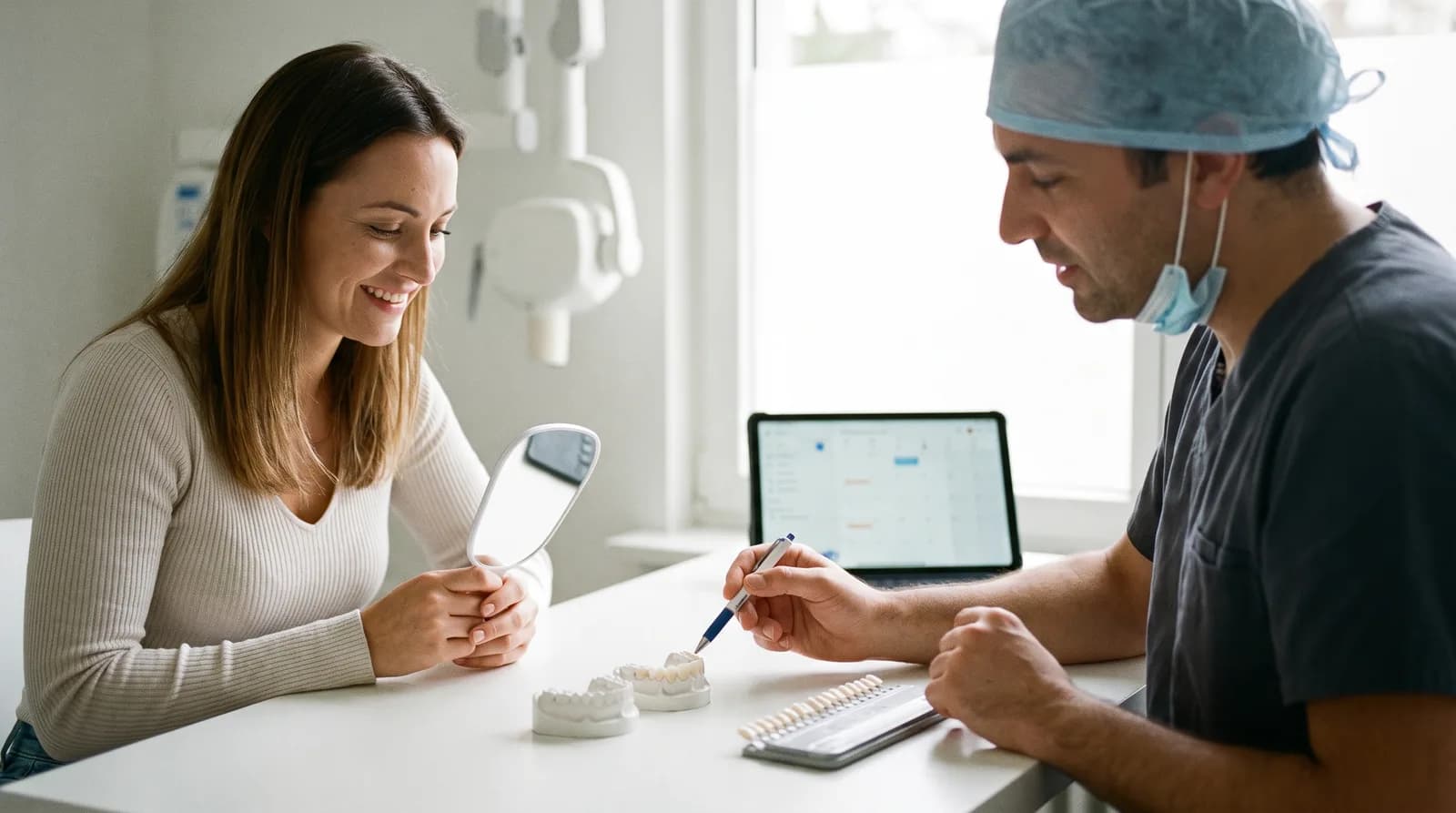
Photos are typically taken from several angles, including a natural smiling photo and a resting photo, since both reveal different information about tooth display and lip position. A digital scan, using the same iTero-style technology often used for other restorative planning, captures the current shape and position of your teeth. The software then overlays a proposed design, adjusting tooth length, shape, and alignment based on your facial proportions.
This whole visit typically takes about an hour, most of it spent reviewing the proposed design together rather than on the scanning and photography itself, which moves fairly quickly. Dr. Curley will walk through the reasoning behind specific proposed changes, such as why a particular tooth length was chosen relative to your lip line, so the design isn't just a picture but a plan you actually understand.
A digital smile design preview can show you proposed tooth shape, length, alignment, and overall smile proportion mapped onto your own face. It's a strong visual guide for shape and proportion decisions before treatment.
What it's less precise about is exact final shade, since lighting conditions in photos don't always match the lighting your final restoration will be viewed under, and the porcelain or bonding material used will have its own light-reflecting properties once placed. Treat the preview as a reliable guide to shape and structure, with shade discussed and confirmed separately, often during a physical try-in later in treatment.
The preview is also strongest at showing overall proportion rather than microscopic detail. It can clearly show whether a tooth will look longer, shorter, wider, or straighter, and how that change affects your smile as a whole. Fine texture details on the finished restoration are typically decided closer to the fabrication stage, once the broader shape has already been agreed upon.
No, a digital smile design preview is a planning tool and visual guide, not a guarantee of the exact final result. Biological factors, material properties, and adjustments made during treatment can all lead to small differences from the simulation.
Gum tissue response, exact bite alignment once new restorations are in place, and how porcelain or bonding material reflects light in person can all shift the outcome slightly from the digital preview. Reputable practices present the preview as a strong directional guide, not a locked-in promise, which is why an in-person consultation and any physical try-in steps remain part of the process even after a design is approved.
This is worth understanding upfront so expectations stay realistic. A digital preview is remarkably useful for agreeing on direction, shape, and overall proportion, but the biology of your own mouth, and the physical properties of dental materials, mean the final result is a close match to the preview rather than a pixel-perfect copy of it.
Curious what your own smile design could look like?
A consultation is the first step toward seeing a personalized preview built from your own photos and scans.
Schedule a Consultation →Digital smile design suits patients considering veneers, a full smile makeover, orthodontics paired with cosmetic work, or anyone who wants to see options before committing to a specific treatment plan. It's especially useful when multiple teeth are involved.
Patients undecided between a few different approaches, such as veneers versus whitening and minor bonding, often find the visual comparison clarifying in a way that a verbal description alone can't match. It's less necessary for a single, small cosmetic fix, like touching up one chipped tooth, where the change is limited enough that a preview adds less practical value.
It's also genuinely useful for patients who are simply curious but not committed to any specific treatment yet. Seeing a realistic preview, even if you ultimately decide not to move forward, tends to be more informative than reading descriptions or browsing generic before-and-after photos of other people's smiles, since the design is built from your own actual face and teeth.
Age and existing dental history matter less than most people expect. What matters more is whether you have specific concerns about shape, alignment, or color that are hard to put into words, since that's exactly the gap a visual preview is designed to close.
Once you approve a design, Dr. Curley translates it into an actual treatment plan, which might involve veneers, bonding, whitening, orthodontics, or some combination, each with its own separate process and timeline. The design becomes the shared reference point throughout.
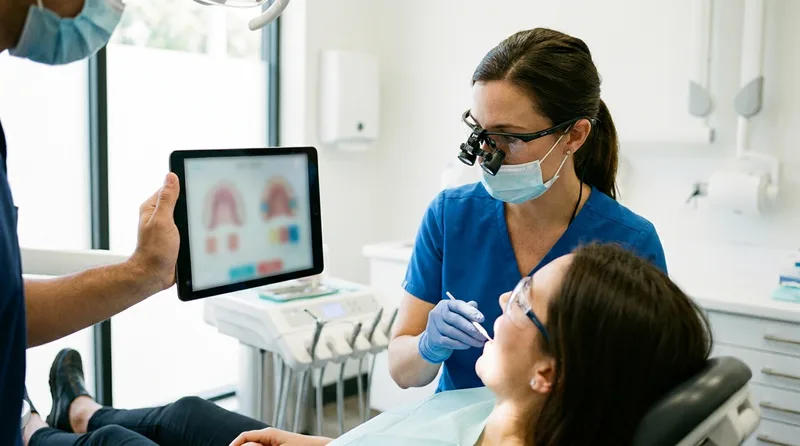
For a veneer case, the approved design informs how much enamel is prepared and the exact shape the lab fabricates. For a whitening-first plan, the design might show the shade improvement expected before deciding whether veneers are needed at all. Having that shared visual reference reduces back-and-forth guessing about what "a little longer" or "slightly whiter" actually means in practice.
This reference point also helps once treatment is underway across multiple visits. If your case involves several steps spread over weeks, having an agreed design to check progress against keeps everyone, patient and dental team alike, working toward the same specific outcome rather than relying on memory of a conversation from weeks earlier.
The initial digital smile design consultation typically takes about an hour, covering photos, scans, and reviewing the proposed design together. Any requested adjustments to the design are usually finalized within a follow-up call or a brief second visit.
Once the design is approved, the timeline shifts to whichever treatment you choose, whether that's a same-day whitening session, a multi-week veneer process, or something longer if orthodontics is involved first. The design itself doesn't add meaningful time to treatment; if anything, it tends to shorten the overall timeline by reducing mid-treatment adjustments, since the direction was already agreed upon before any work began.
If your case involves coordinating with an orthodontist or another specialist, the digital design can also serve as a shared reference across providers, which helps keep everyone aligned on the end goal even when multiple offices are involved in different phases of treatment.
Many practices, including ours, include the digital smile design consultation as part of a cosmetic treatment planning visit rather than charging a separate standalone fee. Ask directly when scheduling, since policies vary by practice.
Because the design process directly informs treatment decisions, it's typically bundled into the overall planning phase of cosmetic work rather than billed on its own. If you're only curious and not yet ready to commit to treatment, mention that upfront so the visit can be scoped appropriately.
Some practices do charge a separate design fee, particularly for more complex, multi-step smile makeovers that require extensive planning across several specialists or a longer treatment timeline. Asking directly during your initial phone call, rather than assuming either way, avoids any surprise when you arrive for the visit.
Digital smile design what patients should know boils down to this: it's a genuinely useful preview tool that removes a lot of guesswork from cosmetic planning, but it's a guide rather than a locked-in guarantee. Following general oral health guidance from the CDC alongside any cosmetic plan supports a result that lasts. Results may vary. Please consult with your dentist at Susan J. Curley DDS for personalized treatment recommendations.
If you've been curious about cosmetic treatment but wanted to see options before committing, a digital smile design consultation is a low-pressure way to get a real preview of what's possible.
See Your Smile Before You Commit
Schedule a digital smile design consultation with Dr. Curley in Wall Township and preview your options first.
Book Appointment →Have questions before booking?
Contact Our Wall Township Office →Written By
Dentist
Same day crowns vs lab crowns: how they compare on process, durability, appearance, timeline, and overall cost for your restored tooth.
GLO teeth whitening vs traditional whitening: how they compare on speed, sensitivity, results, convenience, and overall cost for your smile.
Porcelain veneers process step by step: consultation, tooth preparation, temporaries, fabrication, and placement, visit by visit.
Book your visit with Dr. Curley online or call us, and we'll take it from there.