
Patient Resources
Causes of Bad Breath: Why Mouthwash Alone Won't Fix It
Causes of bad breath include gum disease, dry mouth, and tongue bacteria, not a lack of mouthwash. See what actually resolves persistent bad breath.
Jul 26, 20269 min read


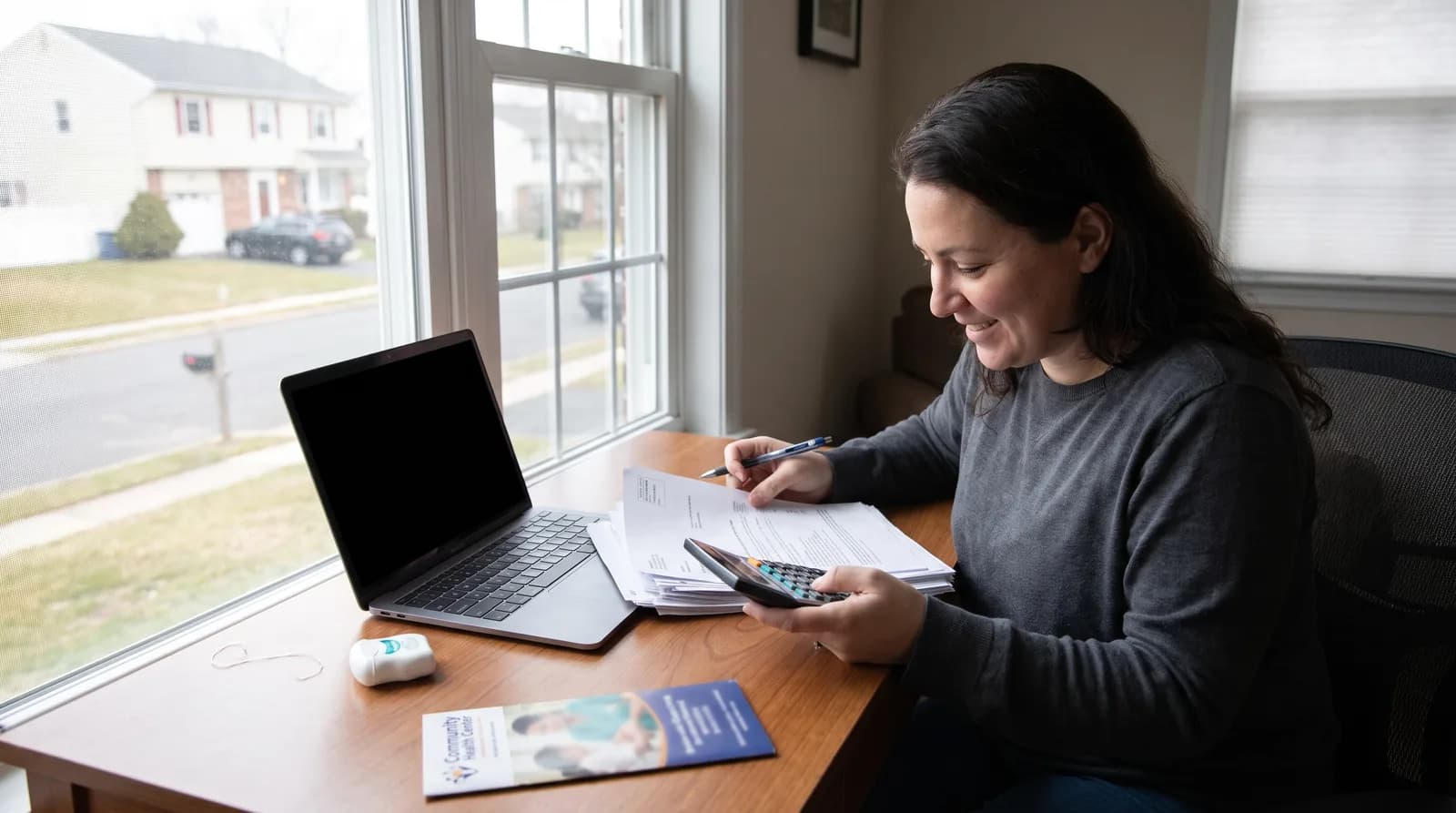
Not having coverage doesn't mean putting off care indefinitely, and understanding dental care without insurance NJ patients regularly manage successfully starts with knowing the real options available. Between direct payment, financing programs, and simply talking through a treatment plan with your dentist, uninsured patients have more paths forward than it might seem at first. This guide covers exactly how that works in practice. Payment options are discussed openly as part of every consultation at Susan J. Curley DDS, without any judgment attached to not having coverage.
No Insurance? Let's Talk Options.
A consultation can walk through payment and financing options that fit your specific situation.
Book Appointment →Dental care without insurance NJ patients manage through a combination of direct payment, financing programs like Sunbit and CareCredit, and treatment planning that prioritizes the most pressing needs first rather than tackling everything at once. None of these require having coverage to access care.
Direct payment using a credit or debit card remains the most straightforward option for routine care like cleanings and exams, which tend to cost less than more involved procedures. For larger treatment plans, financing programs spread the cost over time, making a bigger procedure more manageable on a monthly basis. Prioritizing treatment, addressing the most urgent issue first rather than everything simultaneously, is also a practical way to manage cost without insurance. Combining these approaches often works better than relying on just one option alone.
Being upfront about not having insurance during a consultation helps Dr. Curley recommend a treatment approach that accounts for your specific budget from the start. According to the ADA's Health Policy Institute, cost remains one of the most commonly cited barriers to regular dental care nationwide.
A cost conversation typically involves discussing your specific concern, getting a clear treatment recommendation, and then reviewing the actual cost and available payment options before anything is scheduled. Nothing proceeds without you understanding the cost upfront, which is a standard part of how every treatment plan is presented.
After an exam, Dr. Curley explains what she's found and what treatment she'd recommend, then the team walks through the specific cost and financing options available for your situation. This happens before any commitment to treatment, giving you time to consider your options rather than feeling pressured to decide immediately. If cost is a significant factor, this is also the point where prioritizing treatment or breaking it into stages gets discussed directly. You're always free to take time to think it over before scheduling anything further, without any pressure to commit on the spot.
This transparency is meant to remove guesswork from the process, so you always know what you're agreeing to before moving forward with any treatment, without any surprises appearing later.
Financing options for uninsured patients include Sunbit, which doesn't require a traditional credit check, and CareCredit, a healthcare-specific credit line with various payment term options. Both spread the cost of treatment into manageable monthly payments.
Each option works differently, so discussing your specific situation during a consultation helps identify which one actually fits your circumstances. There's no single best option for everyone; it depends on your specific financial situation and the treatment involved.
Sunbit financing works by evaluating factors beyond a traditional credit score, which is why it's accessible to a wider range of patients, including those with limited or imperfect credit history.
Approval decisions are typically made quickly, often within minutes, which is part of why it's a popular option for treatment that needs to happen soon rather than being delayed by a lengthy approval process.
| Factor | Sunbit | CareCredit |
|---|---|---|
| Credit check | Not required in the traditional sense | Standard credit application |
| Approval speed | Often within minutes | Typically quick as well |
| Best suited for | Patients with limited or imperfect credit history | Patients wanting a dedicated healthcare credit line |
Both options exist specifically to make treatment accessible without requiring the full cost upfront or perfect credit. Choosing between them often comes down to personal preference and your specific credit situation.
Want the Full Details on Sunbit?
Our guide covers exactly how Sunbit works, who qualifies, and how to apply.
Read About Sunbit Financing →Yes, treatment can be prioritized by addressing the most urgent or pressing issue first, then scheduling additional treatment in stages as budget allows, rather than requiring everything to happen in a single visit or payment.
This staged approach is common and doesn't reflect poorly on the overall treatment plan, since many patients across all financial situations choose to space out larger treatment this way.
Dr. Curley discusses treatment priority openly with uninsured patients, distinguishing between what needs attention now, like an active infection or significant discomfort, and what can reasonably wait a few weeks or months without getting worse. This staged approach means uninsured patients aren't stuck choosing between addressing nothing and paying for everything at once. Preventive care, which tends to cost less than restorative work, is also worth prioritizing since it helps avoid larger, more expensive issues developing later. This kind of planning conversation happens as a matter of routine, not as a special accommodation, since it's simply part of good treatment planning for any patient, regardless of their financial circumstances.
This kind of open conversation about priority and budget is a normal part of treatment planning, not something to feel uncomfortable bringing up. Every patient's situation is different, and there's no single right way to approach it.
Yes, preventive care remains one of the more cost-effective investments even without insurance, since routine cleanings and exams catch smaller issues before they become larger, more expensive problems requiring more extensive treatment. This holds true whether or not insurance is part of the equation.
Regular dental visits catch roughly 80% of oral health issues before they become serious, according to the ADA, and this pattern holds regardless of insurance status. A cavity caught early and treated with a simple filling costs considerably less, in both time and money, than the same cavity left untreated until it requires a root canal or crown. Skipping preventive care to save money in the short term often costs more in the long run once a larger issue develops. This is exactly why preventive visits are usually the last thing worth cutting from a budget, not the first. Roughly 42% of adults aged 30 and older have some form of periodontal disease, according to CDC 2024 data, which is part of why consistent preventive care matters just as much without insurance as with it.
Even without insurance, keeping up with routine checkups is one of the more effective ways to manage overall dental costs over time, since it consistently prevents more expensive problems from developing.
A common misconception is assuming dental care is simply unaffordable without insurance, when in reality financing and prioritization options make most treatment accessible in some form. Another is assuming a dentist will judge or lecture about lacking coverage, which isn't how a patient-focused practice approaches the conversation.
Some patients also assume that mentioning a lack of insurance upfront will limit their treatment options or lead to being pushed toward a specific plan regardless of preference, when in reality the opposite is usually true: being upfront early opens up more flexible planning, not less, since the team has more room to work with. Others delay scheduling entirely, assuming a bill will simply be presented at the end without any conversation beforehand, when transparency before treatment begins is standard practice at this office.
Clearing up these assumptions early, ideally at your first call or visit, tends to make the entire experience feel considerably more approachable than expected, especially for patients who've avoided bringing it up in the past.
Starting the conversation simply involves mentioning during scheduling or at your appointment that you don't have insurance and want to discuss payment options, which is a completely routine request the team handles regularly. There's no need to feel awkward bringing this up, since it comes up in some form nearly every day at the practice.
Being upfront early, ideally before treatment begins rather than after, gives Dr. Curley the full picture needed to recommend a realistic plan, including which financing option might fit best or how to prioritize treatment if cost is a significant factor. Patients bring this up every day, and it's treated as a normal, practical part of planning care rather than anything unusual. Waiting until after treatment has started to bring up budget concerns limits the options available to help, which is exactly why raising it early makes such a difference.
The earlier this conversation happens, the more options remain open for structuring your specific treatment plan around your budget. CDC oral health data notes that cost-related barriers disproportionately affect adults without dental insurance nationwide.
Dental care without insurance NJ patients need doesn't have to mean delaying treatment indefinitely. Between direct payment, Sunbit and CareCredit financing, and thoughtful treatment prioritization, there are real, practical paths to getting the care you need. Susan J. Curley DDS discusses these options openly and without judgment, whatever your specific financial situation looks like.
Results may vary. Please consult with your dentist at Susan J. Curley DDS for personalized treatment recommendations.
If lack of insurance has been keeping you from scheduling, mentioning it when you book is a reasonable first step toward finding an option that works, and there's genuinely no judgment attached to asking.
Ready to Talk Through Your Options?
Book an appointment with Susan J. Curley DDS and let's find a payment plan that works for you.
Book an Appointment →Prefer to talk it through first?
Call 732-681-8604 →Written By
Dentist
Causes of bad breath include gum disease, dry mouth, and tongue bacteria, not a lack of mouthwash. See what actually resolves persistent bad breath.
Tooth sensitivity causes range from worn enamel to cavities and cracks. See what sudden sensitivity might mean and when it's worth a dental visit.
Dentist that accepts my insurance Wall Township: see exactly which plans Susan J. Curley DDS accepts and what to do if yours isn't listed.
Book your visit with Dr. Curley online or call us, and we'll take it from there.