
smile-design
Your First Smile Makeover Consultation: What to Expect
Your first smile makeover consultation: what to expect, from the goals discussion to your digital smile design preview and plan.
Sep 20, 20268 min read


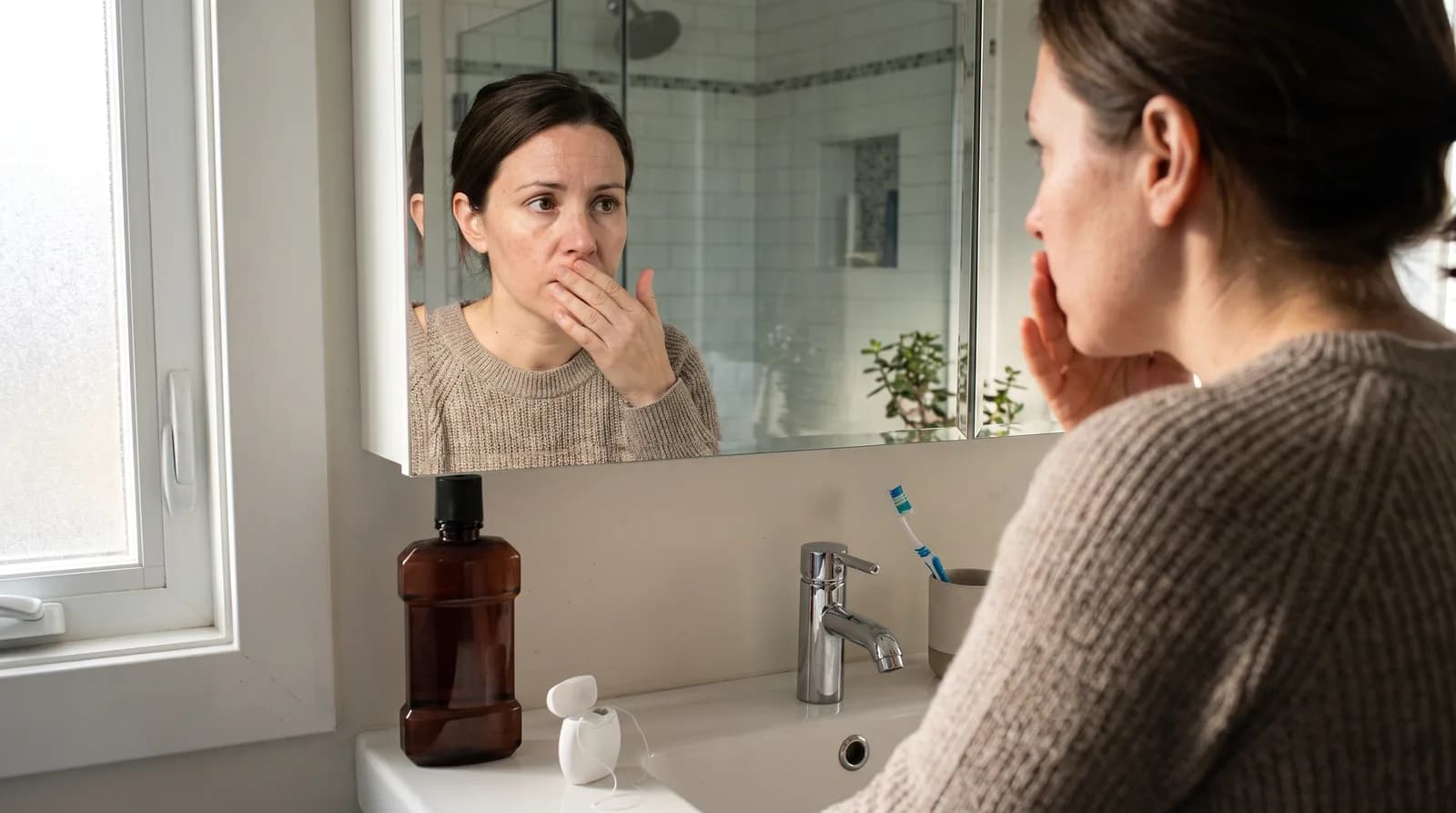
If you're reaching for mouthwash more often than usual and it's not really working, understanding the actual causes of bad breath matters more than another rinse. Mouthwash masks odor temporarily, but it doesn't address whatever is actually producing it, which is why bad breath often returns within an hour or two of using it. This guide covers what's really behind persistent bad breath and why treating the underlying cause works better than masking the symptom. Bad breath evaluation is part of routine general dentistry care at Susan J. Curley DDS. Most patients are surprised by how straightforward the actual fix turns out to be, once the actual cause is identified rather than guessed at.
Mouthwash Not Cutting It Anymore?
An exam can identify what's actually causing persistent bad breath.
Book Appointment →The actual causes of bad breath most often include gum disease, bacteria buildup on the tongue, dry mouth, and untreated tooth decay, rather than simply needing more mouthwash. Each produces an ongoing source of odor that a rinse only temporarily covers, no matter how strong or minty it is.
Bacteria breaking down food particles, plaque, and dead cells release sulfur compounds that create persistent odor, and this process continues around the clock rather than pausing after a meal. Mouthwash can neutralize some of that odor for a short window. But it doesn't remove the bacteria colonies or address gum disease, dry mouth, or decay actually producing it. Identifying which underlying cause applies to you is the real difference. It separates temporarily masking bad breath from actually resolving it. Reaching for a rinse repeatedly throughout the day is often a sign the underlying cause hasn't been addressed yet, rather than a sign you simply need a stronger product.
An exam is the most reliable way to pinpoint the specific cause, since mouthwash alone can't tell you what's actually happening. According to MouthHealthy, the ADA's patient education site, most cases of chronic bad breath originate in the mouth rather than elsewhere in the body.
Mouthwash doesn't fix bad breath because it primarily masks odor with its own scent rather than eliminating the bacteria or treating the condition producing the smell in the first place. Once the mouthwash's effect fades, the underlying source continues producing odor as before, often within a very short window.
Relying on mouthwash as a long-term solution, rather than a short-term freshener, often means the actual cause goes unaddressed for months or longer, allowing whatever's producing the odor to continue unchecked, sometimes worsening gradually over months or years.
Mouthwash is genuinely useful as a supplement to a good routine, freshening breath temporarily or providing antibacterial benefits alongside brushing and flossing, just not as a standalone fix for a persistent underlying cause. It has a real, limited role.
Some mouthwashes contain ingredients with genuine antibacterial benefit beyond just masking odor. Using one after brushing and flossing can meaningfully support oral hygiene as part of a complete routine. The issue isn't mouthwash itself. It's treating it as a substitute for brushing, flossing, tongue cleaning, and professional care, rather than an addition to those habits. Alcohol-free formulas are generally preferable, since alcohol-based versions can dry out the mouth further over time. Checking the label for alcohol content is a simple habit worth adopting.
Thinking of mouthwash as the finishing step in a routine, rather than the primary defense against bad breath, sets more realistic expectations for what it can actually do, and helps avoid relying on it as a crutch.
Yes, gum disease is one of the most common causes of persistent bad breath, since the bacteria involved in gum infection produce a distinctive, ongoing odor as a natural byproduct.
This odor typically returns quickly after mouthwash wears off, since the actual bacteria remain, often within an hour of rinsing, which is a strong clue that mouthwash alone isn't addressing the real cause.
| Sign | Possible Connection to Bad Breath |
|---|---|
| Bleeding gums | Common early sign of gum disease-related odor |
| Persistent metallic taste | Sometimes accompanies gum infection |
| White coating on tongue | Bacteria buildup, a separate but related contributor |
Treating the underlying gum disease, not additional mouthwash, is what actually resolves this type of bad breath, since the bacteria causing the odor live below the gumline where a rinse simply can't reach them effectively.
Want a Gentler Way to Address Gum Health?
Guided Biofilm Therapy offers a modern, more comfortable approach to cleanings that target bacteria buildup.
Read About Guided Biofilm Therapy →Yes, the tongue's surface is covered in tiny crevices where bacteria, dead cells, and food debris accumulate, especially toward the back, making it a leading source of odor that mouthwash alone doesn't fully address. Physically cleaning the tongue matters as much as rinsing, if not more, since it's so frequently overlooked in a typical daily routine.
A tongue scraper, or simply brushing the tongue daily, addresses a significant share of everyday bad breath. It physically removes bacteria rather than just masking the odor temporarily. This is often the missing step for people who've relied heavily on mouthwash without seeing lasting improvement. Combining tongue cleaning with treating any underlying gum issue tends to produce far better results than mouthwash alone ever could. It's a small addition to a routine with a surprisingly large payoff.
If you've never made tongue cleaning part of your routine, it's one of the simplest changes worth trying before assuming a more complex cause, and results are often noticeable within just a few days of adding it to your routine.
Thorough brushing twice daily, flossing once a day, and cleaning the tongue consistently do more to address bad breath at its source than mouthwash ever could, since they physically remove the bacteria and debris producing the odor rather than masking it.
Brushing for a full two minutes, reaching all surfaces including the back molars, removes far more plaque and bacteria than a quick rinse. That's where most odor-producing material actually accumulates. Flossing reaches between teeth where a toothbrush and mouthwash both fail to make meaningful contact. Trapped food particles and bacteria commonly build up unnoticed in this area. Staying hydrated throughout the day supports natural saliva production. This continuously helps wash away bacteria on its own, without any product involved at all.
None of these habits require special products or significant time, just consistency, which tends to produce better results than an expensive mouthwash used sporadically without any change to the underlying routine.
Yes, dry mouth is a significant, often overlooked contributor to bad breath, since saliva normally washes away the bacteria and food particles that produce odor throughout the day and night.
Ironically, alcohol-based mouthwash can worsen dry mouth, making the underlying problem slightly worse even while masking the smell temporarily, which is one more reason it isn't a real long-term fix for anyone dealing with chronic dryness.
Certain medications, breathing through the mouth during sleep, and some medical conditions can all reduce saliva production. This creates an environment where odor-causing bacteria thrive more easily. This is one reason morning breath tends to be noticeable for everyone, since saliva naturally decreases overnight. Choosing an alcohol-free rinse, staying hydrated, and addressing the underlying cause of dry mouth tends to help far more than switching to a stronger-smelling mouthwash. Tobacco use is another common contributor to both dry mouth and bad breath directly.
If dry mouth is a persistent issue for you, mentioning it at a dental visit helps identify whether medication, breathing patterns, or another factor is the primary driver, so the actual cause gets addressed rather than just the symptom being covered up again and again.
Persistent bad breath is worth a dental visit if it continues despite good oral hygiene, comes with bleeding or swollen gums, or hasn't improved after a couple of weeks of consistent tongue cleaning and brushing. These signs suggest mouthwash alone won't resolve it, no matter how frequently it's used or how strong the formula claims to be.
Regular dental visits catch roughly 80% of oral health issues before they become serious, according to the ADA, and persistent bad breath is exactly the kind of symptom that benefits from an exam rather than an escalating rotation of mouthwash brands. Roughly 42% of adults aged 30 and older have some form of periodontal disease, according to CDC 2024 data, and bad breath is frequently one of the earlier signs before more advanced symptoms appear. Catching gum disease at this stage generally means a simpler, less involved treatment path than waiting until symptoms become more severe.
If you've been reaching for stronger mouthwash without real improvement, that pattern itself is a signal worth bringing to an exam rather than continuing to mask it. CDC oral health data notes that oral bacteria and gum disease remain the leading contributors to chronic bad breath nationwide.
Causes of bad breath are usually identifiable and treatable once you look past mouthwash as the default solution, whether the actual cause is gum disease, tongue bacteria, dry mouth, or tooth decay. Susan J. Curley DDS can help identify the specific cause and the right path to resolving it, not just masking it temporarily, without judgment about how long the issue has been going on or how many mouthwash brands you've already tried.
Results may vary. Please consult with your dentist at Susan J. Curley DDS for personalized treatment recommendations.
If mouthwash hasn't been solving persistent bad breath, an exam is a more direct path to actually finding out why, rather than continuing to cycle through different rinses and hoping for a different result each time.
Ready to Find the Real Cause?
Book an appointment with Susan J. Curley DDS and get to the bottom of persistent bad breath.
Book an Appointment →Prefer to talk it through first?
Call 732-681-8604 →Written By
Dentist
Your first smile makeover consultation: what to expect, from the goals discussion to your digital smile design preview and plan.
What is digital smile design? A preview technology that lets you see your proposed new smile before treatment even begins.
Am I a candidate for veneers? Six clear signs that suggest veneers could be a good fit for your smile and long-term goals.
Book your visit with Dr. Curley online or call us, and we'll take it from there.