
Dental Implants
Single Tooth Implant Cost NJ: What Actually Drives Price
Single tooth implant cost NJ: what actually drives the price, from crown type to bone grafting, imaging, and insurance coverage.
Sep 8, 20269 min read


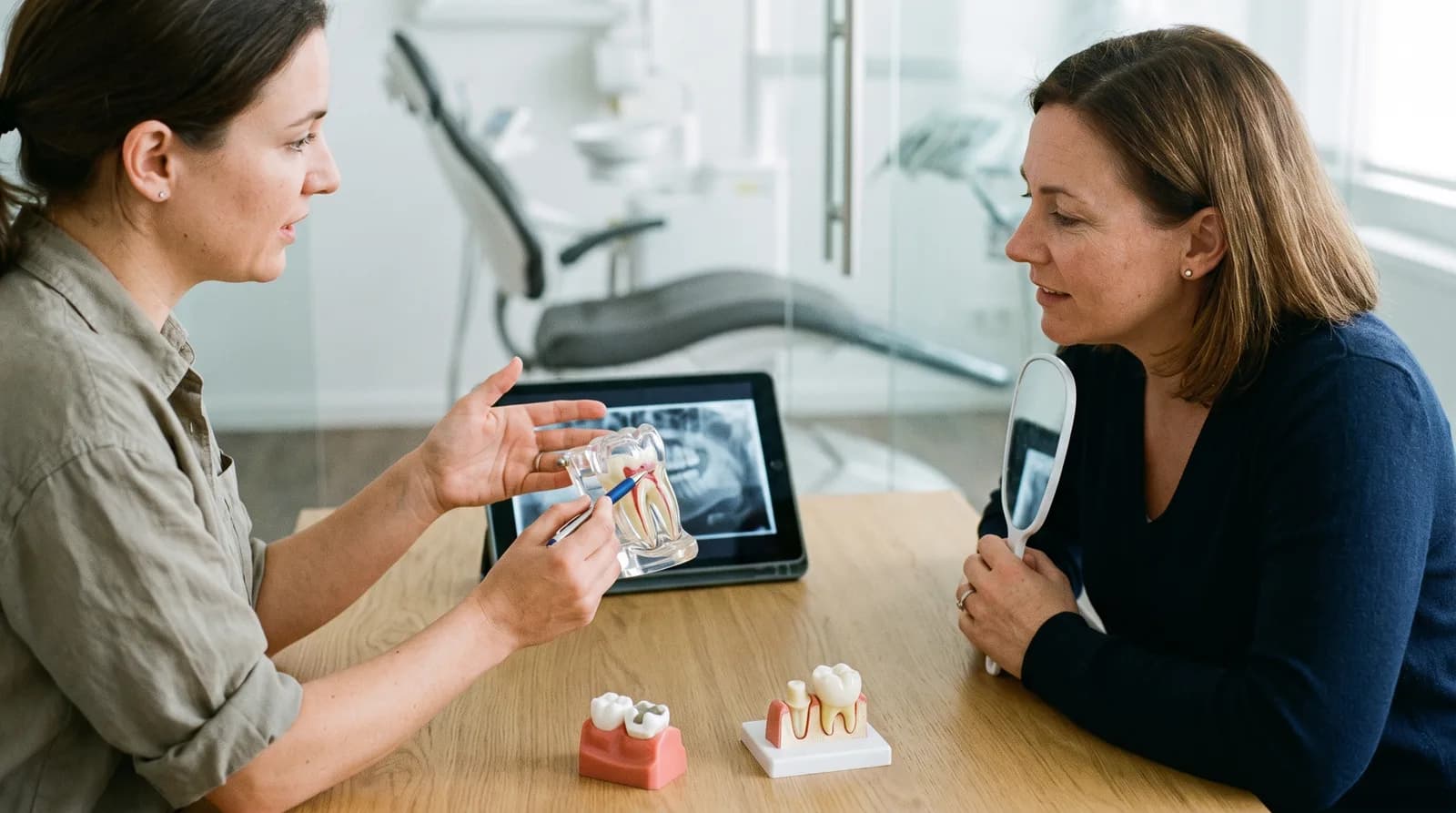
Crown vs filling at our restorative dentistry practice is a decision most patients assume comes down to the size of a cavity, but the actual factors a dentist weighs go well beyond that. Understanding what determines the choice helps you make sense of a treatment recommendation rather than wondering why a filling wasn't enough.
It's a common source of confusion, especially for patients who've had small fillings for years and are then told a crown is needed for a similar-looking issue. Regular dental visits catch 80% of oral health issues before they become serious, according to the ADA, which is part of why routine exams matter even for teeth that seem fine on the surface. The difference usually comes down to what's happening beneath the visible surface of the tooth.
This guide walks through the specific clinical factors your dentist actually weighs, so the next time you hear a crown recommendation, you'll understand exactly what's driving it rather than wondering if it's simply the more expensive default option.
None of these factors are secret or overly technical. They're simply the practical realities of how a tooth holds up over time, and understanding them upfront makes future dental visits feel less like a surprise and more like an informed conversation.
Whether you're facing this decision for the first time or have been through it before, the same underlying question applies every time: how much of the natural tooth is left to work with, and what does that specific tooth actually need to function well for years to come.
Keeping this framework in mind turns a confusing recommendation into a logical one, grounded in the specific condition of your tooth rather than a one-size-fits-all rule.
The next time a dentist explains why a filling won't work for a specific tooth, you'll recognize the reasoning: not enough structure, a crack reaching too deep, or a root canal that's left the tooth more fragile than before. That context makes the recommendation feel like information, not just an instruction.
Nearly 1 in 4 adults in the US has untreated tooth decay, according to CDC oral health data, and catching decay early is often what keeps a filling on the table as an option at all. This guide covers exactly how dentists decide between a crown and a filling.
A filling replaces a small, contained area of decay or damage, while a crown covers the entire visible portion of a tooth above the gumline. The choice depends on how much healthy tooth structure remains, not simply how big the cavity looks on an X-ray.
A filling works by bonding directly into the remaining tooth structure, which only holds up if enough structure is left to support it. A crown, by contrast, surrounds and protects a tooth that's too compromised for a filling to reliably handle daily biting forces.
The amount of healthy tooth structure remaining after decay is removed is often the single biggest factor in this crown vs filling decision. Enough structure supports a filling, while extensive loss generally calls for a crown to hold the tooth together and protect it from fracturing.

Your dentist walks through these categories during an exam, often supported by an X-ray showing exactly how much structure remains below the visible surface. This is a clinical judgment based on specific findings, not a preference for one option over another.
| Situation | Typical Recommendation |
|---|---|
| Small, contained cavity | Filling |
| Cracked cusp or weakened wall | Crown |
| Large, failing filling | Crown |
| Back tooth after root canal | Crown |
| Front tooth after root canal | Filling or crown, case dependent |
Not always, but a crack that involves a cusp or extends toward the tooth's core generally needs a crown to prevent the crack from spreading under normal biting pressure. A minor surface crack without structural involvement may not require one.
Your dentist evaluates the crack's depth and location, sometimes with the help of a bite test or imaging, to determine whether a filling could still work or whether the tooth needs the fuller protection a crown provides.
Cracks are notoriously tricky to evaluate from symptoms alone, since some patients feel discomfort with a barely visible crack while others have a significant crack with minimal symptoms. This is exactly why an in-person exam matters more than guessing from how a tooth feels.
A crack that only affects the outer enamel layer behaves very differently than one reaching into the dentin or pulp beneath it. Your dentist's evaluation focuses on exactly where the crack sits within these layers, not just whether a crack is visible at all.
Not sure if you need a crown or a filling?
An exam gives you a clear, specific answer based on your actual tooth rather than a general assumption.
Schedule an Exam →Root canal treatment removes the nerve and blood supply from a tooth, which over time can make it more brittle than a tooth with a healthy nerve intact. A crown, especially on a back tooth exposed to heavy chewing force, protects against fracture afterward. Dental implants have a success rate of 95 to 98% over 10 years, according to the Journal of Oral and Maxillofacial Surgery, and the same principle of protecting a treated tooth applies to a root canal-treated tooth topped with a crown.

Our guide on root canal treatment covers this step in more detail. Front teeth, which handle less biting force, sometimes skip the crown and are restored with a filling instead, depending on how much structure remains.
The access opening made to perform the root canal itself also removes some tooth structure, which factors into whether a filling can adequately seal and support the tooth afterward or whether a crown is the more reliable choice.
This is why the same root canal procedure on two different teeth can lead to two different final recommendations, one restored with a filling and the other requiring a crown, depending on how much structure each specific tooth had going into treatment.
Yes, a large filling covering most of a tooth's surface can eventually fail, crack, or come loose, at which point a crown is often recommended instead of simply replacing the filling again. Repeated fillings on the same tooth gradually remove more structure each time.
This is a common path for teeth that have been filled and refilled over years. At some point, there's not enough structure left for a filling to reliably hold, and a crown becomes the more predictable long-term solution.
Recognizing this pattern early, rather than waiting for a filling to fail outright, sometimes allows for a planned transition to a crown before the tooth experiences an unexpected fracture or the filling comes loose unexpectedly.
A dentist tracking a tooth's filling history over multiple visits is often the first to notice this trend developing, which is one more reason consistent care with the same practice tends to catch these transitions earlier than switching providers frequently.
Generally yes, a filling preserves more of the natural tooth and is the appropriate choice whenever it can adequately restore function and protect against further damage. In the crown vs filling decision, a dentist doesn't recommend a crown simply because it's available if a filling would genuinely work.
The decision isn't about which option sounds simpler, it's about which one actually holds up for your specific tooth. Recommending a crown when a filling would suffice serves no one, since it costs more and removes more healthy structure than necessary.
This same logic works in reverse too. Choosing a filling for a tooth that genuinely needs a crown often means redoing the work sooner, which ends up costing more overall than getting the right restoration the first time.
A good dentist explains this reasoning rather than simply defaulting to whichever option seems easiest to schedule. Trusting a recommendation is easier when you understand it reflects your tooth's actual condition rather than a generic protocol applied to every similar-looking case.
Patients who ask questions and receive clear, specific answers tend to feel more confident moving forward with treatment, regardless of which restoration ends up being recommended. That confidence matters just as much as the clinical accuracy of the decision itself.
Ask specifically why a filling isn't sufficient for your case, what would happen if you chose a filling anyway, and how much of your natural tooth structure remains. A dentist should be able to explain the reasoning clearly, not just state the recommendation.
Our guide on same-day crowns versus lab crowns covers what to expect once a crown is the right choice for your case. Understanding the reasoning behind the recommendation helps you feel confident in the treatment plan either way.
There's no downside to asking these questions, and a dentist confident in the recommendation will welcome the opportunity to explain it. If the answers feel vague or the explanation doesn't address your specific tooth, a second opinion is a reasonable next step.
Ultimately, the goal of asking isn't to second-guess your dentist, it's to leave the appointment understanding your own tooth well enough to feel settled in the decision either way.
Crown vs filling ultimately comes down to how much healthy tooth structure remains, not the size of the problem alone. Following the ADA's patient resources alongside your dentist's specific exam findings leads to the most reliable restoration choice. Results may vary. Please consult with your dentist at Susan J. Curley DDS for personalized treatment recommendations.
If you've been told you need a crown and want to understand why a filling wasn't an option, asking your dentist to walk through the reasoning is a reasonable and expected question.
Wondering Which Restoration You Need?
Schedule an exam with Dr. Curley in Wall Township for a clear answer based on your specific tooth.
Book Appointment →Have questions before booking?
Contact Our Wall Township Office →Written By
Dentist
Single tooth implant cost NJ: what actually drives the price, from crown type to bone grafting, imaging, and insurance coverage.
Same day dental implants: who qualifies, how eligibility is determined, and what to realistically expect from treatment.
Mini dental implants for dentures: how they stabilize a slipping plate, who qualifies, and how they compare to standard implants.
Book your visit with Dr. Curley online or call us, and we'll take it from there.