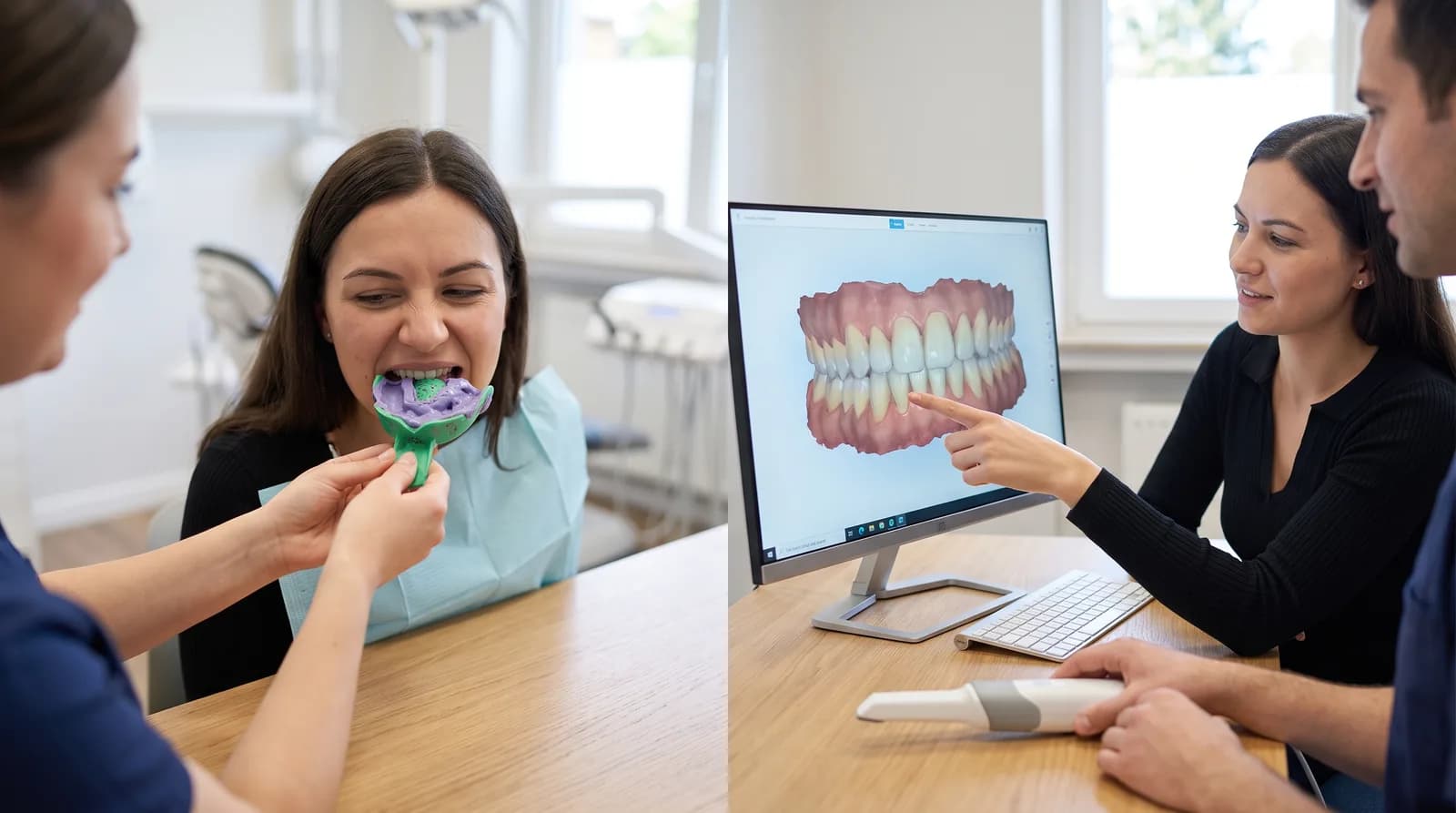
Patient Resources
Choosing a Dentist in Belmar, NJ: What to Look For
Dentist in Belmar NJ what to look for: real experience, full services, modern technology, reviews, and same-day emergency care.
Aug 31, 20269 min read



Clear aligners for teens vs adults share the same core technology as used in our Invisalign program. But the treatment experience around them differs in real, practical ways. Compliance monitoring, retainer habits, growth considerations, and even the reasons people start treatment all shift depending on the patient's age.
Clear aligners can treat 90% of mild-to-moderate alignment issues, according to the ADA's patient resources on orthodontic options, which makes them a realistic option for both teenagers still developing their bite and adults finally addressing shifting they've lived with for years. This guide breaks down exactly what's different between treating a teen and treating an adult, so families and adult patients alike know what to expect.
Many practices, including ours, see both audiences regularly: parents bringing in a teenager who wants straighter teeth without visible metal braces, and working adults finally revisiting alignment they've put off for years. While the aligners themselves work the same way for both groups, the conversation around treatment, what to expect, what to watch for, and how success is measured, looks meaningfully different depending on who's in the chair.
Yes, teens and adults generally use the same core clear aligner technology and material. Teen-specific aligners sometimes include small features like compliance indicators or eruption tabs that accommodate teeth still coming in. The treatment planning process differs more than the aligners themselves.
Teen-specific aligner systems account for the fact that some permanent teeth may not have fully erupted yet, and that jaw growth is still an active factor. Adult treatment plans work with a fully developed bite and don't need to build in room for teeth still emerging, which simplifies planning in that specific respect even though adult cases sometimes involve more established issues like years of wear or previous orthodontic relapse.
Material-wise, the aligners themselves are nearly identical between age groups, since the underlying plastic and manufacturing process doesn't change based on age. What changes is the digital treatment plan built around that material, factoring in whichever growth or eruption patterns apply to that specific patient's mouth at the time treatment begins.
This is why the same iTero-style digital scan used for adult treatment planning works just as well for teens, with the software simply accounting for different anatomical factors depending on the patient's stage of dental development. The underlying workflow, scan, plan, fabricate, wear, doesn't fundamentally change based on age; it's the inputs to that workflow that differ.
Compliance is generally the biggest practical difference. Teens need to wear aligners 20 to 22 hours a day just like adults, but are statistically more likely to forget, lose, or remove them more often than necessary. This directly affects how closely treatment needs to be monitored.

Many teen aligner systems include a small blue dot embedded in the plastic that fades with adequate wear time, giving parents and dental teams an easy visual check without relying purely on the teen's own report. Adults, by contrast, are typically self-directed with far fewer external reminders, though the same 20-to-22-hour daily target still applies for both groups to stay on schedule.
Wondering if clear aligners fit your teen or your own schedule?
A consultation can map out what compliance and timeline realistically look like for your specific case.
Schedule a Consultation →Teens and their parents often choose clear aligners for discretion during school and social activities. Adults more often cite career visibility, comfort compared to metal braces, or finally addressing alignment they've lived with for years. Both groups value the non-metal appearance, but the underlying motivation differs.
Parents frequently drive the initial conversation for teens, weighing clear aligners against traditional braces based on their teen's activities, like sports or musical instruments where braces can be more disruptive. Adults typically arrive at the decision independently, often after noticing their teeth shifting since their own childhood orthodontic treatment, or after putting off treatment for years due to timing or cost.
Social factors play out differently too. Teens often weigh how aligners look and feel among peers at school, while adults are more likely to consider how treatment fits around work meetings, client-facing roles, or simply not wanting a visible orthodontic appliance during an established career. Both concerns are valid, they just center on different social settings.
There's also a timing dimension worth noting. Teens are often treated during a natural window when orthodontic issues are first becoming apparent, guided largely by their dentist's recommendation and their parents' decision-making. Adults, by contrast, are usually the ones initiating treatment entirely on their own terms, often after years of simply living with alignment they'd eventually like to address.
Average clear aligner treatment takes 6 to 18 months, compared to 18 to 36 months for traditional braces, according to the AAO, and this general timeline applies to both teens and adults with similar case complexity. Growth factors can occasionally extend a teen's timeline.
Because teens may still have some jaw growth or tooth eruption in progress, their treatment plan sometimes includes a longer monitoring period or a phased approach to account for those ongoing changes. Adult cases, working with a fully settled bite, tend to follow a more predictable, fixed timeline once treatment begins, assuming aligners are worn as directed.
Consistency matters just as much as any biological factor in determining how long treatment actually takes. A teen who wears aligners diligently can finish comparably fast to an adult with a similar case, while inconsistent wear, more common among teens navigating a busier, less predictable daily schedule, tends to extend treatment beyond the original estimate for either age group.
Retainer expectations are similar for both groups, wear as directed to prevent relapse, but teens generally need closer follow-up since continued jaw development can affect retention longer than it does for adults. Both age groups risk teeth shifting back without consistent retainer use.
Straight teeth are easier to clean, reducing the risk of cavities and gum disease by up to 30%, according to the ADA, which is a strong incentive for both teens and adults to stay consistent with retainer wear after active treatment ends. Teens are statistically more likely to lose or forget retainers during the transition out of active treatment, which is part of why many teen retainer plans include more frequent check-ins during that first year.
| Factor | Teens | Adults |
|---|---|---|
| Compliance monitoring | Compliance indicators, parent check-ins | Self-directed |
| Growth considerations | Jaw growth, tooth eruption factored in | Fully developed bite |
| Retainer follow-up | More frequent check-ins first year | Standard follow-up schedule |
| Common motivation | Discretion at school and social events | Career visibility, addressing long-term shifting |
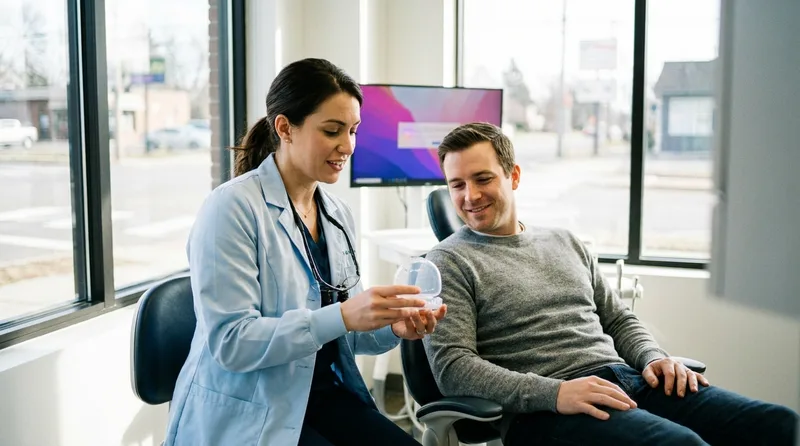
Candidacy for teens factors in whether enough permanent teeth have erupted and how much jaw growth remains, while adult candidacy focuses more on the current state of the teeth and any prior dental work, like crowns or bridges, that could affect aligner fit. Both require a full evaluation before starting.
A teen who still has several baby teeth or unerupted permanent teeth may need to wait, or start with an interim approach, before full clear aligner treatment makes sense. Adults occasionally face a different kind of complexity: existing dental work, gum health, or bone density issues from years of wear that need to be factored into the treatment plan before aligners begin.
The evaluation itself looks similar for both age groups at a high level: a full exam, imaging or a digital scan, and a conversation about goals and timeline. What differs is which specific factors carry the most weight in that evaluation, growth and eruption for teens, and existing dental history for adults.
Parents often ask whether it's better to wait until all permanent teeth have come in before starting treatment for a teen. The answer depends heavily on the specific case: some situations benefit from earlier intervention, while others genuinely do need to wait for more teeth to erupt. That's a judgment call best made during an in-person evaluation rather than assumed either way beforehand.
Cost is generally similar for teens and adults for comparable cases, though insurance coverage can differ since some plans cover orthodontic treatment for dependents under a certain age more generously than for adult policyholders. It's worth checking your specific plan's orthodontic benefits either way.
Many family dental insurance plans include an orthodontic benefit specifically for children and teens, sometimes with a lifetime maximum that doesn't apply, or applies differently, to adult orthodontic coverage. CareCredit and Sunbit financing are available through the practice regardless of age, which can help bridge any gap between insurance coverage and total treatment cost.
It's worth calling your insurance provider directly to confirm orthodontic benefits before starting treatment, since plans vary widely on this point and the terminology used, like "lifetime orthodontic maximum," can be easy to misread. For families with multiple children who may eventually need treatment, understanding how that lifetime maximum applies per child versus per family matters for planning ahead. Straight teeth are easier to clean, reducing the risk of cavities and gum disease by up to 30%, according to the ADA, a benefit worth factoring in alongside the purely cosmetic motivations for either age group.
Clear aligners for teens vs adults ultimately share the same effective technology, applied with different considerations around growth, compliance, and life stage. Both groups can achieve excellent results when treatment is followed as directed. Following general oral health guidance from the CDC alongside orthodontic treatment supports a healthier result long-term. Results may vary. Please consult with your dentist at Susan J. Curley DDS for personalized treatment recommendations.
Whether you're considering clear aligners for your teen or for yourself, a consultation is the clearest way to understand what treatment would actually look like for your specific situation.
Ready to Explore Clear Aligners?
Schedule a consultation with Dr. Curley in Wall Township, whether it's for your teen or for yourself.
Book Appointment →Have questions before booking?
Contact Our Wall Township Office →Written By
Dentist
Dentist in Belmar NJ what to look for: real experience, full services, modern technology, reviews, and same-day emergency care.
Braces vs Invisalign cost comparison NJ: what actually drives price, plus how insurance and financing apply to each option.
iTero digital scanning vs traditional impressions: comfort, accuracy, and how each supports Invisalign, crowns, and veneers.
Book your visit with Dr. Curley online or call us, and we'll take it from there.