Patient Resources
Choosing a Dentist in Belmar, NJ: What to Look For
Dentist in Belmar NJ what to look for: real experience, full services, modern technology, reviews, and same-day emergency care.
Aug 31, 20269 min read


Braces vs Invisalign cost comparison NJ patients search for, especially those weighing Invisalign against braces, usually comes down to a shorter answer than most expect. The two options land in a similar overall range for many cases. The real cost is driven more by case complexity and treatment length than by which technology you choose. That surprises a lot of people who assume Invisalign automatically costs more.
Clear aligners can treat 90% of mild-to-moderate alignment issues, according to the American Journal of Orthodontics. Average treatment takes 6 to 18 months, compared to 18 to 36 months for traditional braces, according to the AAO. This guide breaks down what actually drives cost for both options. It also covers how to get an accurate estimate for your specific case in New Jersey.
Cost comparisons found online rarely reflect what you'll actually pay. Generic national averages don't account for New Jersey's specific market, your individual case complexity, or which practice you choose. This guide focuses on the factors that genuinely move the number for your case. That's more useful than repeating a broad price range that may have little to do with your actual treatment plan.
Cost for both braces and Invisalign is driven mainly by case complexity, treatment length, the specific provider, and your geographic market. The technology itself matters less, a pattern consistent with the ADA's broader patient guidance on treatment costs. Two patients with different alignment issues can see meaningfully different quotes even for the same treatment type.
A minor alignment issue treated with either option typically costs less than a complex case involving significant crowding, bite correction, or jaw alignment. Treatment length matters too, since longer treatment generally means more office visits, more materials, and more monitoring over time. New Jersey's cost of living and the local dental market also factor into pricing, similar to most healthcare services in the state.
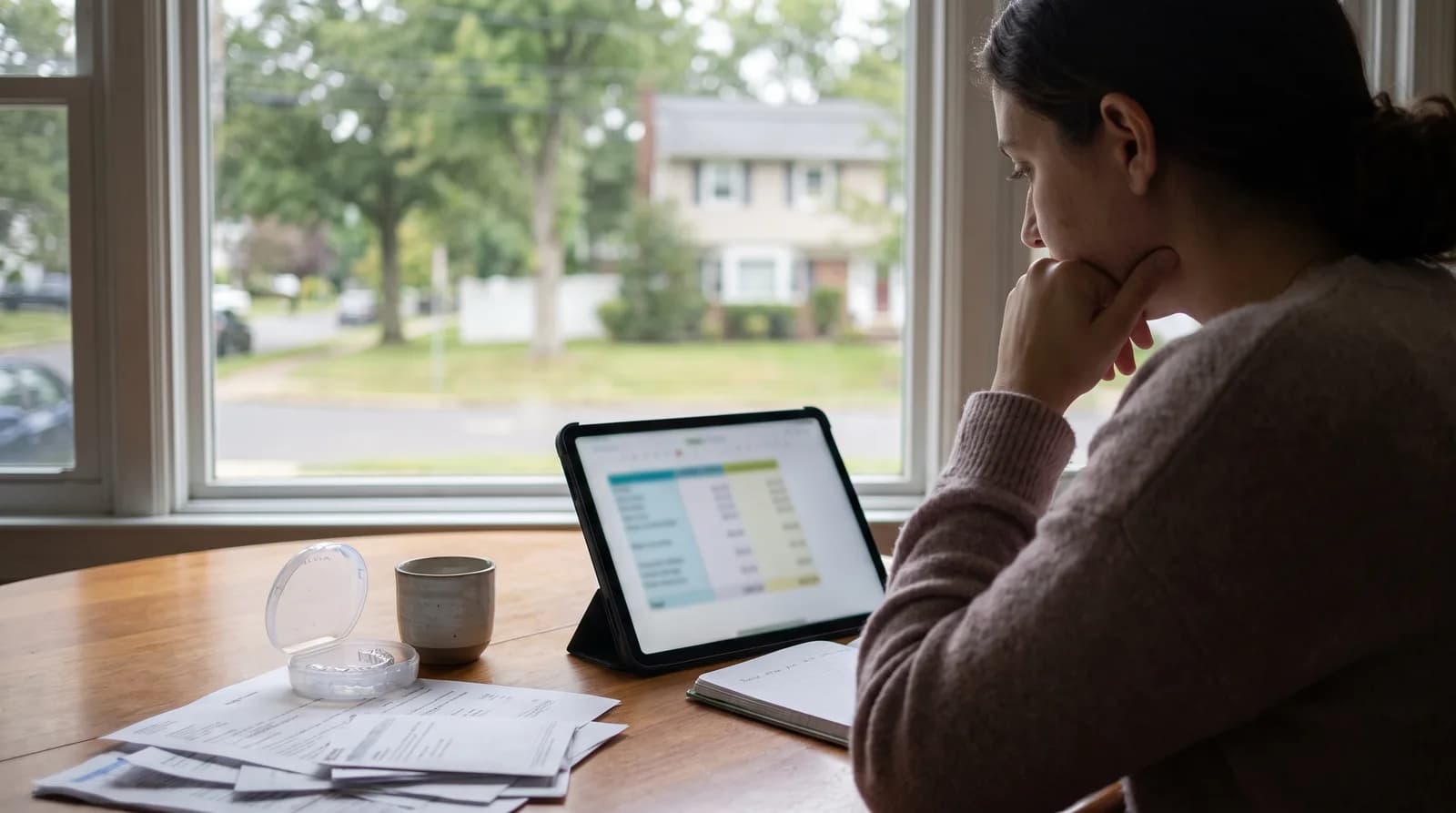
It's worth noting that "cost" in this context usually means the total treatment fee, not a monthly payment. Most patients ultimately experience the expense as a monthly payment through insurance, financing, or an in-house payment plan. Understanding both numbers, the full treatment cost and the monthly breakdown, gives a clearer picture than focusing on either one alone.
Neither option is consistently more expensive than the other. Pricing has converged significantly in recent years, and the actual number often depends more on your specific case than on which technology you choose. Getting quotes for both, when appropriate for your case, is the only reliable way to compare.

Historically, traditional metal braces were the more budget-friendly default, while Invisalign carried a premium tied to its newer technology and discretion. That gap has narrowed considerably as clear aligner technology has become more widespread and competitive. For many mild-to-moderate cases today, the two options land close enough in price. Comfort, appearance, and lifestyle fit become the deciding factors rather than cost alone.
| Cost Factor | Effect on Price |
|---|---|
| Case complexity | Largest single factor for either option |
| Treatment length | Longer treatment generally raises total cost |
| Insurance coverage | Reduces out-of-pocket cost when applicable |
| Financing terms | Spreads cost but may add interest over time |
| Retainers and follow-ups | May be bundled or billed separately |
Want a real cost comparison for your case?
A consultation gives you an itemized estimate for both braces and Invisalign based on your specific teeth.
Schedule a Consultation →Yes, treatment length is one of the biggest cost drivers for either option. Longer treatment generally means more appointments, more materials, and more monitoring. Average clear aligner treatment takes 6 to 18 months, compared to 18 to 36 months for traditional braces, according to the AAO.
A shorter aligner timeline doesn't automatically mean lower total cost. Aligner cases are often priced as a full treatment package rather than per month. Still, the general pattern holds: a mild case requiring fewer months of treatment tends to cost less. A complex case stretching over two or more years costs more, regardless of which option you choose.
Refinement aligners are additional sets sometimes needed toward the end of Invisalign treatment to fine-tune results. These can add both time and occasionally cost if they weren't included in the original quote. Similarly, braces sometimes require adjustment visits beyond the originally estimated timeline if a tooth isn't tracking as planned. Asking upfront how the quote handles these possibilities helps avoid surprises later.
Case complexity is often the single biggest factor in cost. Severe crowding, significant bite issues, or jaw alignment problems require more aligners, more adjustments, or additional appliances. This applies regardless of whether you choose braces or Invisalign. Simple cases cost meaningfully less than complex ones across both options.
Some complex cases aren't good candidates for Invisalign at all and require traditional braces, or a combination approach, to achieve the needed correction. In those situations, the "cost comparison" isn't really a choice, since only one option may be clinically appropriate. A consultation and imaging determine which category your case falls into before cost becomes the deciding factor.
Severe crowding, significant overbite or underbite corrections, and cases involving jaw positioning sometimes need additional appliances beyond standard braces or aligners. This adds to the total cost regardless of which base technology is used. These add-on costs are worth asking about specifically during your consultation rather than assuming a quoted range covers every possible scenario.
Most dental insurance plans in New Jersey treat braces and Invisalign similarly for coverage purposes. Orthodontic benefits are typically based on the type of correction needed rather than the specific technology used. Coverage details still vary significantly by plan.
Many family plans include an orthodontic benefit with a lifetime maximum that applies whether you choose braces or clear aligners. Some older or more limited plans may only cover traditional braces. Confirming your specific plan's orthodontic benefits before starting treatment avoids any surprise once treatment begins.
New Jersey doesn't have a state-specific mandate that changes how orthodontic benefits work compared to other states. Your specific employer or individual plan's terms are what actually govern coverage. Calling your insurance provider directly and asking specifically about the orthodontic lifetime maximum helps. Ask whether it applies to both braces and clear aligners, which gives you the clearest picture before committing to either option.
If you're switching jobs or insurance plans mid-treatment, it's also worth understanding how your new plan handles orthodontic benefits already in progress. Coverage doesn't always transfer smoothly between different insurers or employer plans.
CareCredit and Sunbit financing are available through the practice for both braces and Invisalign. This lets you spread treatment cost over time regardless of which option you choose. Many patients also use an FSA or HSA to cover orthodontic expenses with pre-tax dollars.

Most offices, including ours, also offer in-house monthly payment plans. These spread the total cost across the length of treatment rather than requiring payment upfront. Combining insurance coverage where available with a payment plan or financing option helps. Either treatment often becomes more manageable than the full quoted price might initially suggest.
Financing terms vary in what they offer. Some options are interest-free for a set period, while others carry interest depending on your credit and the length of the plan. Reviewing the specific terms of any financing option before committing helps, the same way you would for any other financed purchase. This shows you the true total cost over the life of the payment plan.
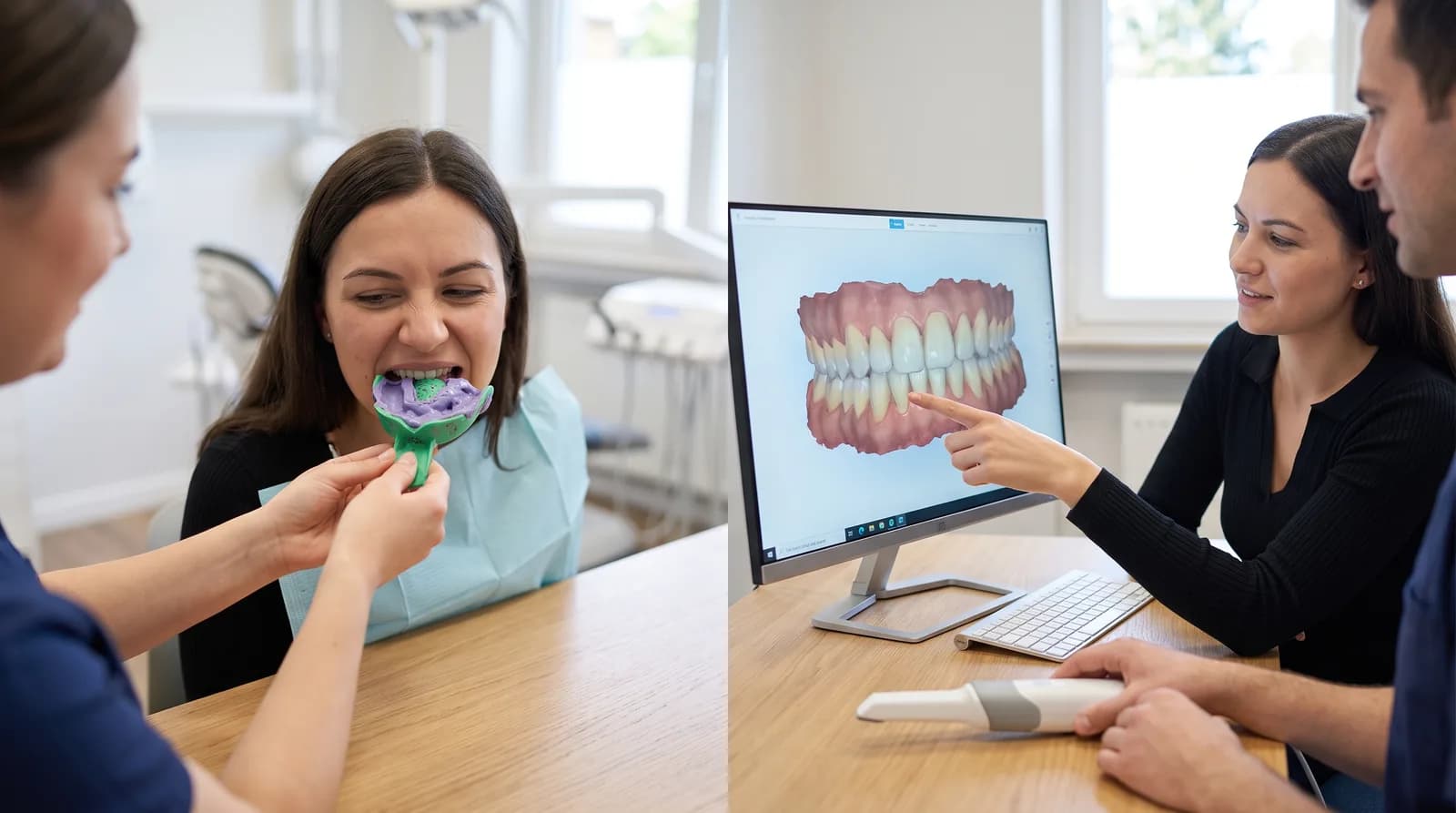
An accurate estimate requires an in-person exam, imaging or a digital scan, and a specific treatment plan. Generic online price ranges can't account for your individual case complexity or New Jersey market rates. Our guide on reading a dental treatment plan explains how to interpret an itemized estimate once you have one.
Ask specifically whether the quote includes retainers, follow-up visits, and any potential refinement aligners. These can be bundled into some quotes and billed separately in others. Comparing quotes apples to apples means confirming exactly what's included in each number you're given.
If you're comparing multiple New Jersey practices, it's worth confirming whether each quote reflects the same scope. Check the same number of follow-up visits, the same retainer policy, and the same coverage for any refinements. A lower initial quote that excludes retainers or follow-up visits isn't necessarily the better value once those costs are added back in.
Bring any previous imaging, X-rays, or notes from another consultation if you have them. That can sometimes speed up the evaluation and give a more precise estimate sooner rather than starting entirely from scratch at each practice you visit.
Long-term value depends less on the sticker price and more on completing treatment successfully and maintaining results afterward with consistent retainer wear. Straight teeth are easier to clean. This reduces the risk of cavities and gum disease by up to 30%, according to the CDC's overview of oral health, a benefit that applies regardless of which option achieved the result.
The option you're most likely to stick with consistently often delivers better long-term value. This applies whether that's the discretion of Invisalign or the fixed, no-daily-decision nature of braces, compared to an option with a marginally lower upfront price but a higher risk of inconsistent wear or incomplete treatment.
Braces vs Invisalign cost comparison in New Jersey ultimately comes down to your specific case, not a fixed price difference between the two technologies. An accurate quote requires an exam, not a guess. Results may vary. Please consult with your dentist at Susan J. Curley DDS for personalized treatment recommendations.
If cost has been the main thing holding you back from starting treatment, an itemized estimate is the clearest way forward. It shows what braces or Invisalign would actually cost for your case.
Get Your Cost Estimate Today
Schedule a consultation with Dr. Curley in Wall Township for an itemized quote on braces or Invisalign.
Book Appointment →Have questions before booking?
Contact Our Wall Township Office →Written By
Dentist
Dentist in Belmar NJ what to look for: real experience, full services, modern technology, reviews, and same-day emergency care.
Clear aligners for teens vs adults: how they differ in compliance, retainers, growth factors, motivation, timeline, and overall cost.
iTero digital scanning vs traditional impressions: comfort, accuracy, and how each supports Invisalign, crowns, and veneers.
Book your visit with Dr. Curley online or call us, and we'll take it from there.