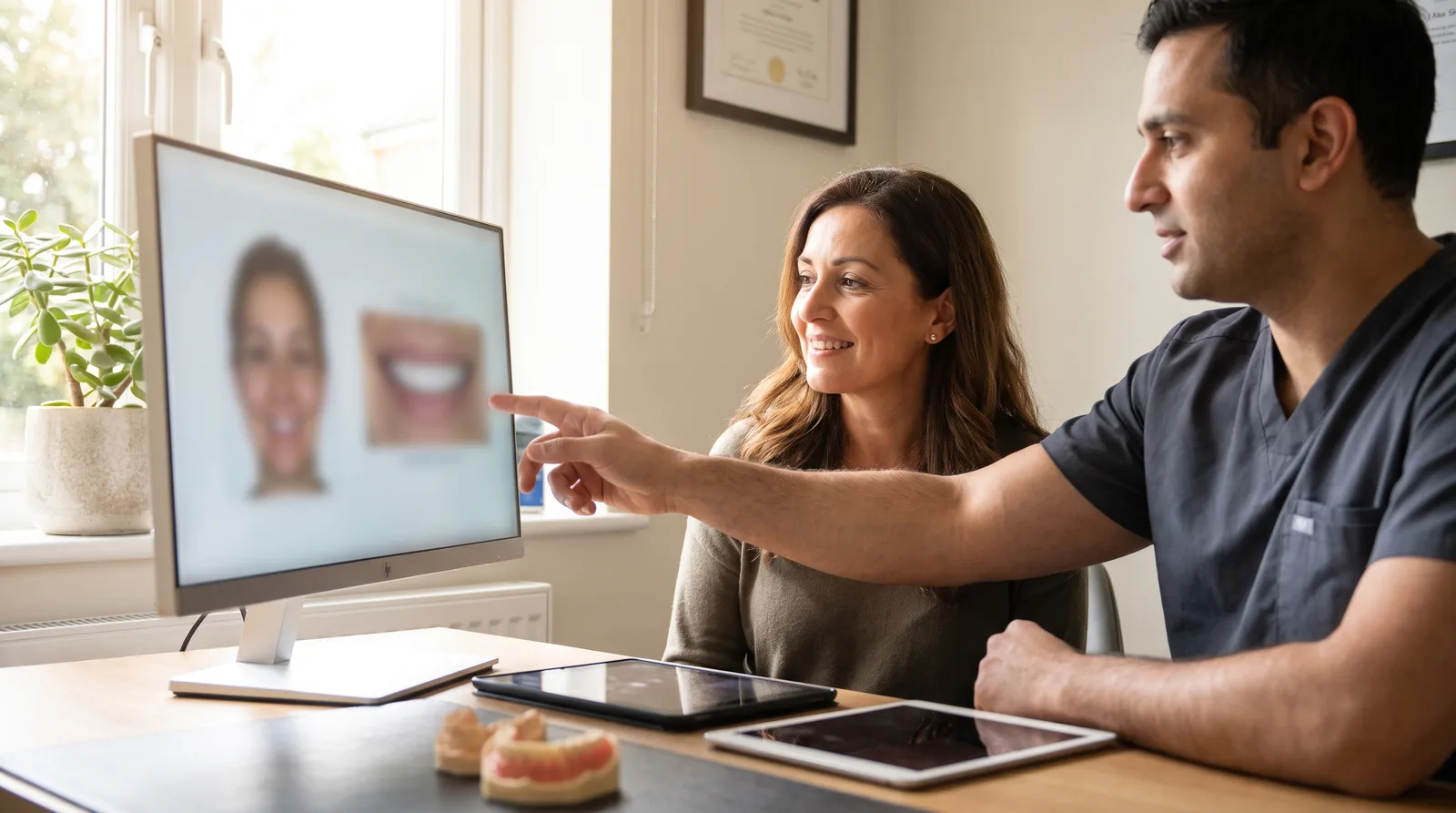
smile-design
Your First Smile Makeover Consultation: What to Expect
Your first smile makeover consultation: what to expect, from the goals discussion to your digital smile design preview and plan.
Sep 20, 20268 min read



A chipped tooth needs a different fix depending on how much damage there actually is, and figuring out which of the chipped tooth repair options, bonding, a veneer, or a crown, applies to you starts with understanding what each one is actually built to handle. This guide works like a quick triage: match your situation to the right fix rather than guessing based on how the chip looks to you. All three options fall under restorative dentistry at Susan J. Curley DDS, and an exam confirms which one your specific tooth actually needs. A chip that looks minor to you might actually call for more coverage, and one that looks alarming might be a quick, same-day fix.
Just Chipped a Tooth?
A same-week exam confirms exactly which repair option fits your specific chip.
Book Appointment →The three main chipped tooth repair options are bonding, a veneer, and a crown, each suited to a different severity of damage. Bonding handles minor chips, veneers cover moderate cosmetic damage, and crowns address more significant structural loss. Understanding this progression helps set realistic expectations before your exam even happens.
Bonding is the fastest and least invasive option, using a tooth-colored resin applied directly to the chip in a single visit. A veneer is a thin shell bonded to the front of the tooth, covering a larger area than bonding alone and offering more durability. A crown covers the entire visible tooth and is reserved for damage significant enough to affect the tooth's structural integrity, not just its appearance. Each option involves a different level of preparation, cost, and longevity, which is exactly why matching the fix to the damage matters.
An exam is what actually determines which category your chip falls into, since severity isn't always obvious just from looking in the mirror. According to Mayo Clinic, prompt treatment of a chipped tooth generally leads to a simpler repair. Waiting to see whether it feels fine on its own rarely improves the outcome, and often narrows your options over time.
Bonding is the right fix for small to moderate chips that don't affect the tooth's overall strength, typically on the edge or corner of a front tooth. It's often completed in a single, same-day visit.
The process involves applying a tooth-colored composite resin directly to the chipped area, shaping it to match the tooth's natural contour, then hardening it with a curing light. No anesthetic is usually needed, since bonding doesn't require removing any of the tooth's natural structure. It's a good option when the goal is simply restoring appearance and smoothing a rough edge, rather than addressing a deeper structural issue. The whole appointment often takes well under an hour, making it a practical fix for a busy schedule.
Bonding is also the most conservative of the three options, since it can often be adjusted or redone later without permanently altering the tooth. If your priorities are speed and minimal intervention, bonding is usually the first option worth discussing.
A veneer becomes the better option when a chip is larger, affects the tooth's overall appearance more significantly, or when you want a more durable, longer-lasting cosmetic result than bonding provides. Veneers also address multiple concerns at once, which is part of why some patients choose them even for a chip that bonding could technically handle.
| Factor | Bonding | Veneer |
|---|---|---|
| Chip size | Small to moderate | Moderate to larger cosmetic damage |
| Durability | Several years | Longer-lasting, more stain-resistant |
| Visit timeline | Often same-day | Typically two visits |
Veneers also work well if you're addressing a chip alongside other cosmetic concerns, like color or minor spacing, in the same treatment plan. Since a veneer covers more of the tooth's surface than bonding, it can smooth out multiple small imperfections at once rather than treating each one separately. This makes veneers a practical choice when a chip is just one of several small cosmetic concerns you'd like addressed together.
Considering Veneers for More Than One Tooth?
Our guide compares veneers directly against bonding for broader cosmetic goals.
Read Veneers vs. Bonding →A chip requires a crown when the damage is significant enough to compromise the tooth's structural strength, extends below the gumline, or follows a root canal. At that point, the tooth needs full coverage rather than a surface repair. This tends to be the least common of the three scenarios, but also the one where getting it right matters most.
Unlike bonding or a veneer, which address the front surface of a tooth, a crown covers the entire visible portion, providing protection from every angle. This becomes necessary when a chip is large enough that the remaining tooth structure could crack further under normal biting pressure, or when enough of the tooth is missing that a thin surface repair wouldn't hold up. Same-day 3D-printed crowns mean this option, while more involved than bonding, often still fits into a single visit. Dr. Curley will confirm during your exam whether the remaining tooth structure can support a crown or whether other steps are needed first, such as a root canal if the damage has reached the tooth's inner nerve tissue.
If a chip exposes the inner layers of the tooth or causes sensitivity, that's often a sign the damage extends beyond what bonding or a veneer alone could address. In some cases, a crown becomes necessary after a root canal on the same tooth, since the combined treatment leaves the tooth more brittle than before.
Right after chipping a tooth, rinse your mouth with warm water, save any broken piece if you can find it, and avoid chewing on that side until you're seen. These simple steps help protect the tooth in the meantime and give Dr. Curley more information at your appointment.
None of these steps fix the chip itself, but they help prevent the situation from getting worse while you wait for your appointment. A same-week exam is generally soon enough for most chips, though a same-day call makes sense if there's significant sensitivity or visible exposure of the tooth's inner layers.
A chipped tooth is worth addressing within a few days to a week in most cases, sooner if you notice sharp edges, sensitivity, or visible exposure of the inner tooth layers. Waiting longer generally doesn't improve the outcome and can sometimes make the eventual repair more involved.
A sharp edge can irritate your tongue or cheek in the meantime, and a chip left untreated is more likely to worsen with normal chewing, sometimes turning a bonding-level repair into something that eventually needs a crown instead. Nearly 1 in 4 adults in the US has untreated tooth decay, according to CDC data, and a similar pattern holds for minor damage like chips: addressing it early keeps the eventual repair simpler. Regular dental visits catch roughly 80% of oral health issues before they become serious, according to the ADA, and a chipped tooth is exactly the kind of issue that benefits from prompt attention rather than a wait-and-see approach.
If the chip came with a hard impact to the mouth, a same-day evaluation is worth prioritizing to rule out damage to the tooth's root or nerve. An impact significant enough to chip a tooth can sometimes affect the nerve even without an obvious visible sign, which only an exam and X-rays can confirm.
Yes, all three repair options, bonding, veneers, and crowns, are designed to match your natural tooth color and blend in with the surrounding teeth. Modern materials make it difficult to tell a repaired tooth apart from an untouched one.
Bonding is shade-matched during the appointment itself, while veneers and crowns are custom-fabricated to match your specific tooth color and shape using digital scans or impressions. Digital Smile Design can help you visualize the expected result before committing to a veneer or crown, giving you a clearer sense of the outcome ahead of time. For most patients, the finished repair is genuinely difficult to distinguish from the surrounding natural teeth. Even friends and family often don't notice which tooth was repaired once the work is finished.
If matching color and shape closely matters to you, mention it during your consultation so it factors into which option Dr. Curley recommends. Bringing a reference photo of your smile before the chip happened can also help guide the shade and shape matching process. This is especially useful if the chip changed the tooth's appearance noticeably, since it gives Dr. Curley a clear target to match.
Chipped tooth repair options aren't really a matter of personal preference so much as matching the fix to the actual severity of the damage. Bonding handles minor chips quickly and conservatively, veneers cover moderate cosmetic damage with more durability, and crowns step in when the tooth's structure itself is compromised. Susan J. Curley DDS will confirm which category your chip falls into during an exam, rather than guessing from a description over the phone, and walk through cost and timeline for whichever option applies.
Results may vary. Please consult with your dentist at Susan J. Curley DDS for personalized treatment recommendations.
If you've recently chipped a tooth, the next step is a same-week exam to find out exactly which repair option fits, whether that turns out to be a quick bonding appointment or something more involved.
Just Chipped a Tooth?
Book an appointment with Susan J. Curley DDS and find out the right fix for your specific chip.
Book an Appointment →Prefer to talk it through first?
Call 732-681-8604 →Written By
Dentist
Your first smile makeover consultation: what to expect, from the goals discussion to your digital smile design preview and plan.
What is digital smile design? A preview technology that lets you see your proposed new smile before treatment even begins.
Am I a candidate for veneers? Six clear signs that suggest veneers could be a good fit for your smile and long-term goals.
Book your visit with Dr. Curley online or call us, and we'll take it from there.