Restorative Dentistry
Dental Bridge vs Implant Which Is Right for Your Case
Dental bridge vs implant which is right: how each option works, longevity, impact on neighboring teeth, and who's a better candidate for each.
Aug 18, 202610 min read



The first few weeks with a new set of restorative dentistry work rarely go exactly the way patients expect, and adjusting to new dentures first month is genuinely a process, not a single moment where everything suddenly feels normal. Sore spots, speech changes, and eating adjustments are all a standard part of that process.
Most of what feels alarming in the first few days turns out to be a well-recognized, temporary part of the adjustment period rather than a sign that something needs to be redone from scratch.
Knowing what to expect ahead of time changes how the first week actually feels. A sore spot on day two feels very different when it's an anticipated part of the process rather than a surprise. Regular dental visits can catch about 80% of oral health issues before they become serious, according to the ADA, and staying on top of denture follow-ups fits that same preventive approach.
This guide walks through what actually happens week by week, and when a symptom is worth a call rather than waiting it out. For restorative options generally, see this practice's restorative dentistry services.
The first month with new dentures typically involves sore spots that need adjusting, temporary speech changes, increased saliva, and a gradual return to eating a normal range of foods, all of which improve steadily rather than resolving overnight.
None of this is a sign that something went wrong with the fitting. A denture rests against soft tissue that's never had to bear that kind of pressure before, and that tissue needs time to adapt regardless of how well the denture was made.
Most patients notice steady, week-over-week improvement rather than a single turning point. Expecting gradual progress, rather than instant comfort, makes the process feel far more manageable from the start.
According to ADA guidance, a follow-up visit within the first few weeks is a standard, expected part of the denture process, not an indication that anything went wrong with the original fitting.
Dealing With a Sore Spot?
A quick adjustment visit usually resolves it within minutes.
Schedule an Adjustment →Sore spots develop where a denture presses unevenly against gum tissue, and they're extremely common in the first few weeks as the tissue adjusts and the fit gets fine-tuned through follow-up adjustment visits.
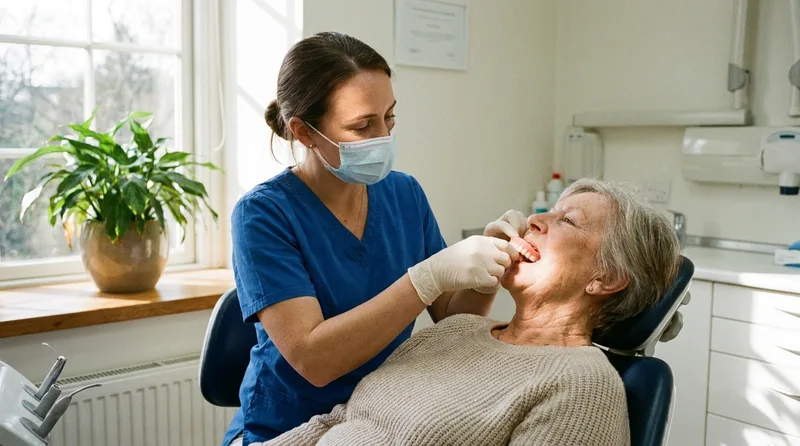
A denture that felt fine at the fitting appointment can still create a sore spot once it's used for actual chewing and talking throughout a full day. That's a normal part of the process, not a sign the denture was made incorrectly.
Never attempt to adjust or file down a denture without professional guidance. A small adjustment in the wrong spot can throw off the fit in ways that are harder to correct afterward.
Bringing the denture to a follow-up visit, worn for at least a few hours beforehand, helps the dentist see exactly where the pressure points are actually forming rather than guessing from a description alone. A quick adjustment at that visit typically resolves the specific spot within minutes.
It's common to need more than one adjustment visit during the first month, especially as new sore spots surface once earlier ones are resolved. This is a normal part of fine-tuning the fit, not a sign of a flawed original impression.
Speech often sounds different at first because the tongue and lips need to relearn how to form certain sounds, especially s and th sounds, around the new shape of the denture in the mouth.
A slight lisp or whistling sound is common during the first couple of weeks. It typically fades as the muscles involved in speech adapt to the denture's presence, without any specific exercises required.
Reading out loud for a few minutes each day tends to speed up this adjustment. It gives the tongue and lips repeated practice with a wide range of sounds in a low-pressure setting.
According to Mayo Clinic's general guidance on dental care, speech typically normalizes within a few weeks as the tongue and facial muscles adapt to a denture's shape and positioning.
Start eating with new dentures using soft foods cut into small pieces, chewing evenly on both sides of the mouth, and gradually work up to firmer foods over the following weeks as confidence and comfort improve.

Soft foods like eggs, pasta, and well-cooked vegetables are a reasonable starting point. Cutting food into smaller pieces than usual reduces the pressure needed to chew, which matters while the fit is still settling in.
Chewing on both sides at once, rather than favoring one side, helps keep the denture stable during the bite. Favoring one side tends to rock the denture slightly, which can make chewing feel less steady than it actually is.
Sticky and very hard foods are worth avoiding for the first few weeks specifically, since they place more strain on a fit that's still adjusting than a typical meal would. Nuts, hard candy, and very chewy foods are worth saving for later once confidence has built up.
Temperature can matter too, at least early on. Very hot foods and drinks sometimes feel different against a denture than they did against natural gum tissue, so a little extra caution during the first few meals is reasonable.
Increased saliva production during the first week or two is a normal, temporary response to a new object in the mouth, and it typically resolves on its own as the mouth adjusts to the denture's presence.
The body treats a new denture similarly to any new object in the mouth at first, triggering extra saliva as part of a natural adjustment response. This isn't a sign of a poor fit or an allergic reaction.
This symptom typically fades within one to two weeks without any specific treatment needed. If it persists well beyond that window, mentioning it at a follow-up visit is a reasonable step.
Staying hydrated and avoiding excessive talking during the first day or two can make this symptom feel slightly less noticeable, though it resolves on its own regardless either way. It's one of the more temporary symptoms on this list and rarely lasts as long as the sore-spot adjustment period does.
Some patients notice a dry mouth sensation instead of excess saliva, particularly if a denture affects how they breathe or hold their mouth throughout the day. Both patterns are within the normal range of first-week adjustment responses.
25+ Years Supporting Denture Patients
Dr. Curley walks every new denture patient through what to expect.
Meet Dr. Curley →A realistic week-by-week timeline includes sore spots and speech changes in week one, gradual improvement in both speech and eating through weeks two and three, and a mostly adapted routine by around week four.
This timeline varies somewhat by individual, and it isn't a strict schedule to measure progress against. Some patients adapt faster, others take a few extra weeks, and both patterns are within a normal range.
A scheduled follow-up appointment, typically within the first few weeks, is the standard opportunity to address any remaining sore spots or fit adjustments before settling into a long-term routine.
Patients who attend their scheduled follow-up visits tend to reach a comfortable, stable fit noticeably faster than those who skip that step and simply wait for things to improve entirely on their own. That single habit makes more difference than any specific home remedy or technique.
Keeping a simple note of which days felt harder and which felt easier can help identify a pattern worth mentioning at the next visit, particularly if a specific food or activity consistently triggers discomfort. Patients who keep up with routine dental care are roughly 60% less likely to lose teeth over time, according to the Journal of Dental Research, and that same consistency habit extends naturally to denture follow-up care.
| Week | What's Typical |
|---|---|
| Week 1 | Sore spots, increased saliva, noticeable speech changes |
| Weeks 2 to 3 | Speech improving, eating range expanding, fewer sore spots |
| Week 4 and beyond | Mostly adapted; follow-up adjustment as needed |
Call the dentist for a sore spot that doesn't improve after a few days, an ulcer that develops, or a denture that feels loose or unstable, rather than waiting it out or attempting a home adjustment.
Ordinary mild soreness during the first week or two is expected and often improves with minor adjustments at a follow-up visit. A spot that keeps getting worse, or an actual ulcer, is different and worth addressing sooner rather than later.
A denture that feels loose or shifts noticeably during eating or talking, beyond the very beginning of the adjustment period, is also worth mentioning at a visit rather than assuming it will resolve on its own. A denture adhesive can help temporarily, but it isn't a substitute for an actual fit adjustment if looseness persists.
Trusting a gut feeling that something isn't right is generally a good instinct here. Patients often notice a problem well before they can fully articulate exactly what's wrong, and that instinct is worth acting on.
Regular dental visits can catch about 80% of oral health issues before they become serious, according to the ADA, and a persistent denture problem follows that same logic: earlier attention tends to mean a simpler fix.
Keeping new dentures comfortable long-term involves regular follow-up checkups, cleaning the denture daily as directed, giving gum tissue a rest overnight, and returning for a refit if the fit changes noticeably over time.

Gum tissue and jawbone shape can shift gradually over months and years, which is a normal part of long-term denture wear. Periodic adjustments or a full reline keep the fit comfortable as that underlying shape changes.
Patients who keep up with routine follow-up care tend to get noticeably more comfortable, longer-lasting use out of a denture than those who only return once a problem has already developed.
Ready to get your fit checked? Book an appointment to get started.
The short version: sore spots, speech changes, and eating adjustments are a normal, temporary part of the first month with new dentures, and most patients see steady improvement by week three or four. A sore spot that lingers, or a denture that feels unstable, is worth a call rather than waiting it out.
Results may vary. Please consult with your dentist at Susan J. Curley DDS for personalized treatment recommendations.
If the first week has felt harder than expected, that's genuinely normal, and it tends to get easier from here. Most of the discomfort that feels significant in week one is a distant memory by week four.
Have a question about your fit?
Contact Us →Written By
Dentist
Dental bridge vs implant which is right: how each option works, longevity, impact on neighboring teeth, and who's a better candidate for each.
Dental checkup frequency for adults: why six months is the standard, who needs more frequent visits, and what actually happens at a typical checkup.
Fluoride treatment for adults necessary in some cases, not others. See who actually benefits, how it works, and how it differs from toothpaste.
Book your visit with Dr. Curley online or call us, and we'll take it from there.