
Preventive Dentistry
Dental Sealants for Adults Worth It: The Full Guide
Dental sealants for adults worth it? For molars with deep grooves, yes. See how they work, who's a candidate, and how they compare to a filling.
Aug 16, 202610 min read



Most people assume fluoride treatment for adults necessary or not is an easy no, since fluoride gets marketed almost entirely to kids. That assumption is outdated. As part of routine general dentistry care, fluoride keeps working on adult teeth the same way it works on younger ones, and several common adult conditions actually increase how much it helps.
Dry mouth, gum recession, and a history of cavities all become more common with age. Each one raises decay risk in ways that fluoride specifically addresses. None of that risk disappears just because someone stopped seeing a pediatric dentist decades ago.
This guide covers what fluoride actually does, who benefits most as an adult, and how a professional treatment differs from toothpaste at home. For general preventive care beyond fluoride specifically, see this practice's general dentistry services.
Fluoride treatment for adults is necessary in specific situations: dry mouth, a history of cavities, gum recession, or orthodontic treatment all raise decay risk enough that fluoride becomes a genuinely useful addition to a normal cleaning.
Fluoride isn't a blanket recommendation for every adult at every visit. It's a targeted tool for specific risk factors. A patient with none of those risk factors may not need it. A patient with one or more usually does.
The CDC has called community water fluoridation one of the top ten public health achievements of the 20th century. That endorsement wasn't limited to children. Fluoride's cavity-fighting mechanism works on adult tooth enamel exactly the same way it works on a child's. 42% of adults aged 30 and older have some form of periodontal disease, according to the CDC, which is exactly the kind of widespread risk that makes fluoride relevant well beyond childhood.
Age doesn't change the basic chemistry involved. What changes with age is exposure to specific risk factors, like dry mouth or gum recession, that make fluoride's protective effect more valuable at certain points in life than others.
A patient in their thirties with no health changes and strong oral hygiene habits might genuinely not need fluoride treatment. That same patient at sixty, managing a new medication that causes dry mouth, often does. The tooth didn't change. The risk profile did.
Wondering If Fluoride Makes Sense for You?
A routine exam is the easiest way to find out based on your actual risk factors.
Schedule a Cleaning →People think fluoride is only for kids because most public fluoride campaigns, from water fluoridation to school programs, target childhood specifically, when permanent teeth are still developing and decay rates are easiest to track.
That early-life focus makes sense from a public health standpoint. Childhood is when fluoride has the biggest measurable impact on permanent teeth still forming. But that emphasis created a lasting impression that fluoride's usefulness ends once those teeth are fully in.
It doesn't. Adult tooth enamel still benefits from fluoride's remineralizing effect. The marketing just moved on to a different age group, not because adults stopped needing it, but because children were the easier audience to reach with public programs.
Insurance coverage sometimes reinforces the same misconception. Many plans cover fluoride treatment automatically for children but require adults to request it specifically. That coverage gap has nothing to do with whether fluoride actually helps an adult's teeth.
Dental offices themselves sometimes contribute to the gap too, simply by not bringing it up during adult cleanings the way they routinely do for pediatric patients. It's rarely intentional. It's just a habit built around how insurance and public messaging have shaped routine practice over decades.
Fluoride strengthens tooth enamel by helping it reabsorb minerals lost to acid attacks from food, plaque, and bacteria, a process called remineralization that makes enamel more resistant to future decay.
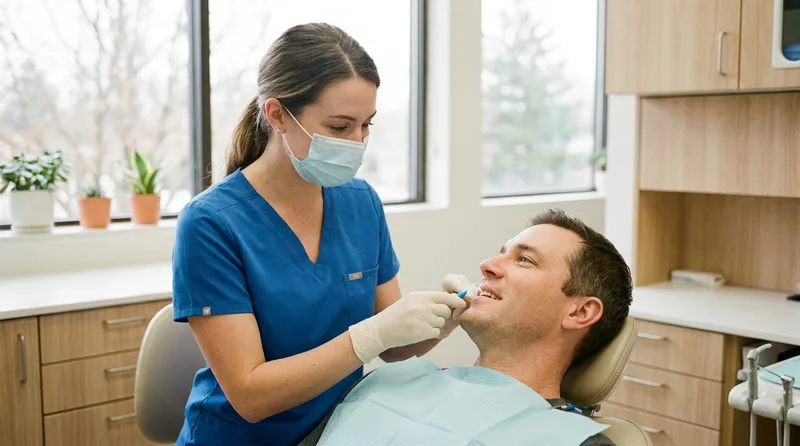
Enamel loses and regains minerals constantly throughout the day. Eating and drinking anything acidic pulls minerals out. Saliva and fluoride help push them back in. Fluoride specifically makes that rebuilt enamel harder and more decay-resistant than it would be otherwise.
Nearly 1 in 4 adults in the US has untreated tooth decay, according to CDC data. Fluoride addresses exactly the kind of early, still-reversible damage that often goes unnoticed until it's no longer reversible.
This cycle of demineralization and remineralization happens dozens of times a day in a normal mouth. Fluoride simply tips that balance further toward repair, which adds up meaningfully over months and years of consistent exposure.
That cumulative effect is part of why a single fluoride treatment isn't a one-time fix. It's most useful as part of an ongoing pattern, reinforced at routine visits, rather than a single intervention meant to solve a problem permanently.
Adults who benefit most from fluoride treatment include those with dry mouth, gum recession exposing tooth roots, a recent history of cavities, or active orthodontic treatment like braces or clear aligners.
Dry mouth reduces saliva's natural rinsing and remineralizing effect. Medications, certain health conditions, and age-related changes all commonly cause it. Less saliva means less natural protection, which makes fluoride's added support more valuable, not less.
Gum recession exposes tooth roots that were never covered in the same protective enamel as the crown of the tooth. Root surfaces decay more easily and respond well to fluoride's protective effect specifically because they're more vulnerable to begin with.
Orthodontic appliances create more surfaces for plaque to hide around, which raises decay risk during treatment. Fluoride during that window helps offset the added risk until the appliance comes off and normal cleaning gets easier again.
A recent cavity is one of the clearest signals a dentist looks for. It demonstrates, directly and specifically, that the current balance between decay and protection has tipped the wrong way in that particular mouth.
None of these four factors need to be dramatic to matter. Mild dry mouth from a common allergy medication, slight gum recession from years of brushing, or a single cavity two years ago are all reasonable enough to bring up during a routine exam. Patients who keep up with routine care are roughly 60% less likely to lose teeth over time, according to the Journal of Dental Research, and fluoride is one small, low-effort part of that broader pattern.
| Risk Factor | Why Fluoride Helps |
|---|---|
| Dry mouth | Compensates for reduced natural saliva protection |
| Gum recession | Protects exposed, more vulnerable root surfaces |
| Recent cavities | Strengthens enamel in a demonstrated high-risk mouth |
| Braces or aligners | Offsets added plaque risk around appliances |
A Quick, Comfortable Addition to Any Cleaning
Fluoride treatment takes minutes and fits easily into a routine visit.
See Related Preventive Options →During a fluoride treatment, a concentrated gel, foam, or varnish gets applied directly to the teeth for a few minutes, then either rinsed or left to absorb, depending on the specific product used.
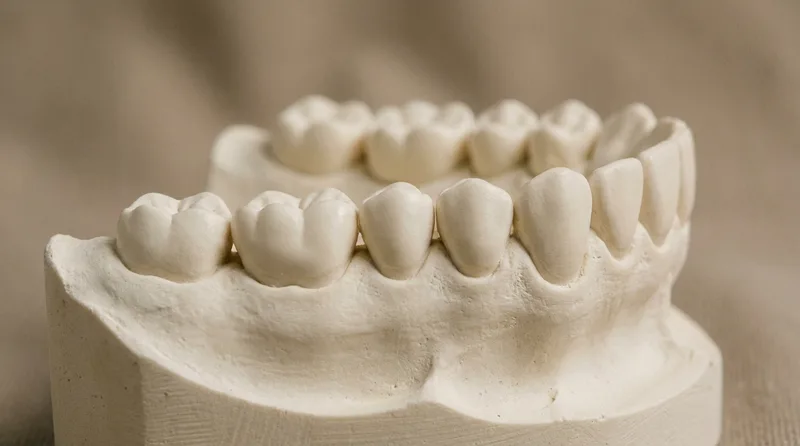
The whole process usually takes less than five minutes and happens right after a routine cleaning. There's no discomfort involved, no anesthetic, and no recovery time. Most patients are back to normal activity immediately afterward.
Varnish is the most common option for adults. It sets quickly and stays on the teeth for several hours, allowing fluoride to absorb gradually rather than all at once. Patients are usually asked to avoid hot food or hard brushing for a few hours afterward.
Foam and gel applications work similarly but typically require a longer sitting time in a mouth tray. Varnish has become more popular for adults specifically because it sets faster and lets a patient go about their day sooner.
None of these options require special preparation beforehand. A patient can eat or drink normally before the appointment, and the treatment itself fits easily into the same visit as a routine cleaning and exam.
Fluoride treatment is safe for adults when applied by a dental professional at the recommended concentration, a level well below anything associated with fluoride overexposure or toxicity concerns for a healthy adult.
Professional fluoride treatments use a carefully controlled dose specifically calibrated for safe, effective use. The concentration is far higher than toothpaste, but the application is a single, brief, professionally administered treatment rather than daily repeated exposure.
According to ADA guidance, fluoride remains one of the most thoroughly studied and safest preventive tools in modern dentistry when used as recommended. Concerns about fluoride overexposure generally apply to swallowing large amounts over time, not a single in-office application.
Fluorosis, the cosmetic condition sometimes associated with fluoride, results from consistent overexposure during childhood tooth development. It isn't a risk for adult teeth, since enamel formation is already complete by adulthood.
Patients occasionally raise broader fluoride safety concerns they've encountered online. Most of that concern traces back to studies on very high, sustained exposure levels, not the single, professionally measured dose used in a standard in-office treatment.
Professional fluoride treatment uses a concentration far higher than anything available in over-the-counter toothpaste, applied directly and left in contact with teeth long enough to have a meaningfully stronger remineralizing effect.
Toothpaste delivers a low, safe dose meant for daily use over a lifetime. Professional treatment delivers a concentrated dose meant for occasional, targeted reinforcement. Both matter, but they serve different roles rather than competing with each other.
Brushing with fluoride toothpaste twice a day remains the baseline every adult should maintain regardless of whether they also get professional treatments. Professional fluoride adds a periodic boost on top of that baseline, not a replacement for it.
According to Mayo Clinic's general guidance on dental care, combining consistent daily habits with periodic professional care tends to produce better long-term outcomes than either approach alone.
Knowing whether fluoride treatment makes sense starts with a routine dental exam, where risk factors like dry mouth, gum recession, or recent cavities get evaluated directly rather than assumed from general habits alone.
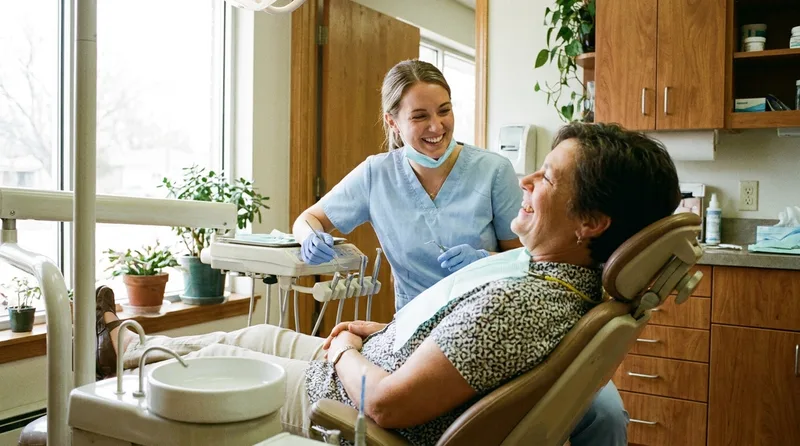
There's no separate specialty visit required. The conversation typically happens during a regular cleaning, once a hygienist or dentist has an actual look at gum health, enamel condition, and any relevant medical history.
Regular dental visits can catch about 80% of oral health issues before they become serious, according to the ADA. A fluoride conversation is exactly the kind of small, preventive decision that a routine visit tends to surface naturally.
Patients sometimes worry that asking about fluoride will lead to an unnecessary upsell. In practice, it's a quick conversation that either confirms fluoride isn't needed right now or identifies a genuine, specific reason to add it.
The short version: fluoride treatment for adults is necessary for some patients and unnecessary for others, depending on specific risk factors rather than age alone. Dry mouth, gum recession, recent cavities, and orthodontic treatment are the clearest reasons to consider it.
Results may vary. Please consult with your dentist at Susan J. Curley DDS for personalized treatment recommendations.
If fluoride hasn't come up at a dental visit in years, that's worth asking about directly rather than assuming it no longer applies. A short conversation at a routine cleaning settles the question either way.
Have a question about your specific risk factors?
Contact Us →Written By
Dentist
Dental sealants for adults worth it? For molars with deep grooves, yes. See how they work, who's a candidate, and how they compare to a filling.
Laser gum surgery recovery time is faster than most patients expect. See the realistic day-by-day timeline compared to traditional scalpel surgery.
Laser gum treatment at Susan J. Curley DDS in Wall Township, NJ offers a gentler alternative to traditional gum procedures. Learn what to expect.
Book your visit with Dr. Curley online or call us, and we'll take it from there.