Jersey Shore Dentist 25 Years Experience: How Care Evolved
Dr. Susan J. Curley, DDSAugust 12, 202610 min read
Key Takeaways
Diagnostic imaging moved from flat film X-rays to three-dimensional CBCT scans over the past 25 years.
Same-day 3D-printed crowns replaced the old two-visit process that required a temporary crown for weeks.
Clear aligners like Invisalign now treat roughly 90% of mild-to-moderate alignment issues.
Dental anxiety affects about 36% of Americans, a number that hasn't changed much across the decades.
Patients who keep up with routine care are roughly 60% less likely to lose teeth over time.
The practice's judgment-free, patient-first philosophy has stayed constant even as the technology around it changed completely.
A Jersey Shore dentist with 25 years of experience has watched an entire profession change shape, not just gained a lot of practice at doing the same thing. Dr. Susan J. Curley, DDS opened her Wall Township practice more than 25 years ago, and almost nothing about how dentistry gets done today looks like it did back then.
This isn't a piece about star ratings or review counts. For that side of the story, see this practice's existing reviews and reputation overview. This is a look at what actually changed in the chair, in the lab, and in the diagnosis room over 25 years, and what, deliberately, never did.
Patients who've been coming since the early days sometimes mention how different a visit feels now compared to their first one. This is the story behind that difference, told in roughly the order it actually happened, from the equipment in the room to the philosophy that never changed alongside it.
Jersey Shore Dentist 25 Years Experience: What's Actually Changed?
Dentistry has changed almost everywhere in the past 25 years: imaging moved from film to 3D digital scans, crowns moved from two visits to one, and orthodontics moved from wires to clear plastic most people barely notice.
Someone who hasn't seen a dentist in a decade would notice the difference within minutes of walking into a modern office. The tools look different, the timelines are shorter, and the amount of guesswork involved in a diagnosis has dropped considerably.
None of that happened overnight. It happened in stages, one piece of equipment and one new technique adopted at a time. The career started with film X-rays and paper charts and has landed, 25-plus years later, somewhere much closer to a fully digital workflow.
The pace of change actually accelerated in the back half of that timeline. The first ten years brought steady, incremental improvements. The most recent ten brought CBCT imaging, in-office 3D printing, and digital smile planning, tools that would have sounded closer to science fiction back when the practice first opened its doors.
Patients sometimes ask whether all the new equipment actually changes the outcome or just the experience of getting there. The honest answer is both. Faster, more precise diagnosis tends to mean fewer surprises during treatment, not just a shorter appointment.
It also means fewer repeat visits for the same problem. A crown that fits correctly the first time, guided by a digital scan instead of a physical impression, doesn't need to be remade because of a small measurement error that used to be far more common with older methods. Fewer remakes means fewer appointments spent fixing something that should have worked the first time around.
Early years: film X-rays, paper charts, and traditional lab-made crowns requiring a temporary and a second visit.
Middle years: digital X-rays reduced radiation exposure and wait times; digital patient records replaced paper charts.
Recent years: CBCT 3D imaging, in-office 3D-printed same-day crowns, and Digital Smile Design planning tools.
Today: a largely digital workflow from diagnosis through restoration, built on top of a philosophy that hasn't changed.
From Film X-Rays to CBCT: A Look at Diagnostic Technology
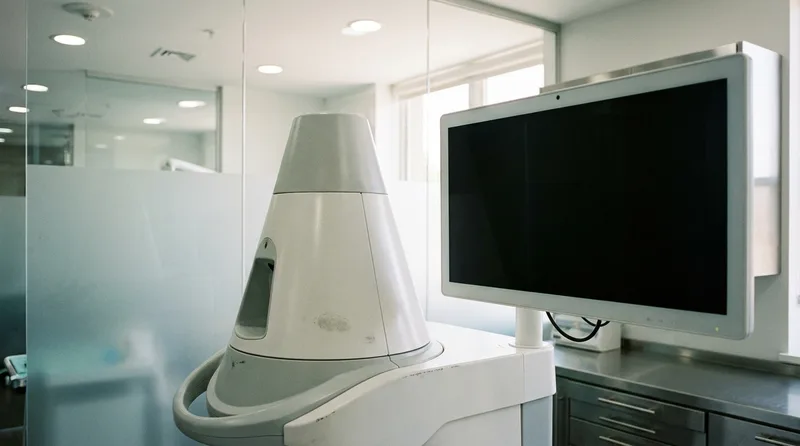
Diagnostic imaging moved from two-dimensional film X-rays to CBCT, a 3D scanning technology that gives a far more precise picture of what's actually happening beneath the surface of a tooth or jaw.
Three-dimensional imaging has replaced the flat film X-rays of decades past.
Film X-rays were the standard for most of Dr. Curley's early career. They worked, but they were flat, occasionally blurry, and required a chemical development process that added time to every visit. Digital X-rays arrived first, cutting both the wait and the radiation exposure. CBCT came later, adding a genuine third dimension to the picture.
That shift matters more than it sounds. A root canal planned with a flat X-ray involves some educated guessing about canal shape and location. A root canal planned with CBCT imaging involves considerably less of it, since the provider can see the actual three-dimensional anatomy before starting.
According to ADA research, digital imaging has become standard across most modern dental practices over the past decade, largely because it reduces both chair time and radiation exposure compared to older film-based methods. That shift happened gradually enough that most patients barely noticed the transition happening around them, visit by visit. Looking back at it all at once, from film to fully three-dimensional imaging, makes the scale of the change a lot more obvious than it felt living through it one upgrade at a time.
Curious What's Changed Since Your Last Visit?
See the current technology in action, or just start a conversation about what a modern visit looks like.
From Two-Visit Crowns to Same-Day 3D-Printed Restorations
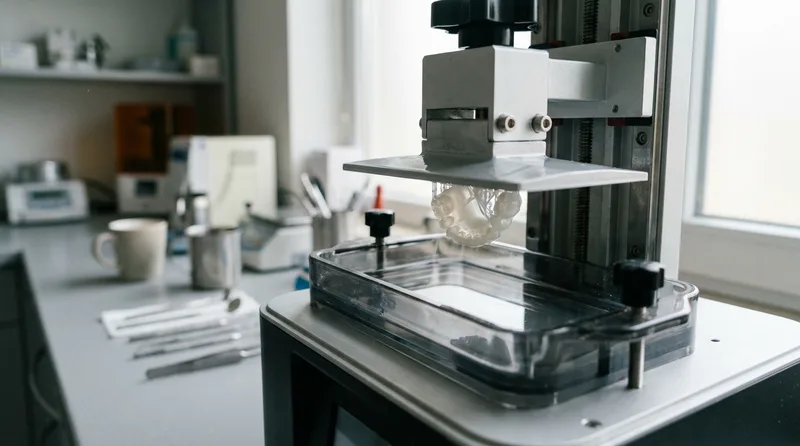
Same-day 3D-printed crowns replaced the traditional two-visit process, where a temporary crown held things together for two to three weeks while a lab fabricated the permanent one somewhere else entirely.
Same-day 3D-printed crowns replaced the old two-visit process.
The old process wasn't broken, exactly, but it asked a lot of patience from patients. A temporary crown never quite feels like a real tooth. A two to three week wait for the permanent one meant a second appointment, a second round of local anesthetic, and a second block of time off work or school.
In-office 3D printing collapsed that timeline into a single visit for most cases. The tooth gets scanned, the crown gets designed and milled or printed on-site, and the patient leaves with a finished restoration instead of a placeholder. Dental implants have a success rate of 95 to 98% over ten years, according to the Journal of Oral and Maxillofacial Surgery, and the crowns that restore them have gotten meaningfully faster to produce over that same stretch of time.
More than 120 million Americans are missing at least one tooth, according to the American College of Prosthodontists, which means restorative work of one kind or another eventually touches most patients who stick with a practice long enough. Having that process take one visit instead of three, over a career-length relationship with a patient, adds up to a meaningfully different experience across dozens of appointments rather than just one.
From Traditional Braces to Invisalign: A Shift in Orthodontics
Orthodontics shifted from traditional metal braces toward clear aligner therapy, and Invisalign in particular now handles a meaningful share of cases that once would have meant years of wires and brackets.
Clear aligners can treat roughly 90% of mild-to-moderate alignment issues, according to the American Journal of Orthodontics, and average treatment now runs 6 to 18 months compared to 18 to 36 months for traditional braces, according to the AAO. That's a meaningful difference for an adult patient weighing a smile change against a career and a social calendar that braces would otherwise complicate.
Dr. Curley is a Pearl-level Invisalign provider, a distinction tied to case volume rather than a single certification course. That level of experience tends to show up in how predictable the results turn out to be case after case.
Straighter teeth are also easier to keep clean. That reduces cavity and gum disease risk by up to 30%, according to the ADA, which means the orthodontic shift toward clear aligners has quietly improved outcomes well beyond the cosmetic result most patients originally signed up for. What started as a purely aesthetic decision for a lot of patients has turned into a genuine health benefit as a side effect.
25+ Years, the Same Patient-First Approach
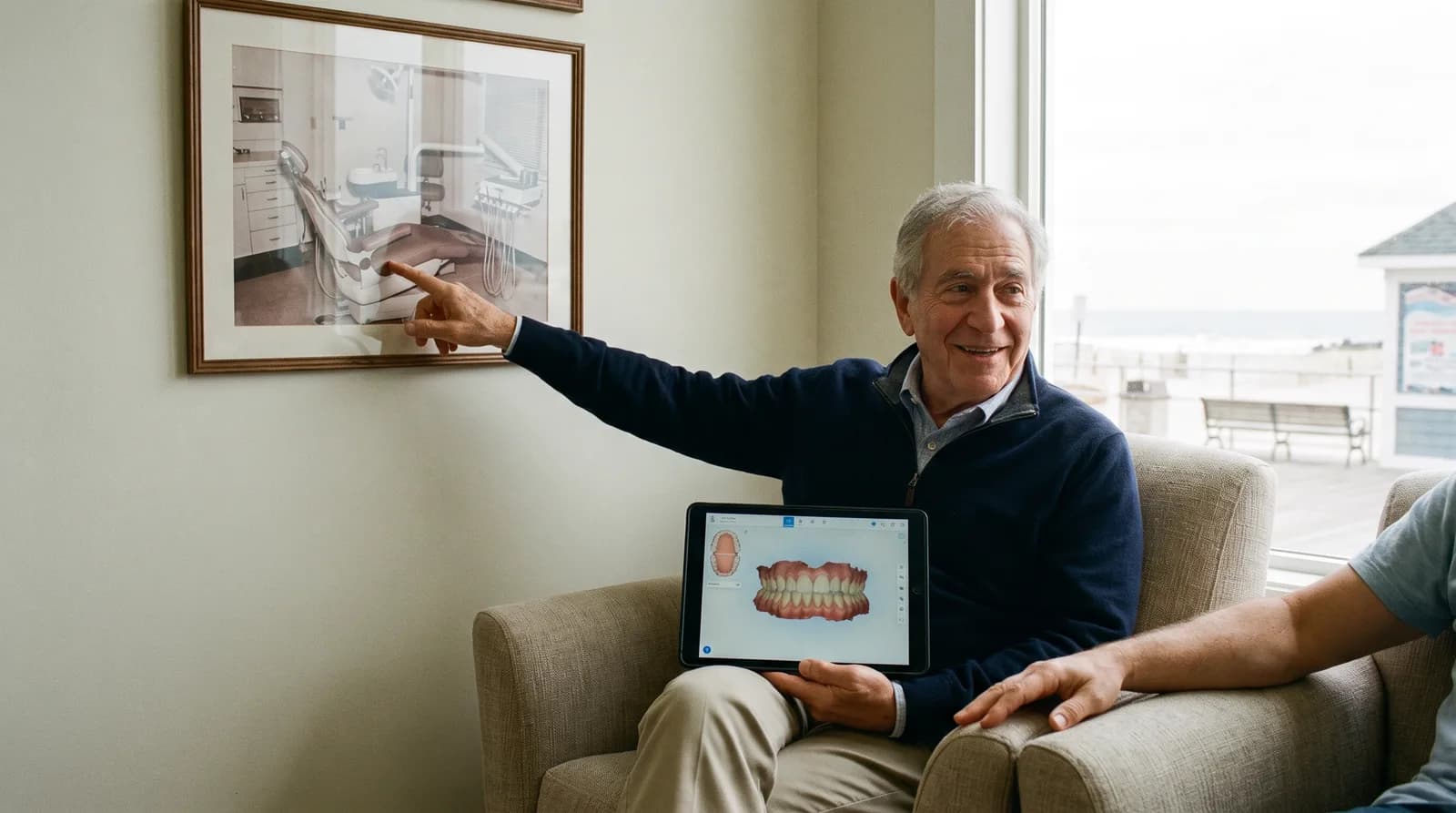
Dr. Curley has treated patients across three decades of technology, with the same philosophy throughout.
What Hasn't Changed: A Judgment-Free, Patient-First Approach
What hasn't changed in 25 years is the judgment-free, patient-first approach that shaped the practice from the beginning, regardless of how much the tools and techniques around it have evolved.
Technology solves a lot of problems, but it doesn't solve the part where a patient feels rushed, talked down to, or nervous about a visit. That part has always required something closer to a philosophy than a piece of equipment, and it's the one thing Dr. Curley has been deliberate about keeping consistent across 25-plus years and a completely different toolkit.
Dental anxiety affects roughly 36% of Americans, with about 12% describing genuine dental fear, according to a 2024 BMC Oral Health study. That number hasn't moved much over the decades even as the equipment around it has changed completely, which is part of why a calm, unhurried approach still matters as much today as it did in 1999.
Sedation dentistry has helped about 75% of fearful patients maintain regular visits over time, according to the Journal of Dental Anesthesia, but the sedation itself was never really the point. It was always a tool in service of the same underlying goal: getting a nervous patient comfortable enough to actually show up and keep showing up, year after year, regardless of which specific technology happened to be new that decade.
Listening to a patient's actual concern before recommending any treatment.
Explaining the reasoning behind a recommendation in plain, non-clinical language.
Treating a returning patient the same whether it's been six months or six years.
Offering sedation options for anxious patients rather than pushing through discomfort.
Why Jersey Shore Patients Have Stayed for Decades
Jersey Shore patients have stayed with Susan J. Curley DDS for decades because trust, once earned, tends to outlast whatever specific technology happens to be in the room at any given visit.
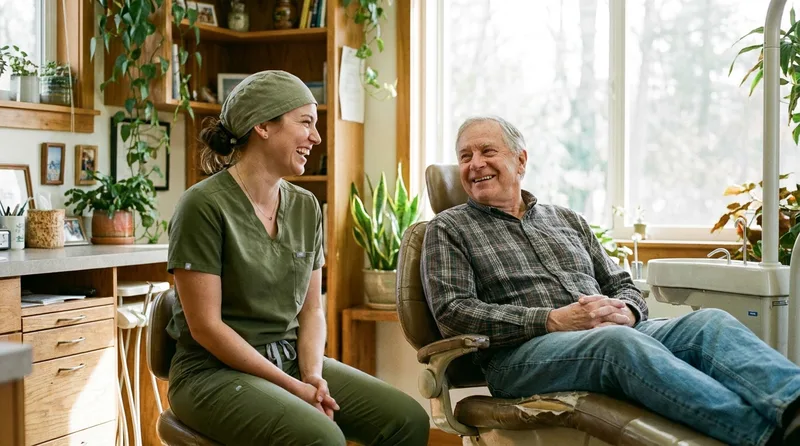
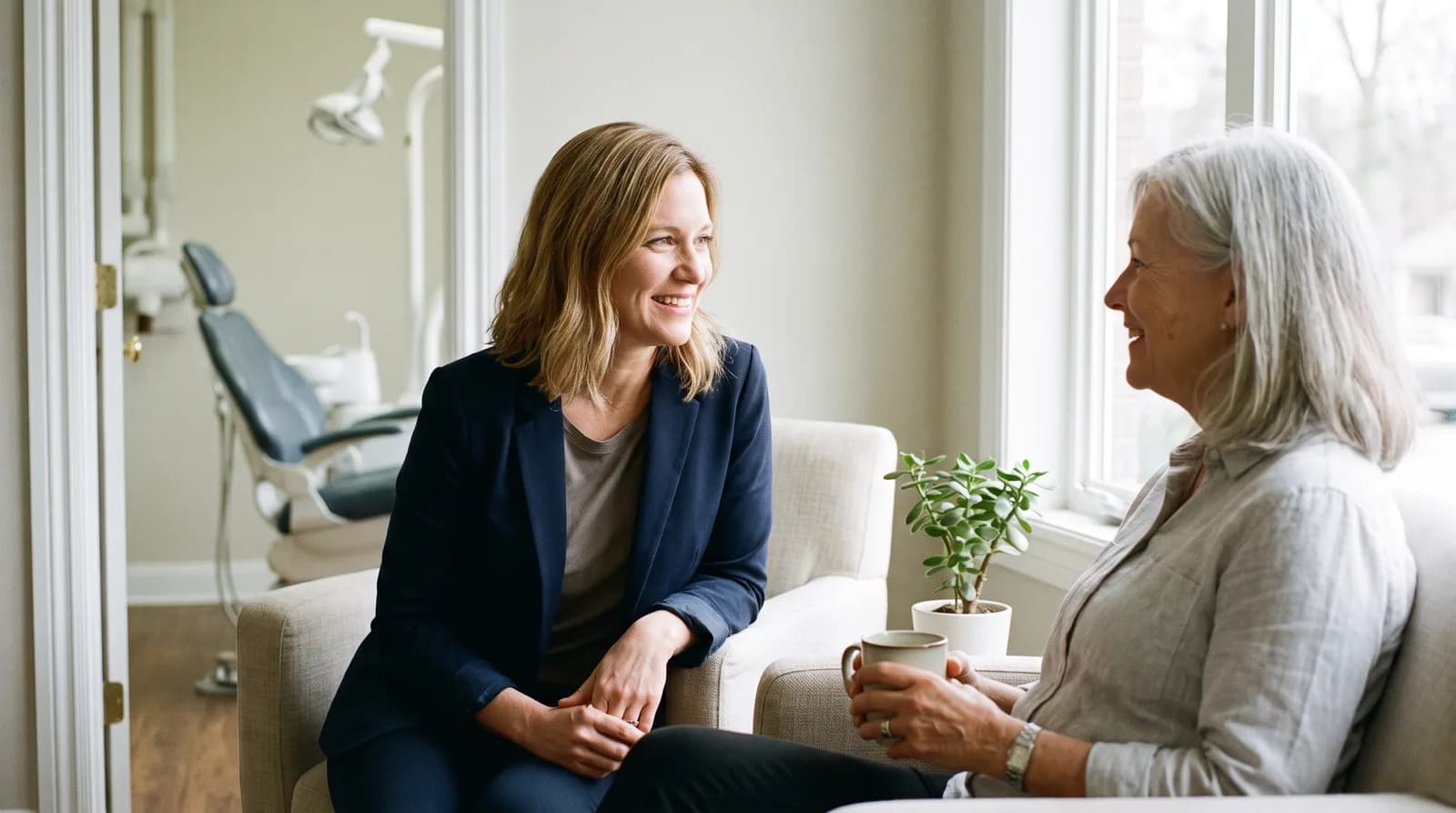
Multi-decade patient relationships are harder to shortcut than technology.
A lot of patients who started as young adults in the late 1990s are now bringing their own adult children in for cosmetic consultations, or scheduling their own restorative work as grandparents. That kind of multi-decade relationship isn't something a newer practice can shortcut, no matter how much technology it has on day one.
Patients who keep up with routine care are roughly 60% less likely to lose teeth over time, according to the Journal of Dental Research. A 25-year relationship with one practice tends to make that kind of consistency far easier to maintain than starting over with a new office every few years. There's also something to be said for a provider who already knows a patient's full history without needing to re-ask the same intake questions at every single visit.
For a closer look at the technology side of that relationship specifically, see this guide on advanced dental technology in Wall Township, which covers the current toolkit in more detail than this piece does.
What the Next Chapter Looks Like for Susan J. Curley DDS
The next chapter for Susan J. Curley DDS likely involves even more digital integration, from AI-assisted diagnostics to further refinement of same-day restorative workflows, without changing the patient-first approach underneath it.
Predicting exactly what dentistry looks like another 25 years out is mostly guesswork, but the trajectory of the last 25 offers a reasonable guide. Imaging will likely keep getting faster and more precise. Restorative timelines will likely keep shrinking. Digital Smile Design and similar planning tools will likely become more standard rather than differentiators.
What almost certainly won't change is the part that never has. A practice built around listening to a patient before recommending anything, explaining the reasoning in plain language, and treating a returning patient the same whether it's been six months or six years since the last visit. That's a harder thing to advertise than a piece of new equipment, but it tends to matter more over the long run.
According to Mayo Clinic's general guidance on dental care, the fundamentals of good oral health have stayed remarkably stable even as the tools to support them keep improving. That's a reasonable way to think about where a 25-year practice goes from here: better tools, same fundamentals.
The short version: the tools have changed almost completely over 25-plus years on the Jersey Shore, from film X-rays to CBCT, from two-visit crowns to same-day ones, from wires to clear aligners. The philosophy underneath all of it hasn't moved an inch, and that's arguably the more important part of the story.
Results may vary. Please consult with your dentist at Susan J. Curley DDS for personalized treatment recommendations.
For patients curious what 25 years of consistency actually looks like from the review side, that's covered in a separate piece worth reading alongside this one.
Dental implant pricing ads what to know: low headline prices often leave out grafting, sedation, and materials tier. Here's how to compare quotes fairly.
Searching for a dentist near Howell NJ? See what sets Susan J. Curley DDS apart from inland options: technology, reputation, and 25+ years on the Shore.