smile-design
Smile Design for a Gummy Smile: Can It Really Help?
Smile design for a gummy smile: what actually causes it and which treatment options can genuinely help you feel confident.
Sep 21, 20268 min read



Diet snacking cavity risk comes down to one factor most people never think about: how often you eat, not just what you eat. Grazing on snacks throughout the day, even relatively healthy ones, can do more damage between cleanings than a dessert eaten with dinner.
This connects to something you've probably noticed without quite naming it: two people can eat roughly the same amount of sugar in a week and end up with very different cavity outcomes at their next checkup. The difference usually comes down to when and how often that sugar hit their teeth, not the total quantity involved.
Most nutrition advice for teeth focuses on which foods to avoid, but the timing piece gets far less attention despite mattering just as much. Dental caries affect roughly 90% of adults and 42% of children aged 6 to 19 at some point, according to a clinical review. That makes prevention through diet and timing one of the more practical levers most people actually have control over. Once you understand why frequency matters, a lot of small daily habits start to make more sense, and a few realistic adjustments can meaningfully change your cavity risk without requiring a complete diet overhaul.
This isn't about cutting out sugar entirely or feeling guilty about snacks. It's about understanding the mechanism well enough to make a few small adjustments that actually move the needle, part of the everyday preventive care that keeps cavities from forming between visits.
Snacking frequency affects cavity risk because each time you eat something with sugar or starch, the bacteria in plaque produce acid that attacks your enamel for roughly 30 minutes afterward. More snacking occasions mean more of these acid attacks throughout the day.
Here's the practical version: three meals plus one snack exposes your teeth to far fewer acid attacks than six small snacking sessions spread across the day, even if the total amount of sugar eaten is identical. Frequency, not just quantity, drives a lot of the risk. Snacking itself has become more common over time too; one national nutrition survey found that the share of children with four or more snacking occasions per day rose from about 7% to nearly 19% over a similar period, a trend that likely applies broadly across age groups.
This is a genuinely counterintuitive point for a lot of people, since "eating less sugar overall" feels like it should be the main lever. In practice, someone eating a moderate amount of sugar concentrated into two or three windows a day often does better than someone eating less total sugar spread across six or seven small exposures.
Timing matters more than total sugar because each acid attack needs about 30 minutes to fully resolve, and eating again within that window essentially resets the clock rather than adding a separate attack. Spacing food out gives your mouth recovery time it doesn't get with constant grazing.
The ADA's research on nutrition and oral health notes that increased frequency of sugar consumption may matter more for cavity risk than total sugar consumption, largely because of this pH recovery window. Practically, that means having dessert with dinner is genuinely better for your teeth than spreading the same amount of sugar across several small snacks during the afternoon.
| Eating Pattern | Acid Attacks Per Day | Recovery Time |
|---|---|---|
| 3 meals, no snacks | Roughly 3 | Full recovery between each |
| 3 meals, 1-2 planned snacks | 4 to 5 | Mostly full recovery |
| Constant grazing, 6+ occasions | 6 or more, often overlapping | Little to none |
| Sipping sugary drinks for hours | Continuous | None until sipping stops |
Cheese, nuts, plain yogurt, and vegetables are genuinely fine snacks for your teeth, and some research suggests cheese and peanuts specifically help counter the acid attacks from other foods eaten around the same time. These aren't just "better than candy," they're actively neutral to helpful.
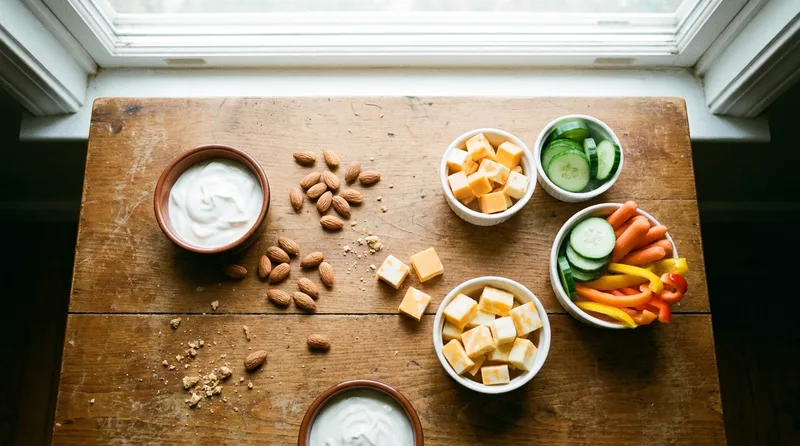
Cheese in particular does a few things at once: it stimulates saliva, provides calcium and phosphate that help remineralize enamel, and doesn't linger on teeth the way sticky or starchy foods do. A small piece of cheese after a meal is a genuinely useful habit, not just a filler suggestion for people who don't want to hear "eat less sugar."
Here's a simple way to sort common snacks:
None of this means the higher-risk category is off-limits. It just means those foods are better eaten with a meal, when saliva production is already elevated. A standalone snack an hour before bed is riskier, since saliva flow naturally slows down and gives bacteria more uninterrupted time to work.
Curious about your own cavity risk?
A quick exam can tell you exactly where you stand, no guesswork needed.
Request an Appointment →No, healthy snacks like fruit and milk aren't completely safe for your teeth, since they contain natural sugars that still feed the same bacteria responsible for cavities. They're a better overall nutritional choice than candy, but they're not exempt from the timing principle.
MouthHealthy, the ADA's patient education site, notes that even healthy foods like milk and vegetables contain natural sugar that can contribute to decay. This is especially true for children, whose snacking patterns tend to be more frequent throughout the day. Dried fruit deserves particular attention here, since it's sticky, concentrated in sugar, and tends to cling to teeth longer than fresh fruit does.
None of this means fruit or milk should be avoided. It means treating them with the same timing logic as anything else. Don't assume "healthy" automatically means "no impact on teeth." A piece of fresh fruit with lunch behaves very differently than a handful of raisins nibbled slowly over an hour at a desk.
Yes, sipping sugary or acidic drinks slowly over hours counts the same as frequent snacking, and in some ways it's worse, since it keeps your mouth in a near-constant acid attack with no recovery window at all. This applies to soda, juice, and sweetened coffee just as much as candy.

Drinking a soda in five minutes with lunch is meaningfully different from sipping the same soda over two hours at your desk. The total sugar is identical, but the second pattern keeps your enamel under acid attack almost continuously, which is exactly the pattern that causes the most damage over time.
This applies to seemingly innocent habits too, like a water bottle with a splash of juice sipped throughout a workout, or an iced coffee nursed over a long morning. The drink itself might not seem like a major offender, but the duration of exposure is what actually drives the risk here, more than the specific beverage.
Yes, chewing sugar-free gum with the ADA Seal of Acceptance after eating can genuinely help, since it stimulates saliva production, which helps neutralize acid and clear food particles faster than saliva alone would. It's a small habit with real backing, not just a marketing claim.
It's one of the easiest ways to manage diet snacking cavity risk without changing what you actually eat day to day.
This works especially well in situations where brushing isn't practical, like right after lunch at work or school. A few minutes of gum chewing won't undo a poor overall diet. As one piece of a broader routine, though, it's a genuinely useful tool worth using consistently, especially on days when snacking happens more often than planned.
A practical pattern looks like three meals plus one or two planned snacks, choosing cheese, nuts, or vegetables most of the time, and saving sweeter treats for right after a meal rather than as a standalone snack.
Small, consistent adjustments matter more than dramatic overhauls, and they're far easier to sustain long-term than a strict elimination diet most people abandon within a few weeks anyway.
Here's what that might look like across a typical day:
This isn't about perfection. It's about noticing patterns, like constant grazing at a desk job or sipping soda for hours, and making a few targeted swaps rather than overhauling your entire diet. Most people can meaningfully reduce their cavity risk without giving up the foods they actually enjoy, which is really the whole point of thinking about timing instead of restriction.
Most patients benefit from a dental exam and x-rays roughly every 6 to 12 months to catch early decay before it becomes a bigger problem, though your specific interval depends on your individual risk factors. Diet and snacking habits are exactly the kind of thing worth mentioning at that visit.
Early decay is often invisible to you but visible to a dentist, especially between teeth or just below the gumline where a mirror alone won't show it. Catching it at this stage usually means a smaller filling instead of a root canal down the line, which is the entire point of routine checkups rather than only showing up once something hurts.
Our guide to how often you need dental x-rays covers how that interval gets determined for your specific case. If your snacking habits have shifted recently, whether that's a new job with constant desk grazing or a new sipping habit, that's worth flagging at your next visit even if nothing feels different yet.
Ready for your next checkup?
We'll catch anything diet-related before it turns into a filling.
Book Appointment →Diet snacking cavity risk isn't about willpower or cutting out every food you enjoy. It's mostly about timing: fewer, more deliberate eating windows beat constant grazing, even when the total amount of sugar stays the same. A few small adjustments do more for your teeth than most people realize. Save sweets for mealtimes and reach for cheese or nuts between meals, and none of it requires giving up the foods you actually like eating. Results may vary. Please consult with your dentist at Susan J. Curley DDS for personalized treatment recommendations.
Time for a checkup?
Schedule your next cleaning and exam to catch anything early.
Book Appointment →Already dealing with a cavity?
See what to expect from a filling →Written By
Dentist
Smile design for a gummy smile: what actually causes it and which treatment options can genuinely help you feel confident.
Your first smile makeover consultation: what to expect, from the goals discussion to your digital smile design preview and plan.
What is digital smile design? A preview technology that lets you see your proposed new smile before treatment even begins.
Book your visit with Dr. Curley online or call us, and we'll take it from there.