Restorative Dentistry
Dental Crown Recovery: What to Expect the First Week
Dental crown recovery, what to expect the first week: what's normal, what to eat, and exactly when a quick call actually helps.
Aug 3, 20269 min read



Dental implant failure signs are easy to miss for one specific reason: pain often isn't one of them. Most patients assume a failing implant would hurt, so they wait for discomfort that may never come while a real problem quietly progresses underneath. This checklist covers what actually tends to show up early, so you know what's worth a phone call rather than something to watch and wait on.
If anything here sounds familiar, it's worth having Dr. Curley take a look. We coordinate with your implant specialist as needed for anything requiring surgical treatment, and can often evaluate and address early-stage concerns directly as part of your ongoing periodontal care.
Early signs of dental implant failure include gum swelling or redness around the implant, bleeding when you brush or floss near it, a change in how the crown feels when you bite down, and any visible looseness. None of these alone confirms failure, but any of them is worth a prompt evaluation.
| Sign | Possible Meaning | How Soon to Call |
|---|---|---|
| Gum bleeding when cleaning | Early inflammation, possible mucositis | Within a week or two |
| Gum swelling or redness | Inflammation, possibly progressing | Within a week or two |
| Bite feels different | Possible crown or connection issue | Within a few days |
| Any visible looseness | Crown or implant instability | As soon as possible |
| Pain or acute swelling | Possible active infection | Same day if possible |
The tricky part is that these signs can be subtle at first. Gum bleeding around an implant is easy to write off as normal, the same way people sometimes ignore bleeding gums around natural teeth. A slight shift in how your bite feels can seem minor. Individually, each sign might not mean much. Together, or persisting over more than a week or two, they're worth mentioning at your next visit rather than waiting for your regular checkup.
No, pain is actually an unreliable sign of implant failure. Research on peri-implantitis, the most common cause of late implant failure, specifically notes that pain is an unusual feature, typically only appearing if there's an acute infection layered on top.
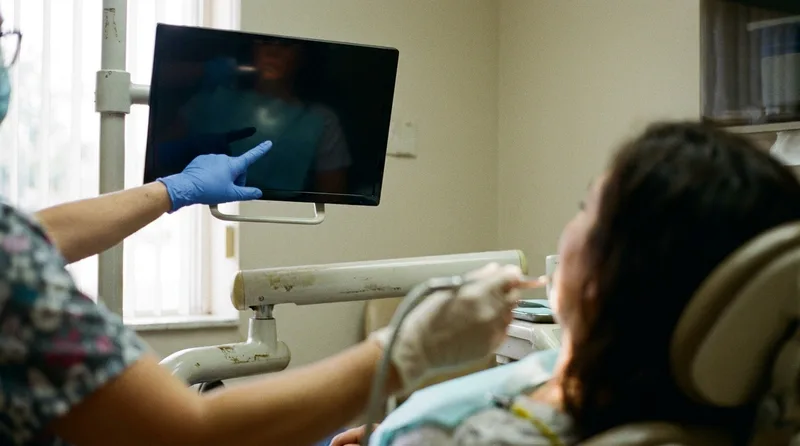
This is exactly why relying on "it doesn't hurt, so it must be fine" is a risky approach with implants specifically. The bone and gum tissue changes that signal trouble, bleeding on probing, gradual bone loss visible on x-ray, deepening pockets around the implant, can all progress without pain for a meaningful stretch of time. Regular checkups matter more for implants than for natural teeth precisely because your own senses aren't a reliable early warning system here.
This doesn't mean pain should be ignored when it does show up. Acute pain around an implant, especially paired with swelling, usually signals an active infection that needs prompt attention rather than a routine checkup timeline. The point isn't that pain is meaningless. It's that the absence of pain tells you very little, which flips the usual logic most people apply to dental problems.
Any looseness or mobility in an implant is a sign worth taking seriously, since a properly integrated implant should feel completely stable, similar to a natural tooth root. Looseness usually indicates either the implant hasn't stayed fused to the bone or something has failed at the connection between the implant and the crown.
It helps to know there are two different things that can feel "loose." Sometimes it's the crown itself that's come slightly unscrewed or unattached from the implant post underneath, which is a more straightforward fix, often resolved in a single visit by tightening or re-cementing the crown. Other times, the implant post itself is genuinely mobile in the bone, which is a more serious finding and usually means the integration has broken down. Only an exam can tell the difference, so any looseness at all warrants getting it checked rather than guessing which type it is.
Patients sometimes describe this looseness as a subtle wobble they only notice when biting into something firm, rather than an obvious shift they'd catch immediately. That subtlety is exactly why it's easy to dismiss at first, and exactly why it's worth mentioning even if you're not fully sure what you're feeling.
Yes, gum swelling, redness, or bleeding around an implant are common early signs of peri-implant disease, the inflammatory process that leads to most late implant failures. These signs often show up well before any pain or visible mobility develops.
A study following implants for at least seven years found peri-implant mucositis, inflammation limited to the soft tissue, in 39.7% of implants, with peri-implantitis, the more advanced form involving bone loss, present in 16.7%. Mucositis is generally reversible with proper cleaning and professional care. Peri-implantitis, left unaddressed, is what actually threatens the implant long-term. Catching the swelling and bleeding stage, before it progresses to bone loss, is exactly why these seemingly minor signs matter.
Dental implants most often fail due to peri-implant disease from bacterial buildup, poor oral hygiene around the implant, smoking, uncontrolled diabetes, or excessive bite force from grinding or clenching. Less commonly, failure happens early on if the implant never properly fused to the bone in the first place.
It's worth separating early failure from late failure, since they have different causes. Early failure, within the first few months, usually traces back to the implant not integrating with the bone properly in the first place, which can relate to bone quality, infection during healing, or excessive force on the implant before it was ready to handle it. Late failure, months or years after a successful integration, is almost always tied to peri-implant disease building up gradually rather than anything going wrong during the original placement.
Here's how these risk factors tend to break down:
Most of these are manageable with the right habits and regular monitoring, which is a big part of why maintenance visits matter as much for implants as they do for your natural teeth.
Noticing any of these signs?
Don't wait for pain to confirm it. Dr. Curley can evaluate what's going on and coordinate next steps if needed.
Request an Appointment →Implant failure or peri-implant disease is diagnosed through a clinical exam that checks for bleeding on probing, measures pocket depth around the implant, tests for mobility, and confirms bone levels with an x-ray. No single symptom you notice at home can confirm a diagnosis on its own.
A typical evaluation includes:
MouthHealthy, the ADA's patient education site, notes that implants require the same diligent home care and regular dental visits that natural teeth do, which is exactly what allows these diagnostic checks to happen consistently rather than only when something already feels wrong. An x-ray comparison against your implant's original baseline images is often what actually reveals bone loss, since a single x-ray in isolation doesn't show change over time as clearly.
Yes, many early-stage implant problems can be successfully treated, especially peri-implant mucositis and early peri-implantitis caught before significant bone loss occurs. The earlier a problem is identified, the more treatment options remain on the table.

Treatment for early peri-implant disease typically starts with professional cleaning around the implant and a review of home care technique, since improved plaque control alone resolves many mucositis cases. More advanced peri-implantitis may require deeper cleaning procedures or, in some cases, referral to your surgical specialist for further evaluation. What isn't usually recoverable is an implant that's lost significant bone support or become genuinely mobile in the bone; at that stage, the conversation shifts to whether removal and eventual replacement makes more sense than continuing to treat around a failing implant.
The gap between these two outcomes, a straightforward cleaning versus a conversation about replacement, often comes down entirely to timing. A patient seen at the first sign of bleeding has dramatically more options than one seen after months of unaddressed inflammation. This is the single biggest reason early evaluation matters more than trying to self-assess severity at home.
Contact your dentist if you notice any new bleeding, swelling, looseness, or a change in bite around an implant, even if nothing hurts. Recognizing dental implant failure signs early matters most here; waiting for pain before reaching out is exactly the mistake that lets early, treatable problems progress into harder, more expensive ones.
None of this means panicking over every minor gum irritation. It means treating implant-specific signs with a bit more attention than you might give a similar sensation around a natural tooth, since implants don't reliably announce trouble the same way. If you're not sure whether something is worth a call, it usually is; a quick check costs far less than waiting until the answer becomes obvious on its own. Most patients who come in early leave with a simple cleaning and reassurance, not a complicated treatment plan.
Something feel off with your implant?
Get it checked before a small issue becomes a bigger one. Early evaluation keeps more options open.
Book Appointment →Dental implant failure signs are rarely dramatic in the early stages, which is exactly what makes them easy to miss. Bleeding, swelling, looseness, or a shifted bite are worth a conversation with Dr. Curley long before pain ever enters the picture. Being proactive about these signs costs you a short appointment; ignoring them can eventually cost the implant itself. Our overview of the dental implant process and our guide to the restorative phase of full-arch cases cover more of what to expect at each stage of implant care. Results may vary. Please consult with your dentist at Susan J. Curley DDS for personalized treatment recommendations.
Noticed a change with your implant?
Schedule an evaluation with Dr. Curley to catch small issues before they become bigger ones.
Book Appointment →Questions about implant care in general?
Contact Us →Written By
Dentist
Dental crown recovery, what to expect the first week: what's normal, what to eat, and exactly when a quick call actually helps.
A free second opinion on dental implants in NJ can reveal what a low All-on-6 quote actually leaves out before you commit to it.
An all on x implant restoration dentist handles the crown-and-bridge phase, not surgical placement. Here's exactly what that role involves.
Book your visit with Dr. Curley online or call us, and we'll take it from there.