smile-design
Smile Design for a Gummy Smile: Can It Really Help?
Smile design for a gummy smile: what actually causes it and which treatment options can genuinely help you feel confident.
Sep 21, 20268 min read


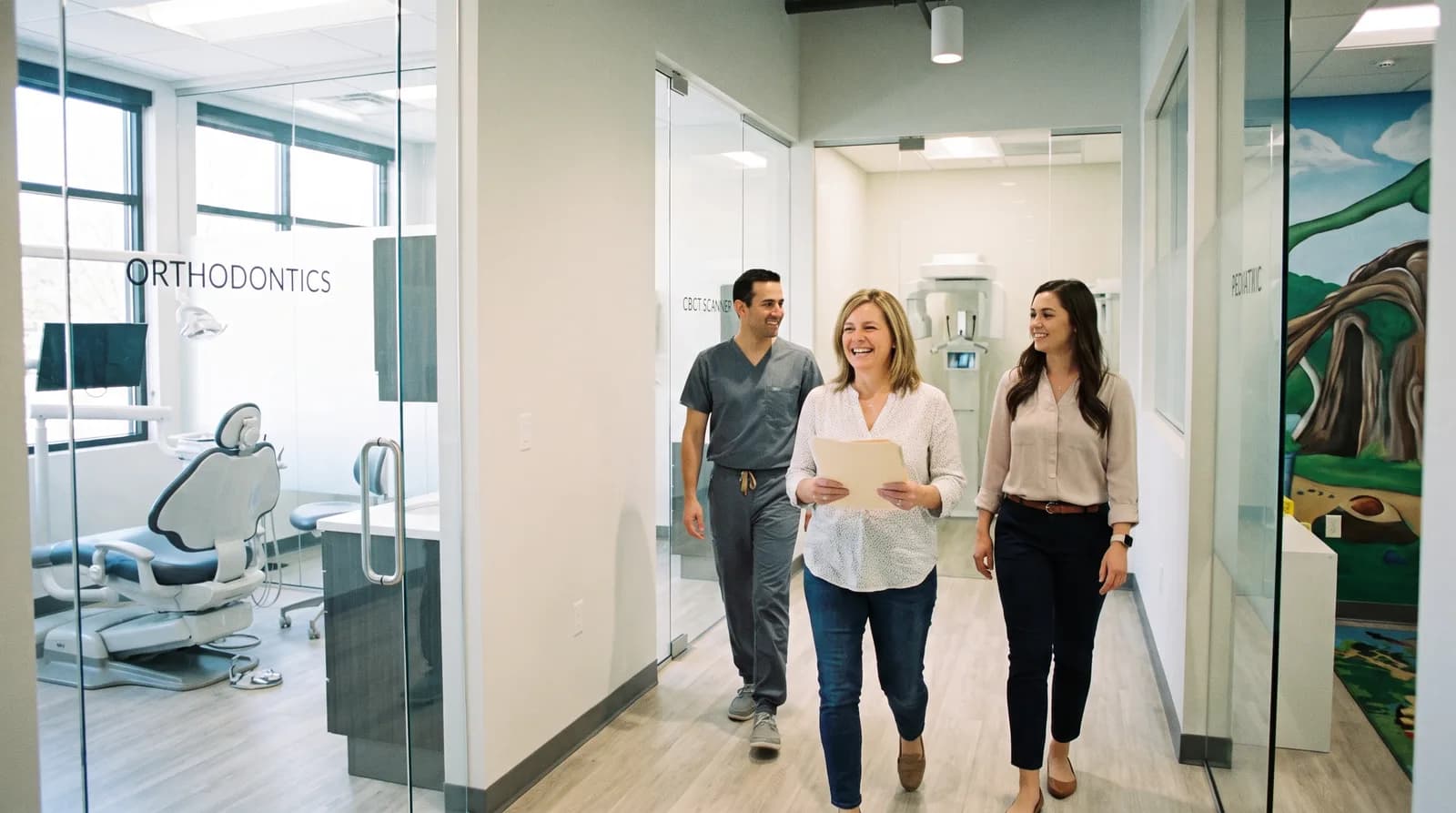
Complete dental care under one roof NJ patients search for sounds like a marketing phrase until you see what it actually changes about a treatment plan. At Susan J. Curley DDS, it means most of what you need, exams, cleanings, fillings, crowns, Invisalign, cosmetic work, and emergency visits, happens with the same team who already knows your history.
The phrase gets used a lot in dental marketing, often without much substance behind it. This article is meant to be the more honest version, including where the model genuinely applies and where it necessarily involves coordinating with an outside specialist rather than doing literally everything under one physical roof.
Dr. Curley has practiced along the Jersey Shore for more than 25 years, and the practice is rated 4.9 stars across 403 Google reviews, largely built on exactly this kind of continuity. Here's what "under one roof" actually looks like once you get past the tagline.
Complete care under one roof means most routine and complex dental needs, general, cosmetic, restorative, periodontal, and orthodontic, get handled by one coordinated team rather than being scattered across multiple offices. It doesn't mean every possible procedure happens on-site without exception.
The honest version of this phrase includes an important nuance: some specialized procedures, like surgical implant placement, are still coordinated with an outside specialist. What "under one roof" really promises is that your general dentist stays the hub of that coordination, not that every single service in dentistry happens in one building.
This distinction matters because overpromising erodes trust the moment a patient discovers a referral was needed somewhere along the way. Being upfront about which services stay in-house and which get coordinated with a specialist actually builds more confidence than a blanket claim that everything happens under one physical roof without exception.
A single coordinated practice typically covers general and preventive dentistry, cosmetic treatment, restorative work, Invisalign, periodontal care, and same-day emergency visits. At Susan J. Curley DDS, that list includes Digital Smile Design, GLO whitening, Guided Biofilm Therapy cleanings, and same-day 3D-printed crowns.
Regular dental visits can catch 80% of oral health issues before they become serious, according to the ADA, which is a big part of why continuity of care matters as much as any individual service on the list.
| Category | Example Services |
|---|---|
| General & preventive | Exams, Guided Biofilm Therapy cleanings, fillings |
| Cosmetic | Digital Smile Design, GLO whitening, veneers |
| Restorative | Same-day 3D-printed crowns, implant restorations |
| Orthodontic | Invisalign (Pearl-level provider) |
| Emergency | Same-day emergency dental care |
Here's a general breakdown of what's typically handled directly versus coordinated with a specialist:
The point isn't that everything happens in-house without exception. It's that your general dentist manages the whole picture, even the parts that get referred out.
Curious what coordinated care would look like for you?
A consultation is the easiest way to see how your specific treatment plan would come together.
Request an Appointment →Same-day technology like an in-office 3D printer for crowns, an iTero digital scanner, and CBCT imaging lets more of your treatment plan happen in a single visit, reducing how often coordination even needs to cross into a second appointment or another office.
A same-day 3D-printed crown is a good example. Instead of a temporary crown, a lab turnaround measured in days, and a second visit to place the final restoration, the whole process compresses into one appointment using in-office 3D printing. That's less about a flashy gadget and more about how much friction it removes from a process that used to require multiple trips.
The iTero digital scanner plays a similar role for Invisalign and other cosmetic work. A digital impression replaces the old mold-based process, and that same scan can feed directly into treatment planning software, cutting out a step that used to add days to the process before any actual treatment could begin.
When something needs a specialist, like surgical implant placement, your general dentist coordinates the referral, shares imaging and treatment notes directly with the specialist, and takes back over for the restorative phase once healing is confirmed. You're not left managing that handoff yourself.
MouthHealthy notes that this kind of coordinated referral model is standard practice even within certain insurance plan structures, not something unique to any one office. 42% of adults aged 30 and older have some form of periodontal disease, according to the CDC, which is exactly the kind of condition that benefits most from a coordinated approach between a general dentist and a specialist when it progresses further.
Here's roughly how that coordination flows:
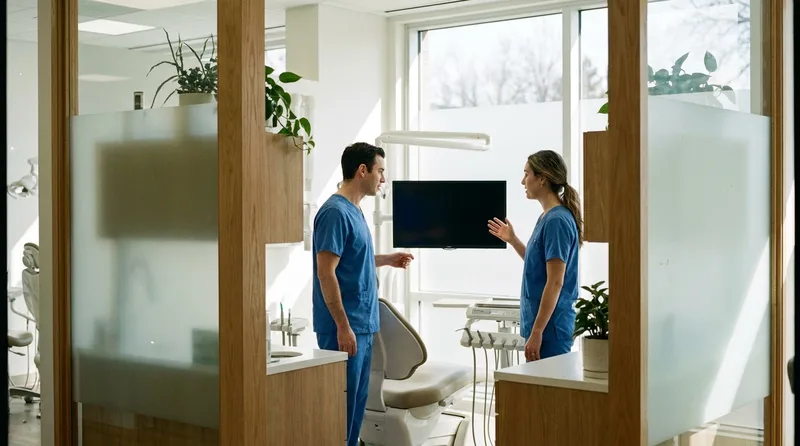
Our overview of the All-on-X restorative process is a concrete example of exactly this split: a surgical specialist places the implants, and Susan J. Curley DDS handles the crown-and-bridge restoration that completes the case. Coordination doesn't mean doing everything yourself. It means making sure nothing falls through the cracks between providers.
Seeing one team matters because they already have your full history, imaging, and preferences on file, which means treatment planning doesn't start from zero every time something new comes up. A cosmetic consultation can factor in a periodontal note from six months ago without you having to remember to mention it.
MouthHealthy, the ADA's patient education site, describes continuity of care as an important part of any health plan, noting that a dentist who sees you regularly is better positioned to catch problems early, like gum disease while it's still reversible.
This continuity shows up in small ways that add up. A dentist who's tracked your bite over several years notices a subtle shift faster than someone seeing you for the first time. A team that handled your last crown knows exactly what shade and contour worked for your smile the next time cosmetic work comes up.
It also reduces the odds of conflicting advice. When different providers at different offices don't share notes, patients sometimes end up caught between two treatment philosophies without a clear way to reconcile them. A single team managing the full picture removes that particular friction almost entirely.
Coordinated care saves time by reducing duplicate exams, repeated history intake forms, and the back-and-forth of transferring records between separate offices for related treatment. Most patients notice this most clearly when a treatment plan involves more than one type of care at once.
A patient needing a crown, a cleaning, and an Invisalign consultation in the same season, for example, can often combine or sequence those visits more efficiently when one office already has the full picture, rather than scheduling three separate intake processes across three different practices. This is the practical, day-to-day version of complete dental care under one roof nj patients actually experience, well before it ever comes up as a marketing phrase.
Technology like iTero digital scanning, CBCT 3D imaging, and integrated patient records makes coordination genuinely easier by giving every provider involved, in-house or referred, access to the same accurate information. Less guesswork means fewer repeated scans and fewer miscommunications between visits.
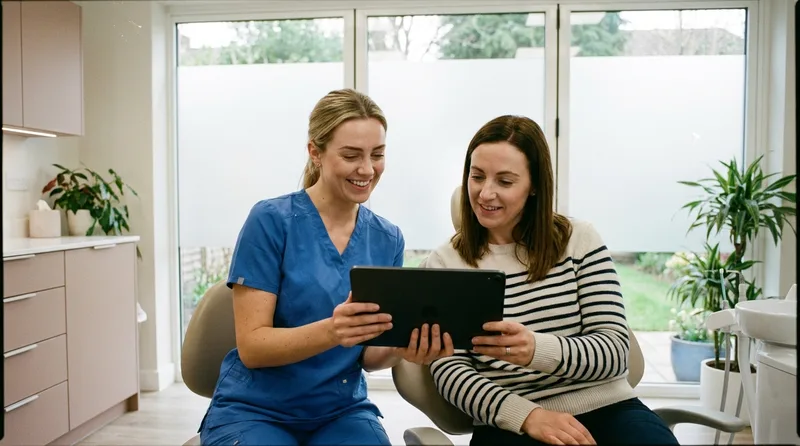
3D endodontics is a good example of how this plays out for a single procedure. A CBCT scan maps root canal anatomy in detail before treatment starts, the same imaging that a coordinating specialist would want to see if a case ever needed a second opinion or referral. The technology serves the coordination, not just the individual procedure it was built for.
Integrated digital records matter just as much as the imaging itself. A specialist receiving a referral with complete, organized history and imaging can move faster and more confidently than one starting with fragmented or incomplete information, which ultimately benefits the patient caught in the middle of that handoff.
Getting started just means booking an exam or consultation, where your history, imaging, and treatment goals get established as the foundation for everything that follows, whether that's routine care or something requiring a specialist down the line.
Our patient reviews reflect what this looks like from the other side of the chair, built up over more than two decades of practicing along the Jersey Shore. The appointment itself is straightforward. What happens afterward, the coordination, is where the actual difference tends to show up, often in ways patients only notice once they've experienced the alternative somewhere else.
Ready to see coordinated care in action?
Book a visit and let us build a treatment plan around your actual history, not a blank slate.
Book Appointment →Complete dental care under one roof in NJ isn't about claiming every procedure happens in a single building without exception. It's about one team staying at the center of your treatment, whether that's a routine cleaning or a case that eventually involves a specialist. That coordination, more than any single piece of technology, is what actually makes the phrase mean something. Results may vary. Please consult with your dentist at Susan J. Curley DDS for personalized treatment recommendations.
Ready to experience coordinated care?
Schedule a visit with Dr. Curley and her team along the Jersey Shore.
Book Appointment →Curious what other patients say?
Read our reviews →Written By
Dentist
Smile design for a gummy smile: what actually causes it and which treatment options can genuinely help you feel confident.
Your first smile makeover consultation: what to expect, from the goals discussion to your digital smile design preview and plan.
What is digital smile design? A preview technology that lets you see your proposed new smile before treatment even begins.
Book your visit with Dr. Curley online or call us, and we'll take it from there.